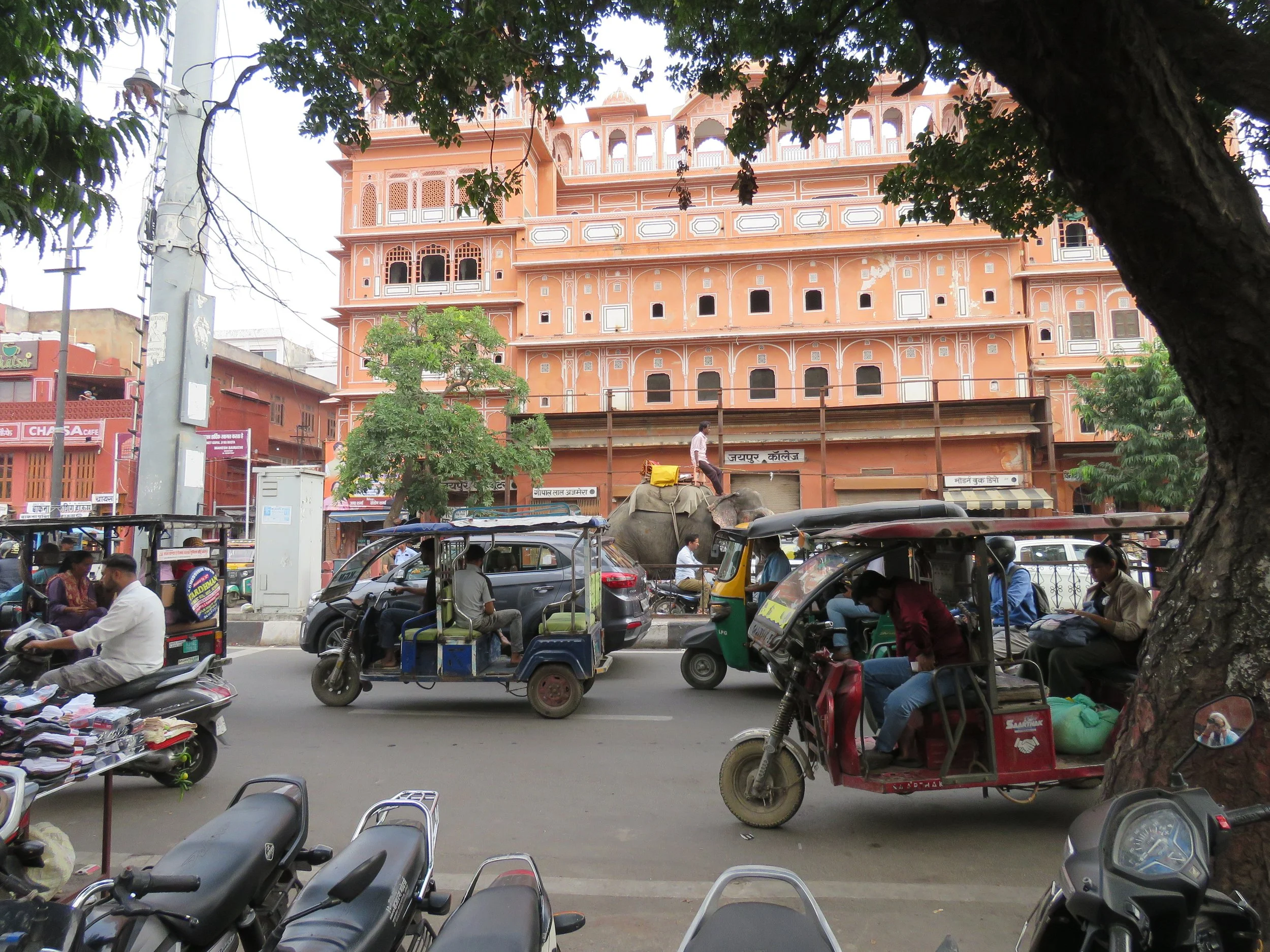
Notice the elephant across the road, among tuktuks and motorbikes…
In India, we were daily thankful for our calm, relaxed driver. Guru Singh made it seem easy to navigate the crazy traffic. And the city of Jaipur was clogged. Apparently our hotel was in or near the city center and it took forever to reach it. But once there, in a quiet narrow side street, our hotel for the next two nights was again an oasis of quiet and luxury. I felt like a maharani herself… Antiques, gold and marble glittered spotlessly everywhere.
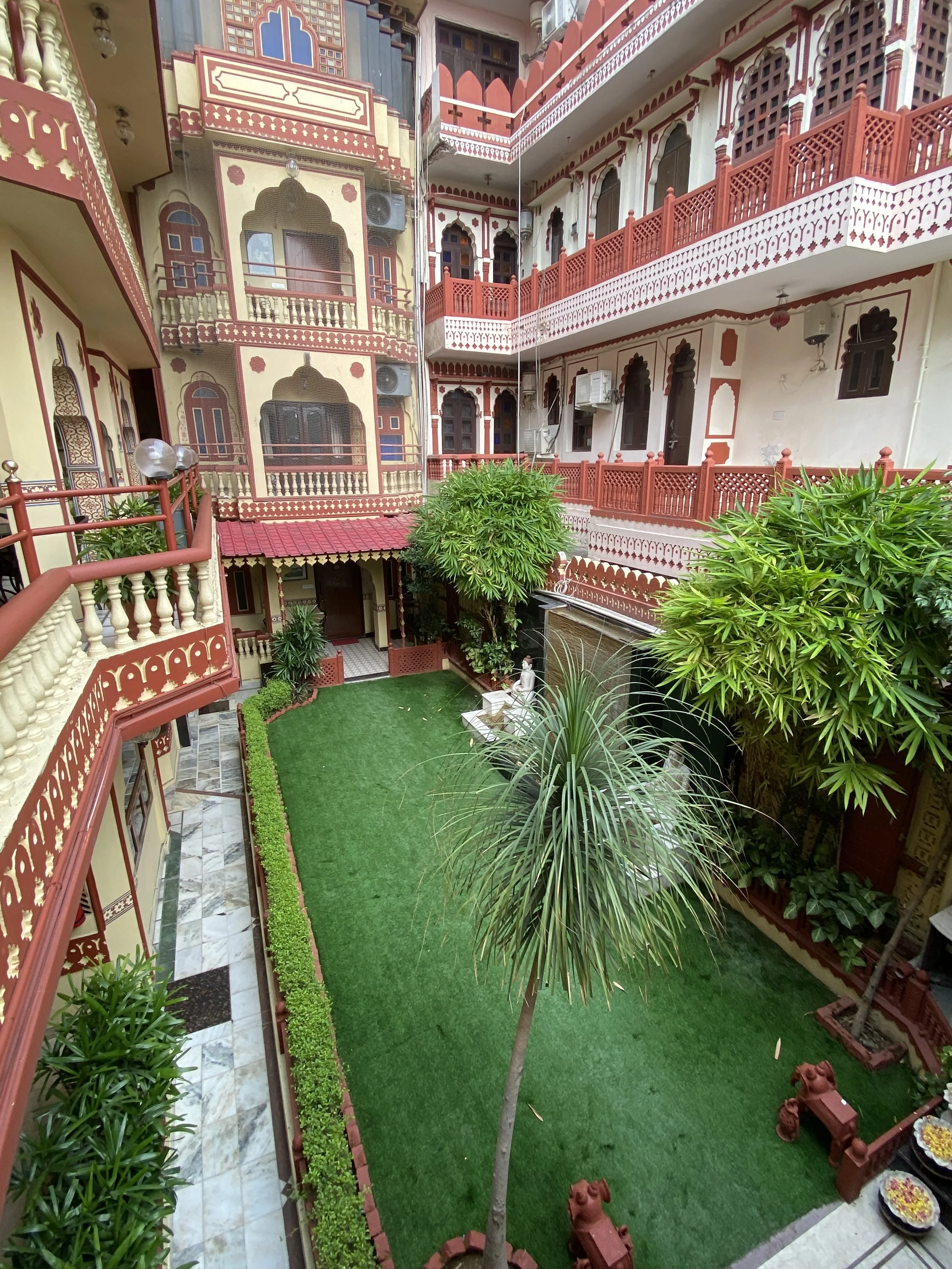
The Umaid Bhawan Heritage House is incredible. Have one look at their website and you’ll see what I mean… It is run by a royal family from Borunda in Rajasthan.
Our room had a four poster bed and a small patio in the courtyard. A rooftop restaurant not only offered wonderful drinks and dishes, but also a view on the crowded city. We sat here sipping a drink and sampling Indian dishes - dosa and lassi - while musicians played we saw occasional fireworks in the city - a very different India then the one I had imagined.
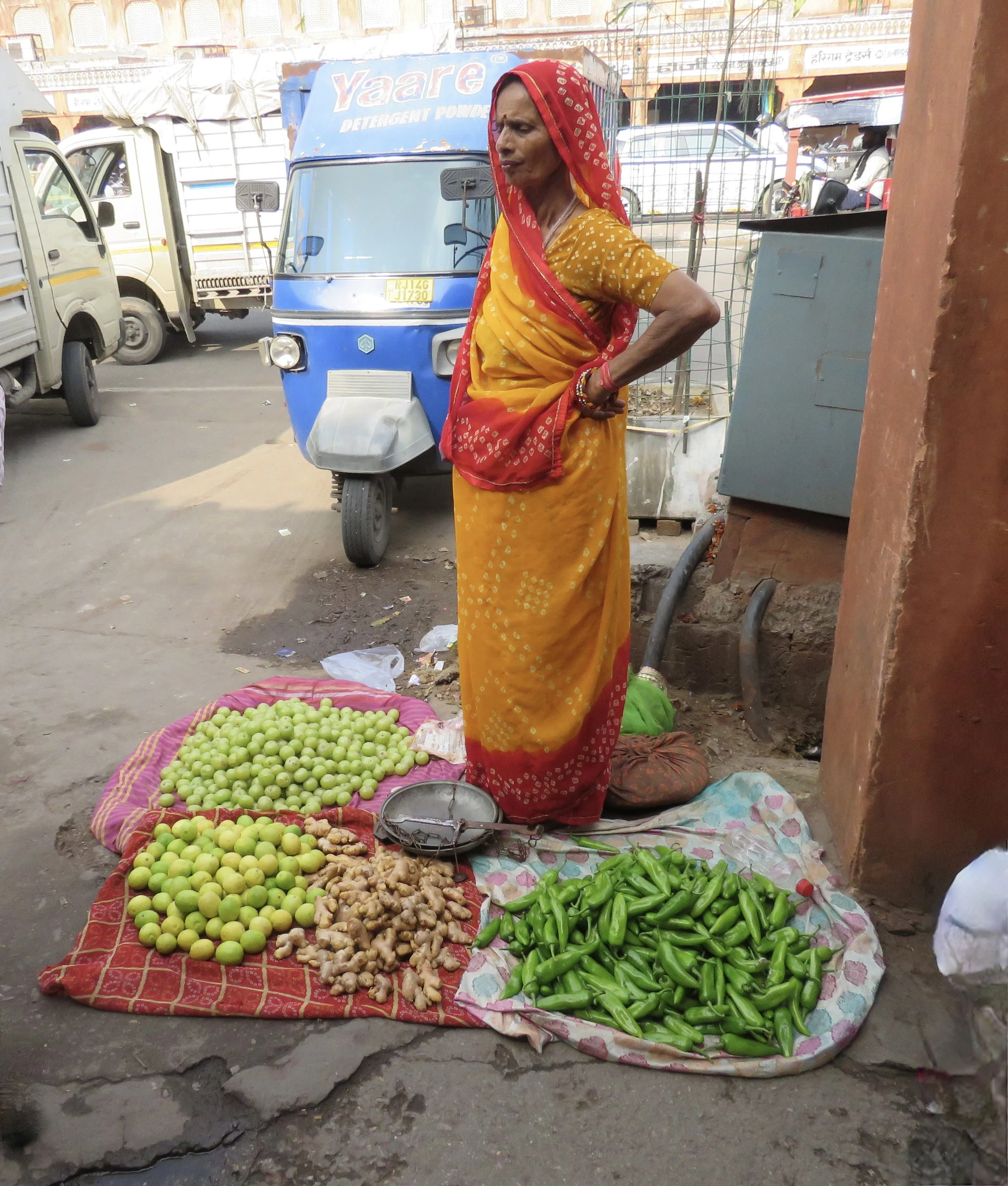
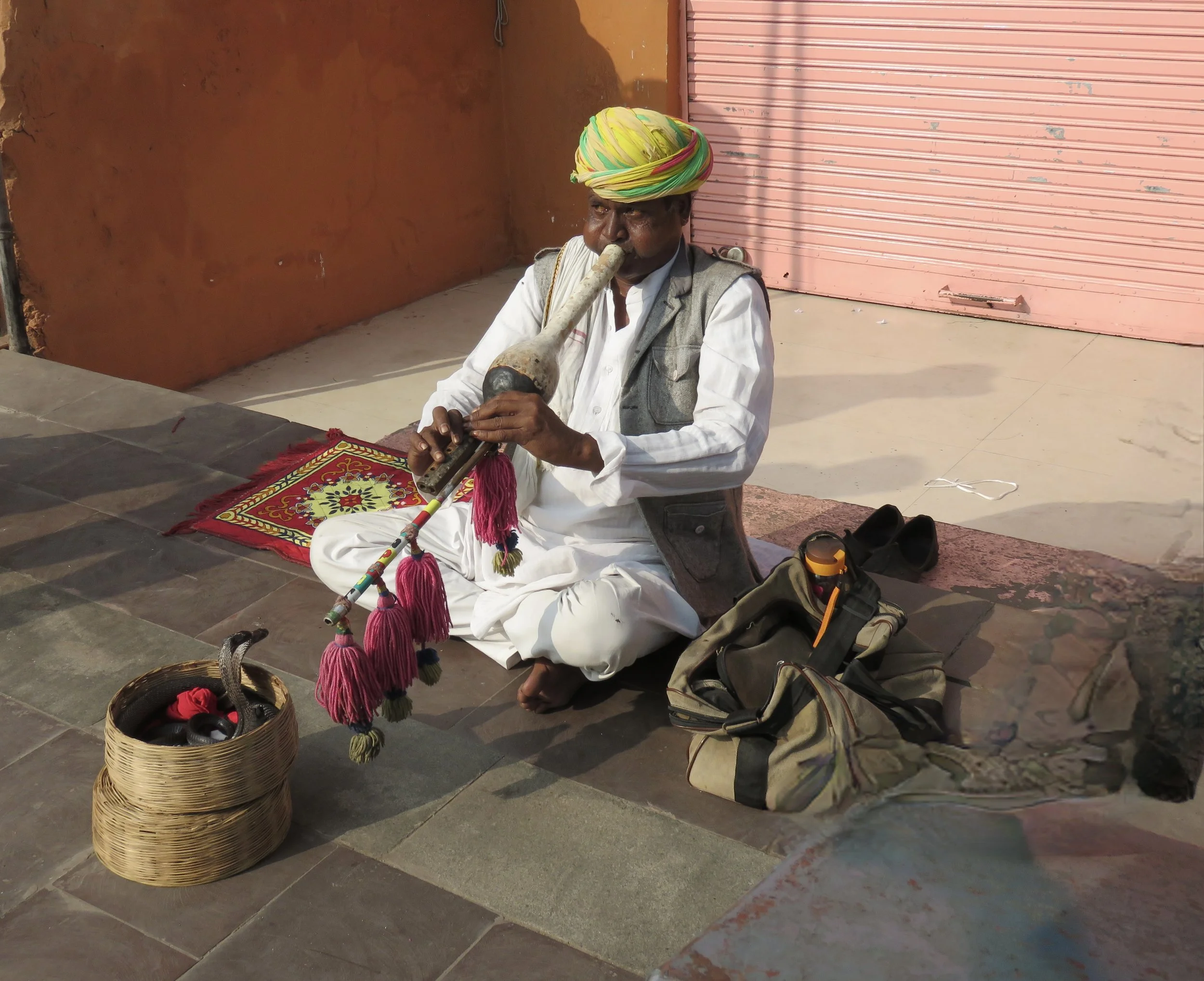
The next morning we left with our lovely local guide to stroll the streets of Jaipur. We walked downtown, past little shops - books, saris, nuts and spice and everything else under the sun. Suddenly we nearly stumbled over a snake charmer, just casually sitting on the sidewalk with his flute and basket of snakes.
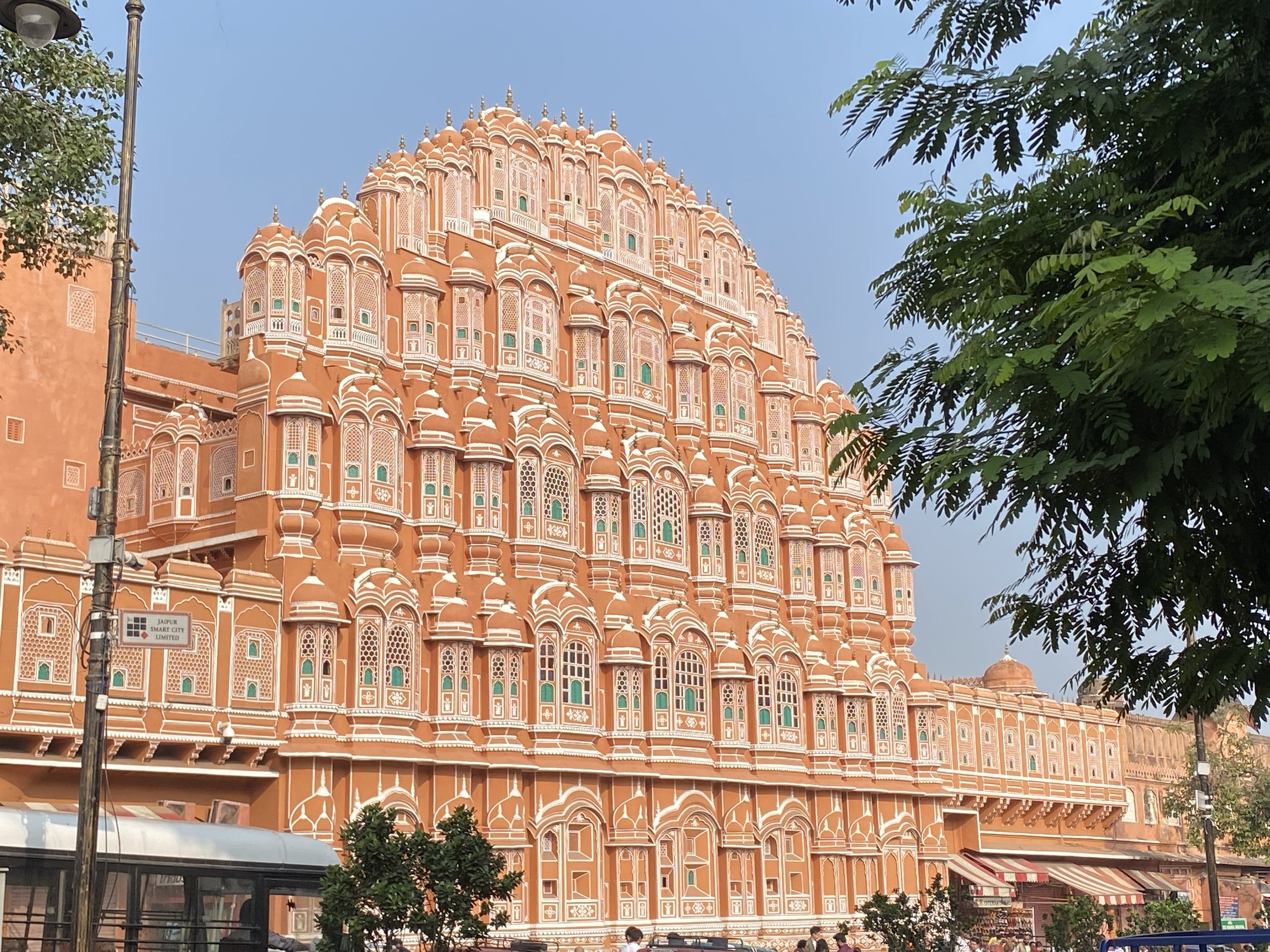
Hawa Mahal
We walked by the Hawa Mahal, or wind palace, with a dazzling pink sandstone façade. Built in 1799, it has 953 windows and a breeze keeps it cool in hot summers. Interestingly, this imposing palace has no front door, only a backdoor from an inner courtyard.
The building is so strikingly pretty in pink that a law was passed in Jaipur: making it illegal to paint buildings in any other colour than Jaipur pink. Hence it has been nicknamed the Pink City.
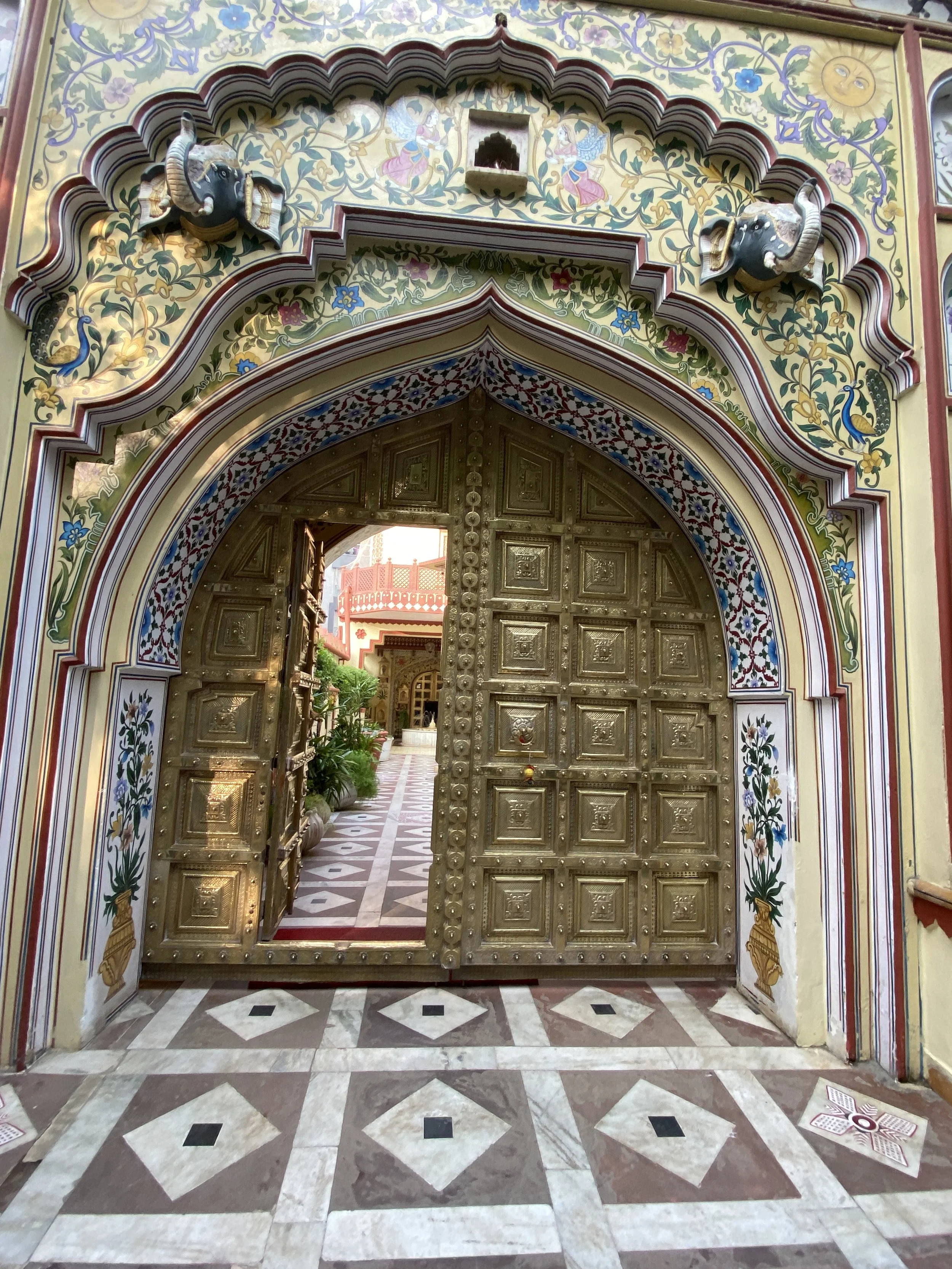
The entrance to our hotel…
After lunch in a popular well known little eatery, we drove to the edge of the city, along the shore of Man Sagar Lake. In the middle of this lake is the 5 story Water Palace - with only one story visible, the rest is underwater. Built in 1699, it seems to be floating on the lake.
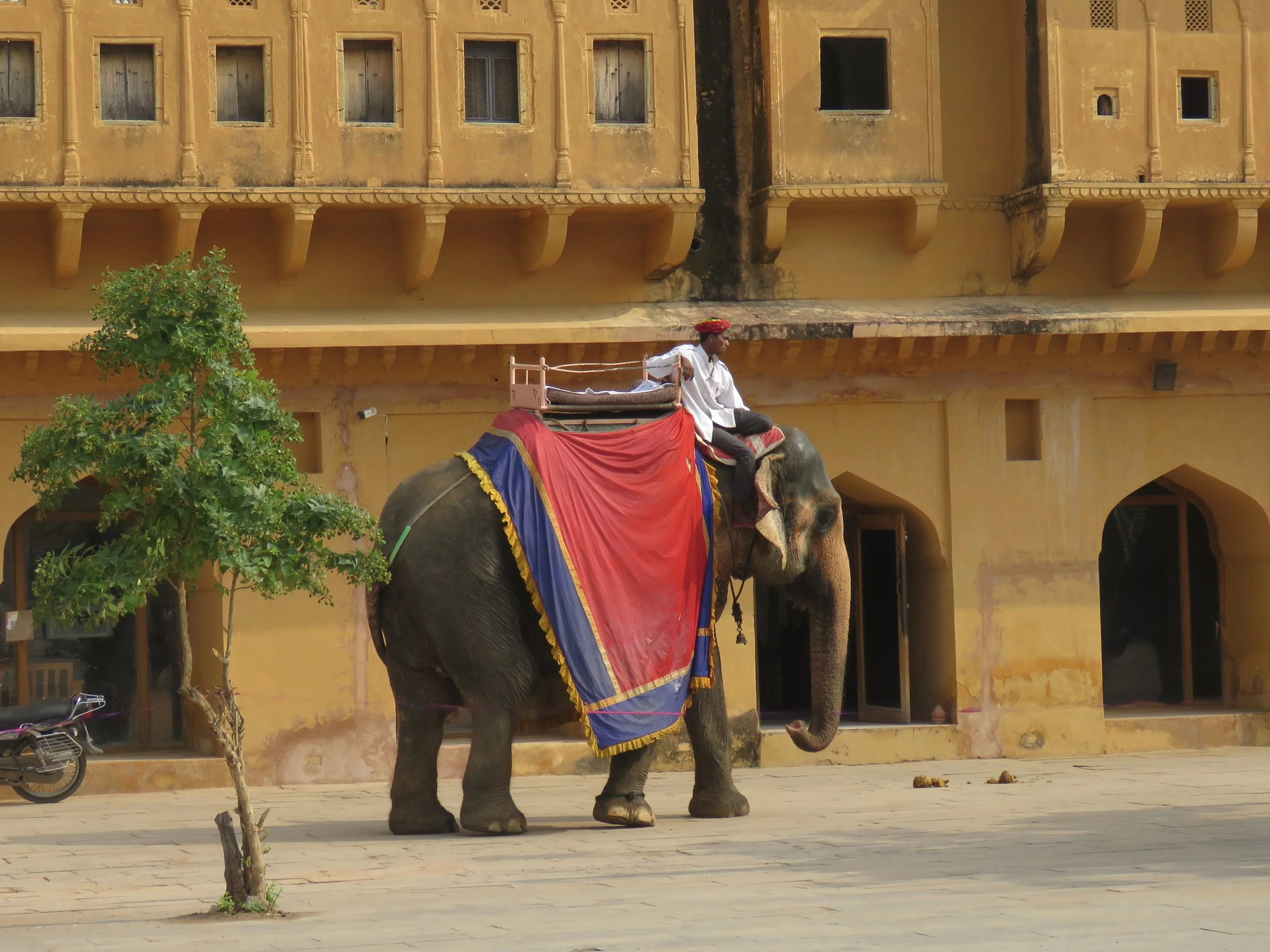
Driving past people, cows, camels and the occasional elephant along the road, we soon saw Nahargarh Fort, perched high on the hills and still looking like a powerful fortress. The fort dates back to the early 1700’s. Long stone walls reach out across the landscape much like the Great Wall of China. It was once a defence fort but also housed the royal family consisting of a king and his many queens.
These Indian palaces are so different from the European palaces we are familiar with. They are sprawling, stone fortresses with immense rooms. They have ornate ceilings and walls but no furniture like historic European palaces usually do. There are trellises everywhere where the ladies would sit and see what was going on without being seen.
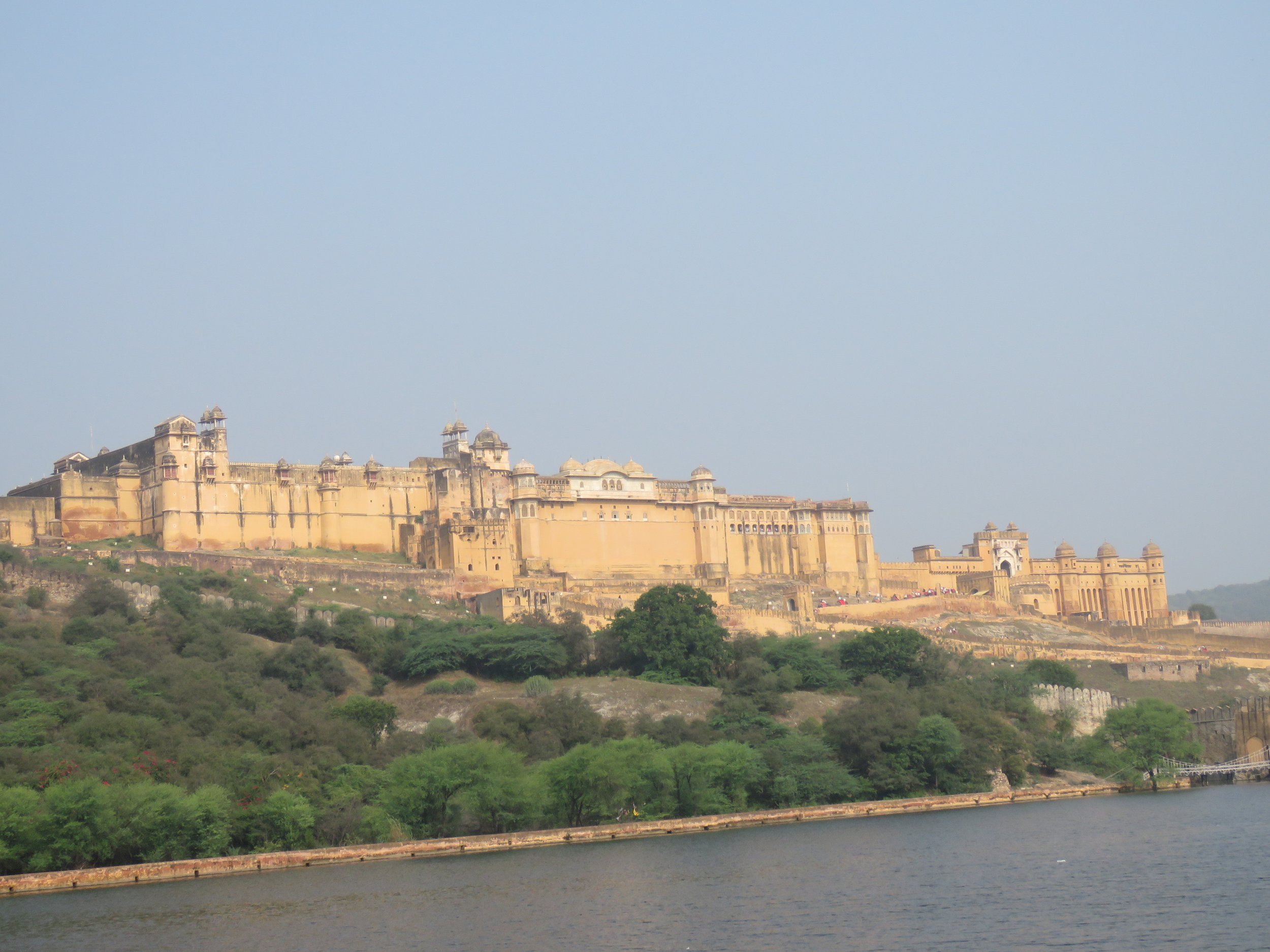
Nahargarh Fort
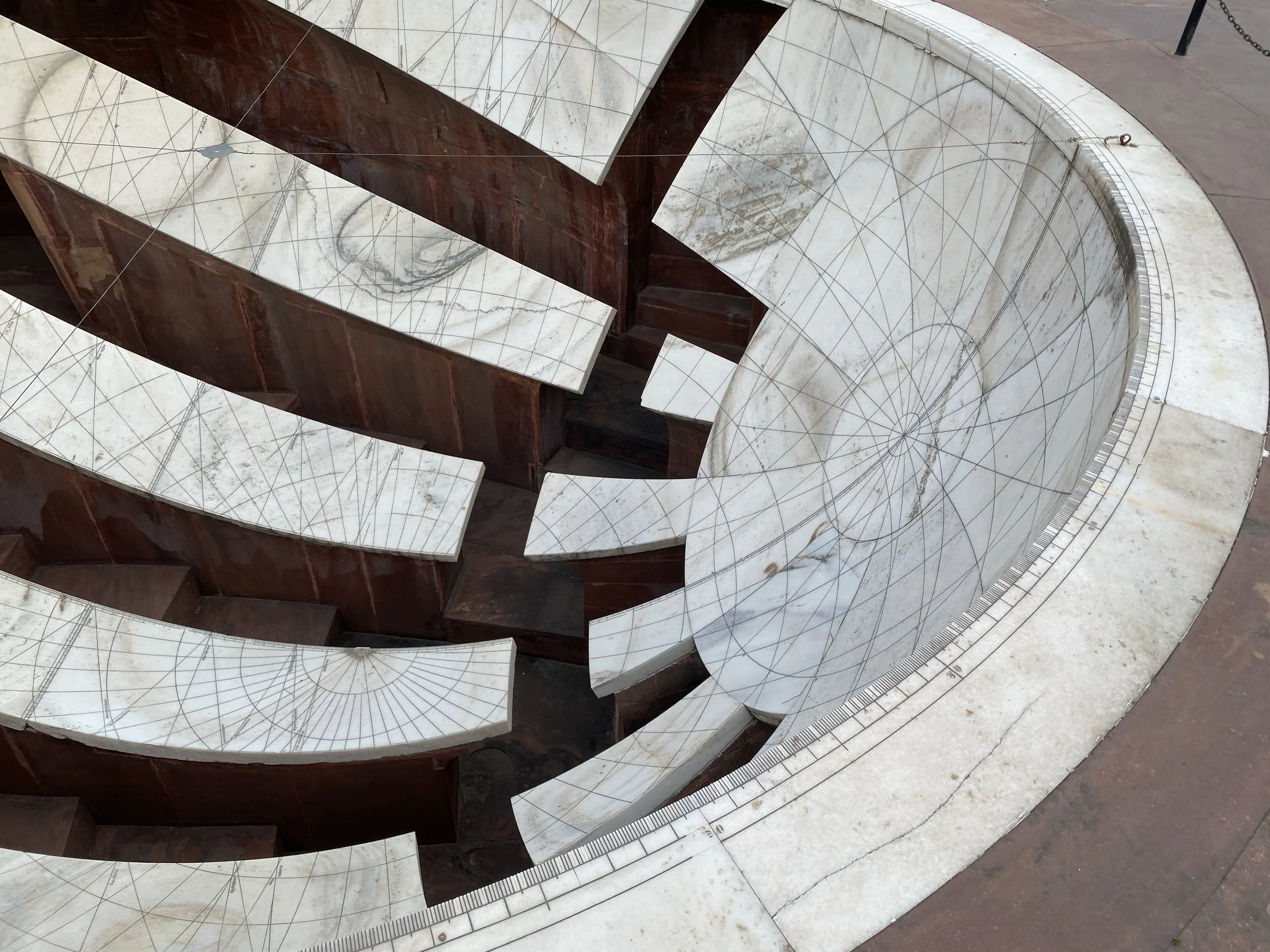
Back in the city, we strolled over the fabric market, found some souvenirs and finally visited Jantar Mantar - an astronomical observatory built by Maharaja Jai Singh, the founder of Jaipur and now a UNESCO World Heritage Site. Sixteen large areas contain geometric devices, designed to measure time, track celestial bodies, observe planets, represent zodiac symbols and much more. Completed in 1734, it is mindblowing how accurate the measurements are and what people were capable of - a true precursor of today’s technology.