Two boats in one day…
During our recent world cruise, we left South Africa thinking we were headed towards the next stop on the itinerary: Reunion and Mauritius - both remote islands we were keen to see. However, a day out of Durban, South Africa, the captain announced that we were not the only ones headed for these islands: a typhoon had also decided to go that way.
Wisely, our ship was diverted and we hugged Mozambique’s coast to our left and Madagascar’s west coast instead of its exposed east coast. Where and when we would next see land was anyone’s guess. The northern tip of Madagascar perhaps? Dar-es-Salaam in Tanzania?
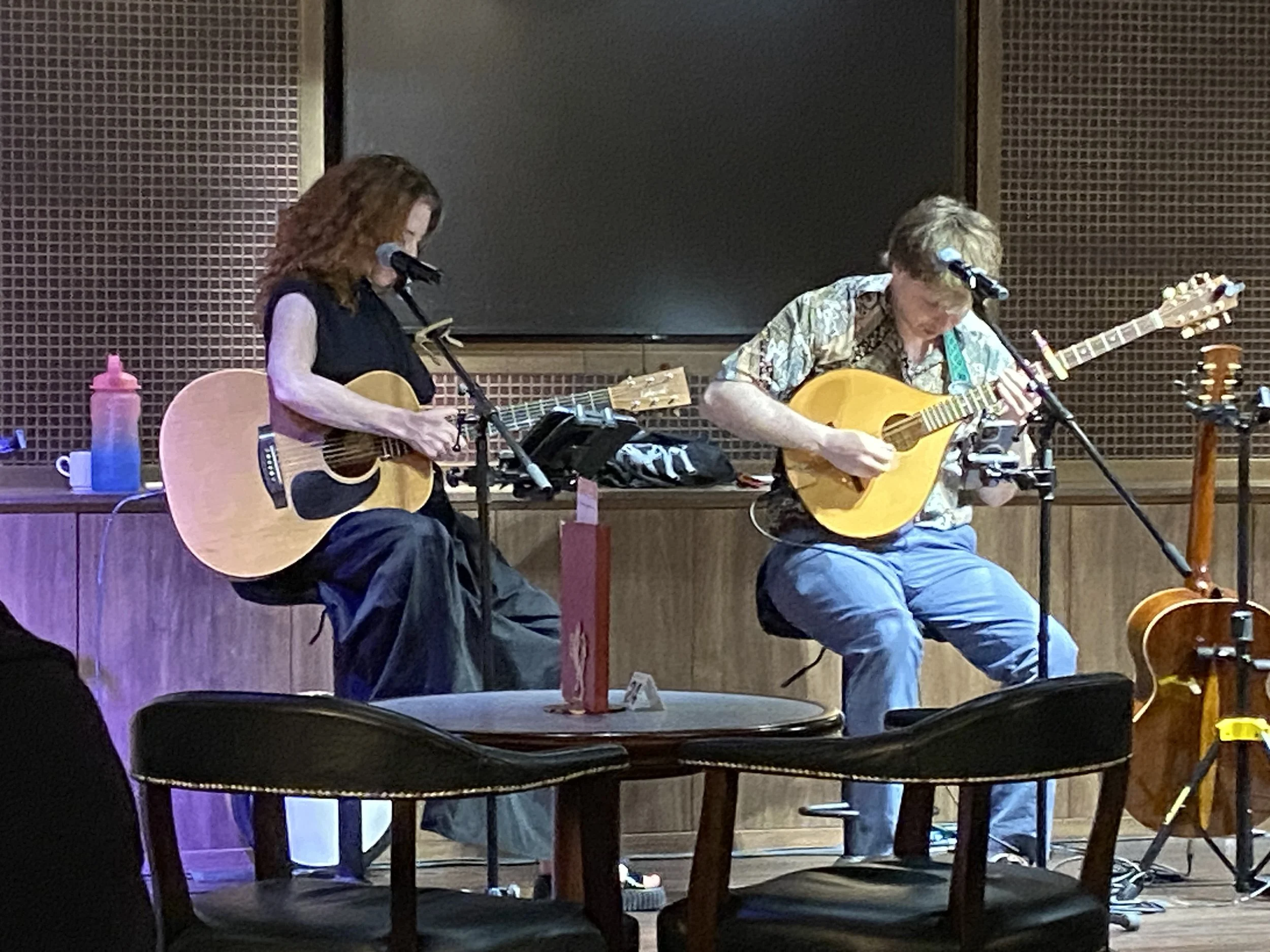
We whiled away our days with breakfast in bed, walking the track and swimming now that the weater was beautiful and warm. There was a great comedian in the theatre of the ship and we sipped a Guiness (well, one of us did) in the Pub where a great Irish duo sang at night. Not a bad way to wait out a typhoon and we never had even a storm.
It was several days before the Cunard company had regrouped and came up with some impressive alternatives. Our next stop would be the Seychelles Islands! And next would be the fabled Maldives… Excitement all around! The ship had secured stops and quickly made all the arrangements - I’m sure not a small task. Although we had lost out on a full day tour of Mauritius, we were excited to see two remote places that we would not easily visit again and about which we had heard much good.
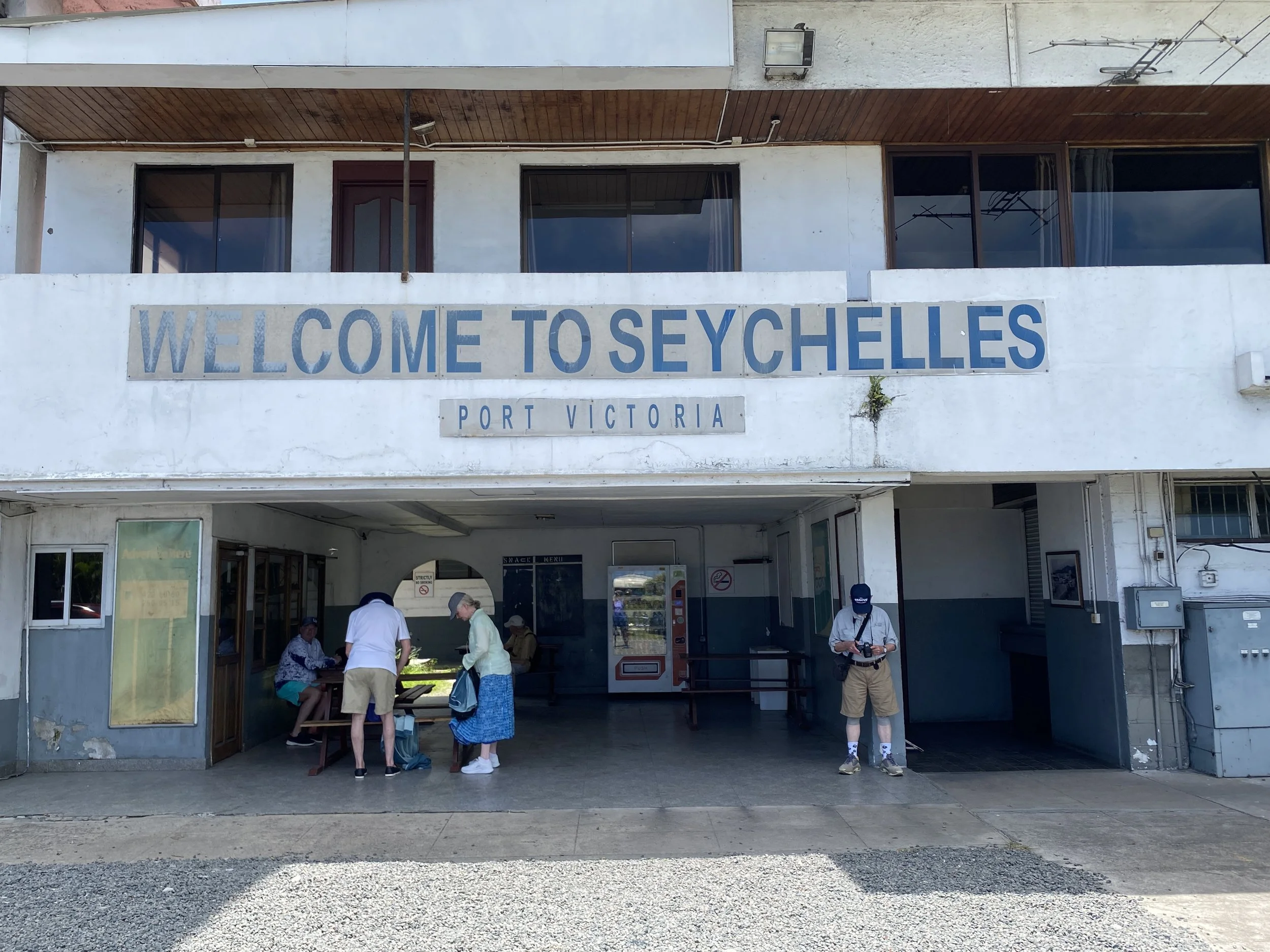
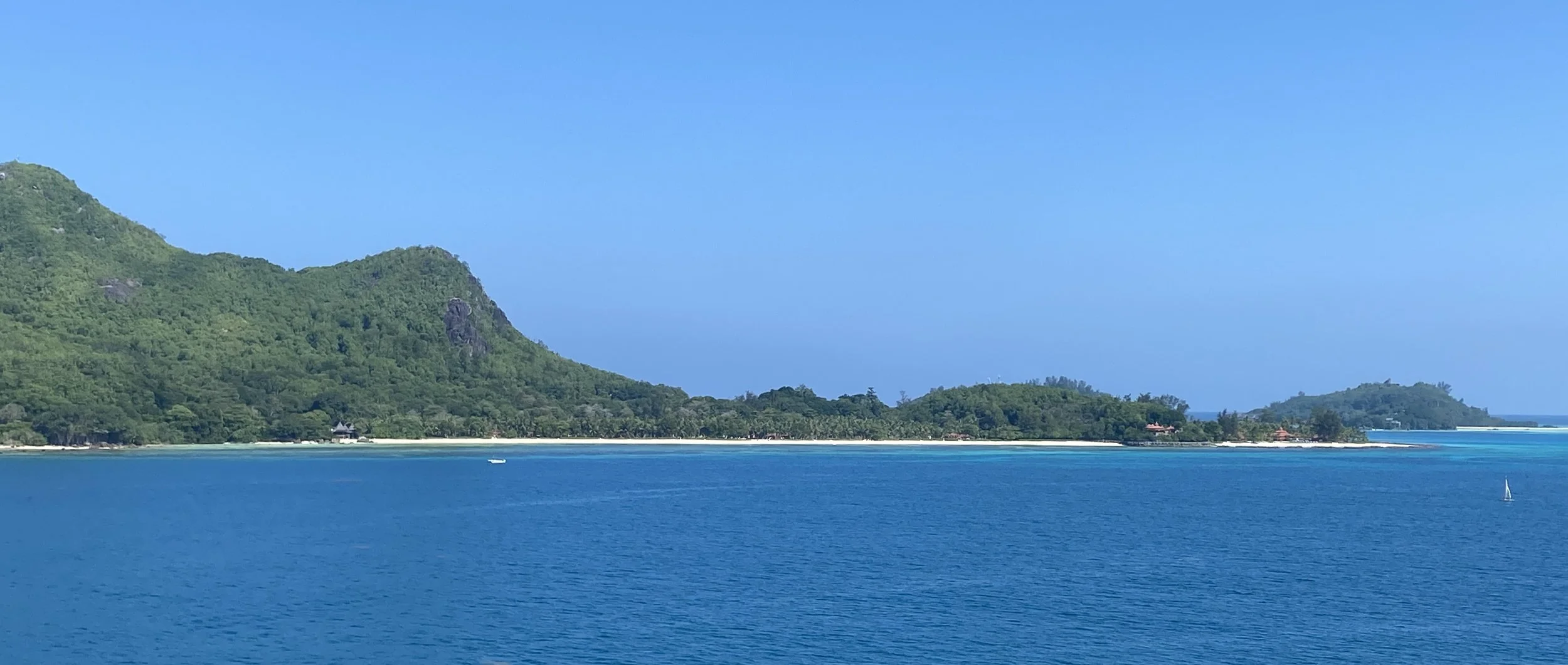
The Seychelles is an archipelago of 115 islands in the Indian Ocean, off the coast of East Africa. It is the smallest country in Africa. The capital city is Victoria and that’s where we headed.
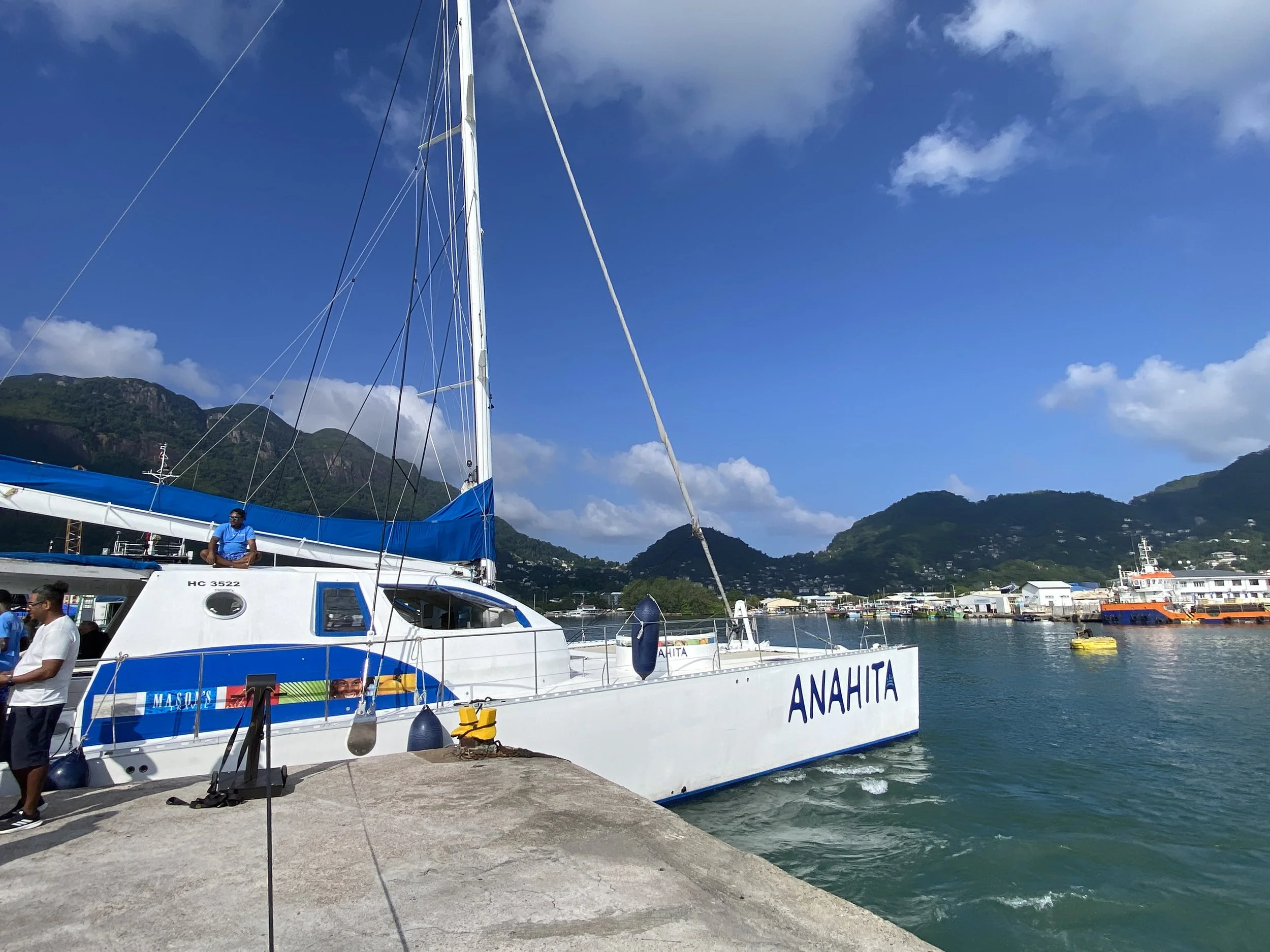
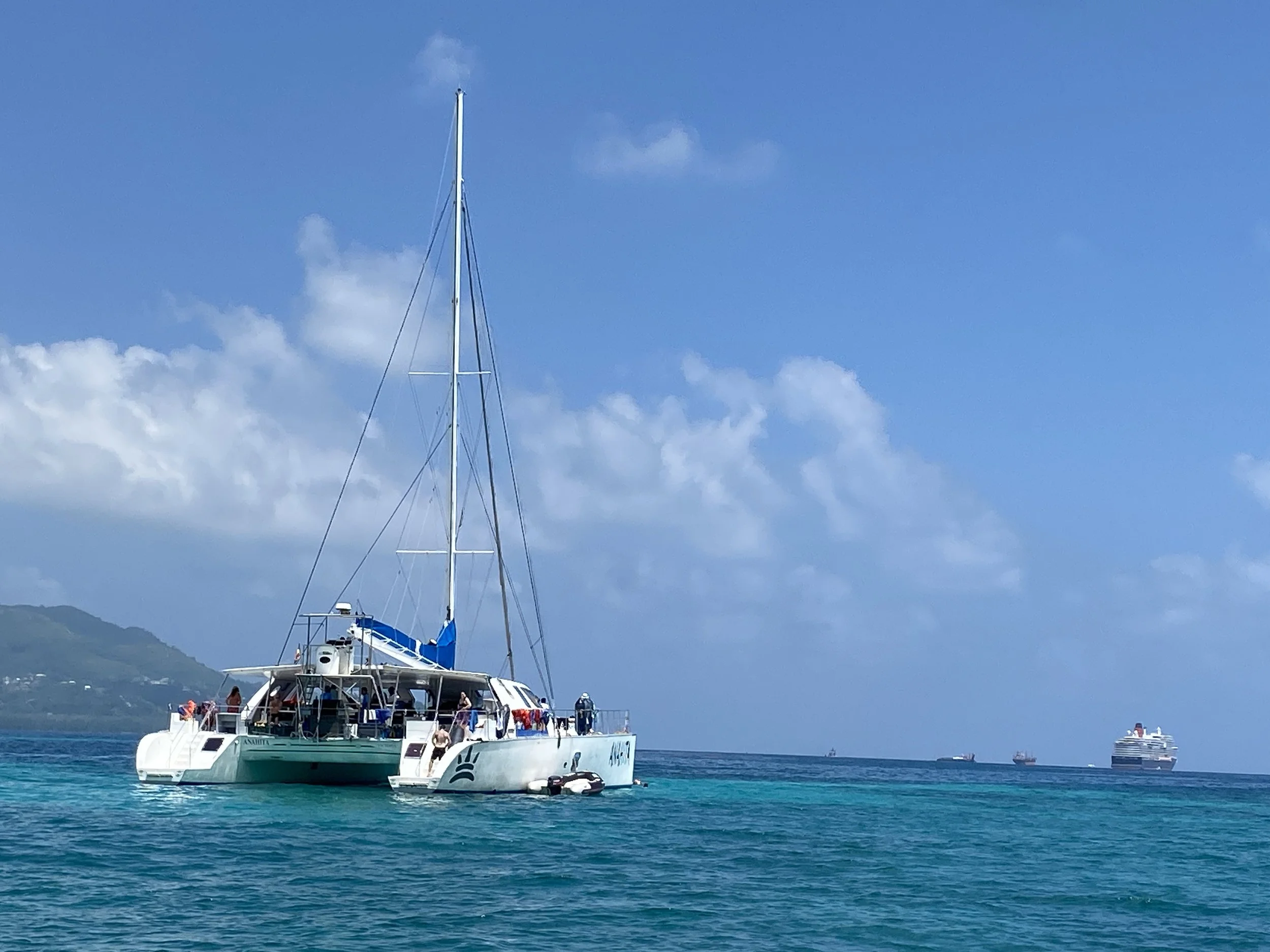
The Anahita in the Seychelles.
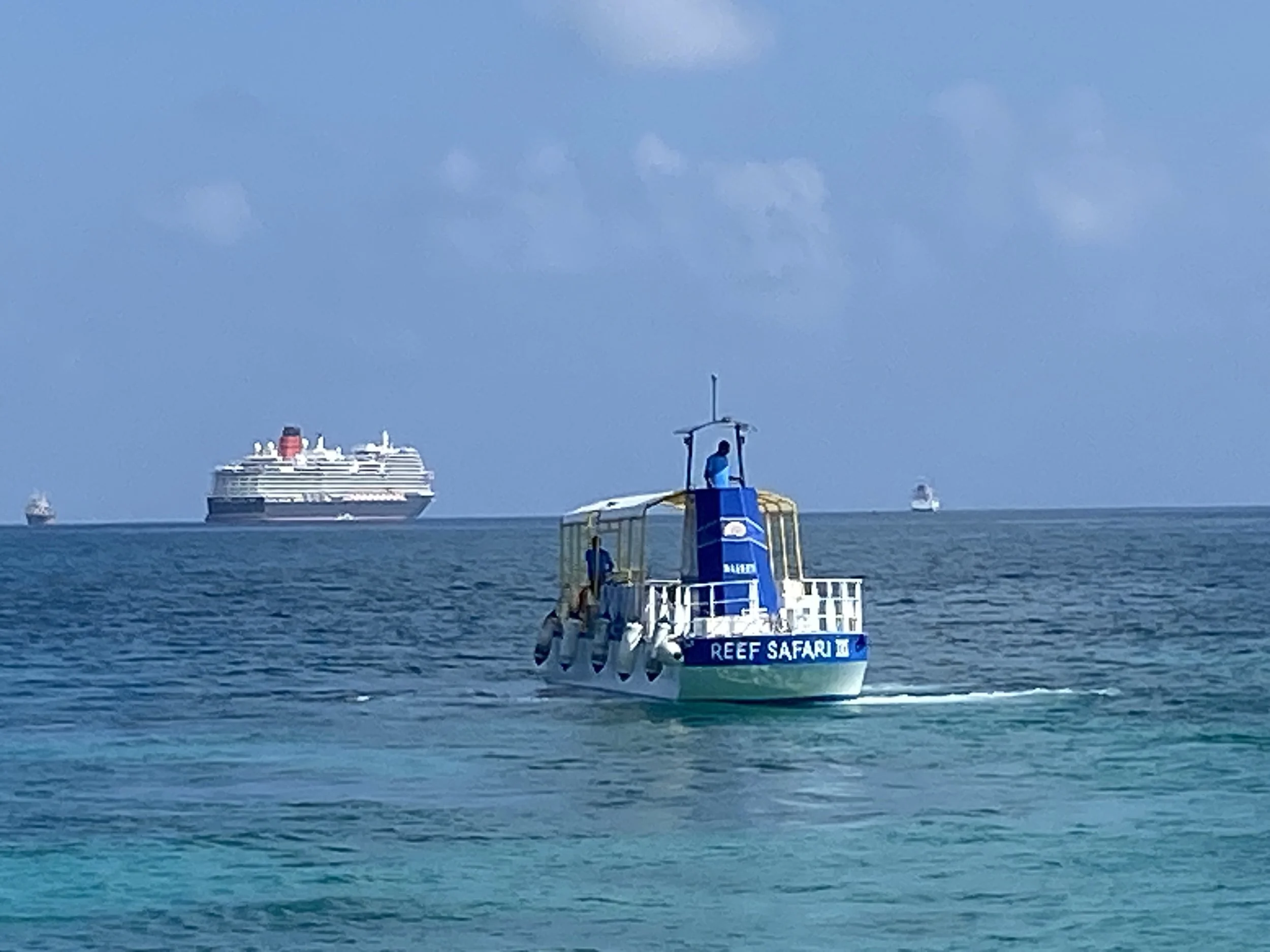
Two ships in one day.
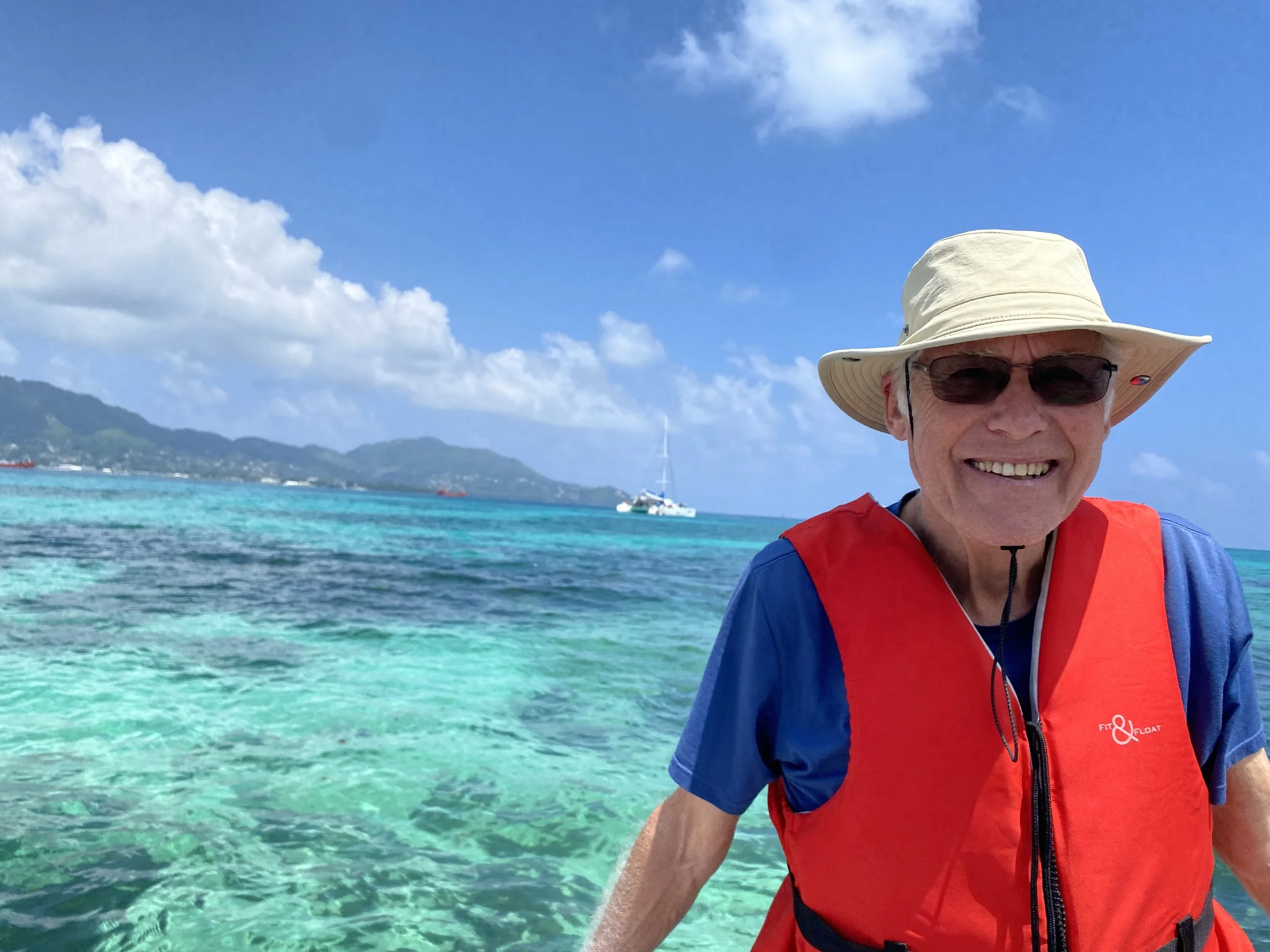
We decided to take a catamaran which took us to a submersible vessel which took us out to St Anne Marine Park. Kees doesn’t snorkel so this was a fun way for him to see the underwater world of clown fish, parrot fish, zebra fishes and many more. You just don’t want to be claustrophobic in these underwater boats. Then the catamaran took us to a beach for more swimming. The water was lovely blue and warm. Back on the main boat, the crew broke out in song, singing their hearts out while playing guitar, drums and bottles full of gravel that served as shakers. Fun!
It was nice to swim because it was very, very hot! Back on shore in Victoria we walked to an ATM and a grocery store.
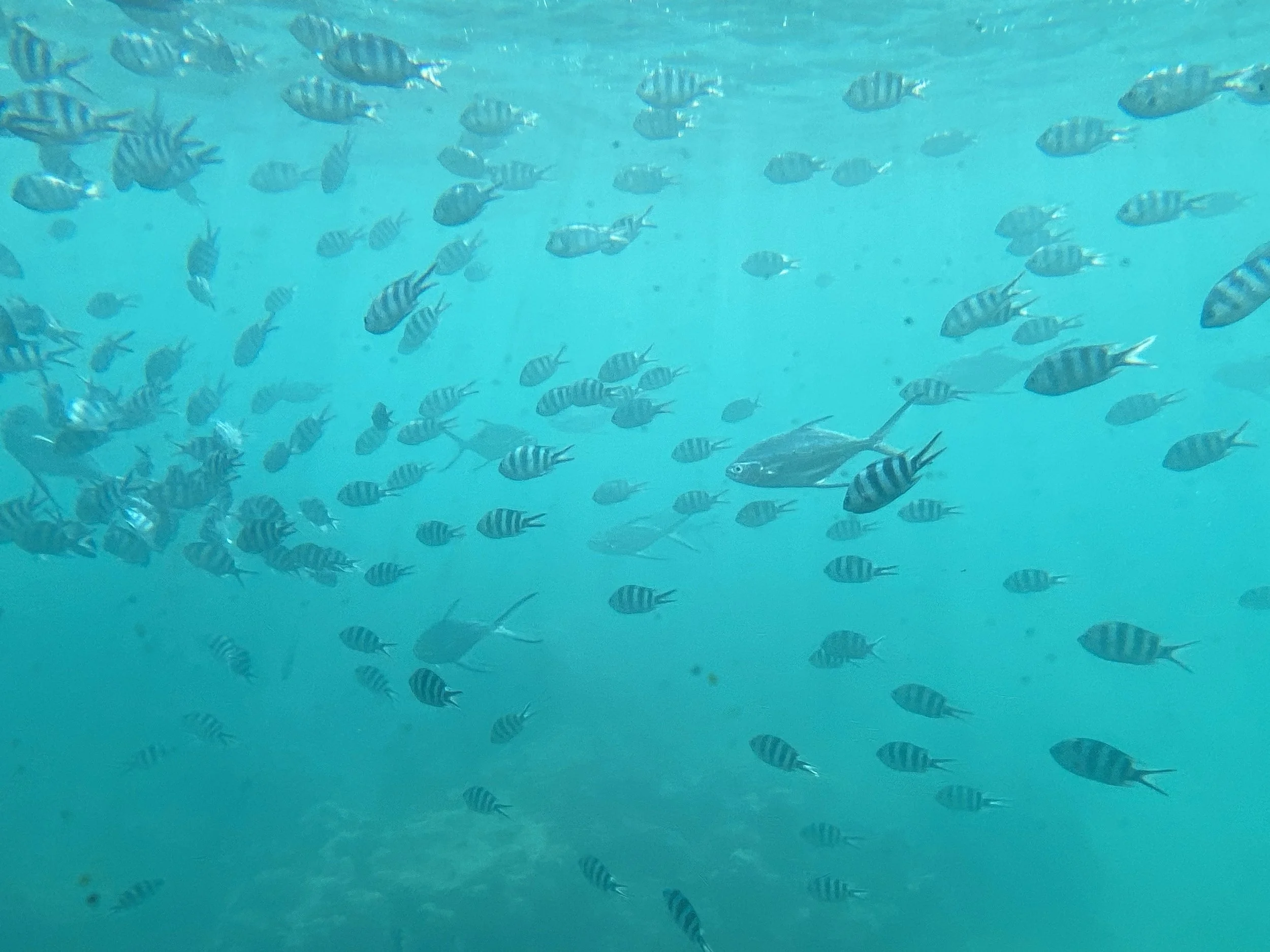
It’s like swimming in an aquarium!
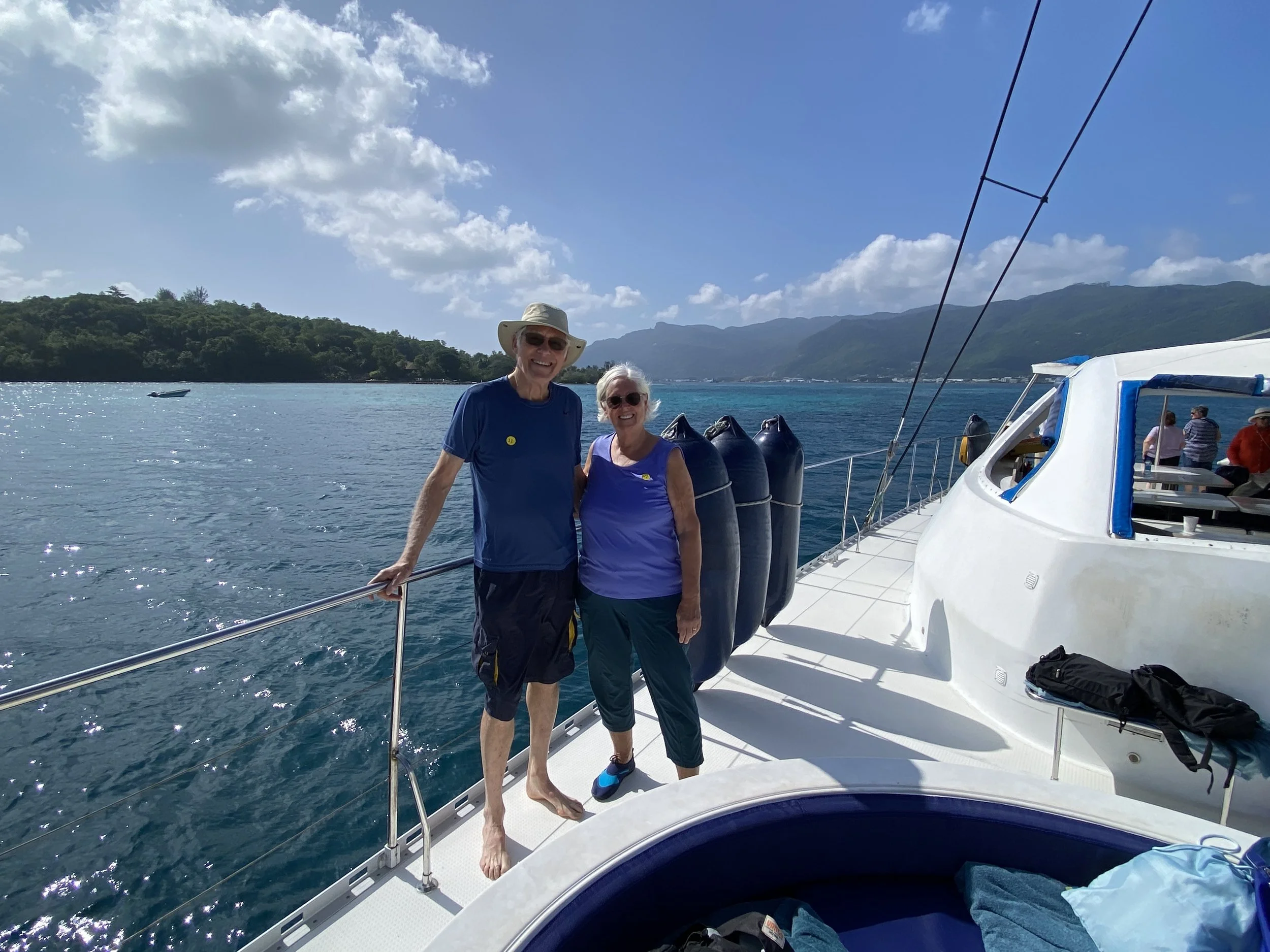
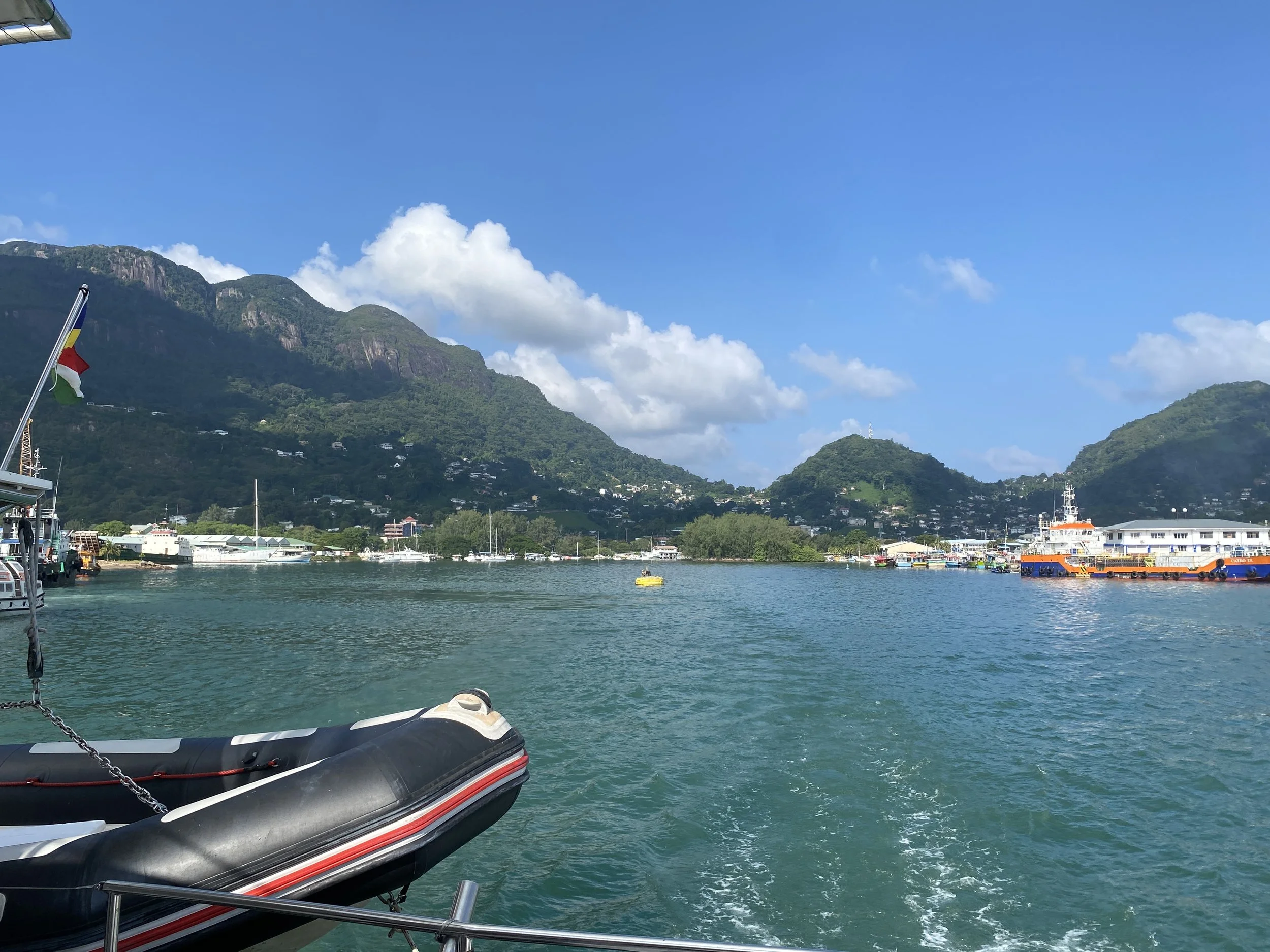
Victoria on the island of Mahe, Seychelles.
After the Seychelles we had 2 full days at sea during which we crossed equator back to the northern hemisphere en route to the Maldives. We can’t afford the resorts in the Maldives - even a half day on a beach in a resort is about 250.- USD p.p. Having just enjoyed snorkeling and swimming in the Seychelles, we decide that we’ll explore the capital city of Malé here.
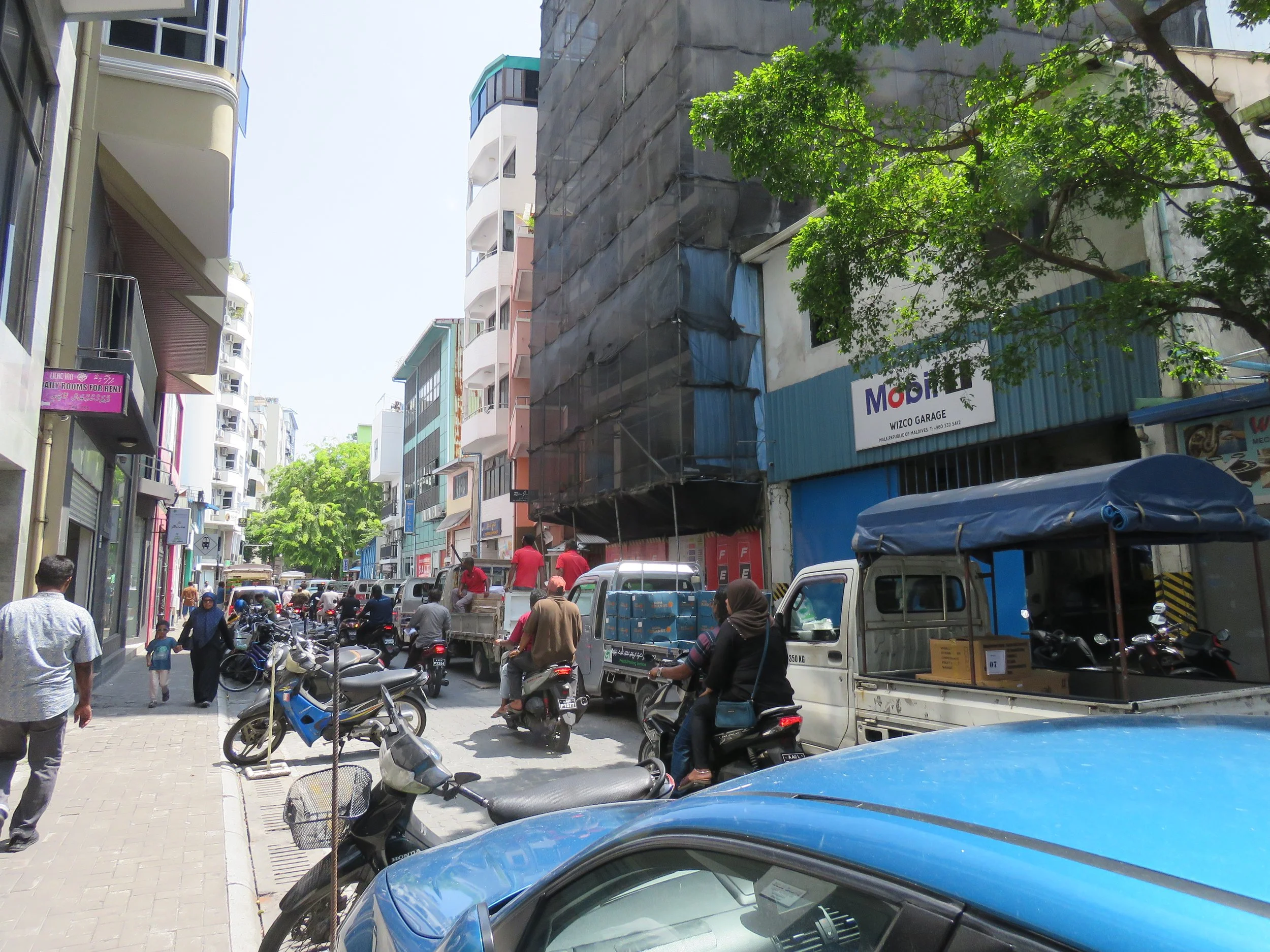
Malé, Maldives was completely, totally different from anything we had ever seen and read about the Maldives. Every advertisement for a resort in Maldives, had shown only white sand, bungalows on stilts and clear blue water… It seemed too idyllic to be true. I had once, actualy, applied on a “job” as librarian here. I think they give you room and board for a month in exchange for selling or shelving books: Barefoot Books.
Too idyllic perhaps, but also too expensive... 400.-, 800.-, even 1400.- USD per night in the various resorts… These are not islands but atolls, basically all at sea level and build on coral. As we approached Malé, the capital city and its adjacent airport connected by bridge, loomed out of the ocean like a bad dream. I actually rubbed my eyes, not believing what I saw…
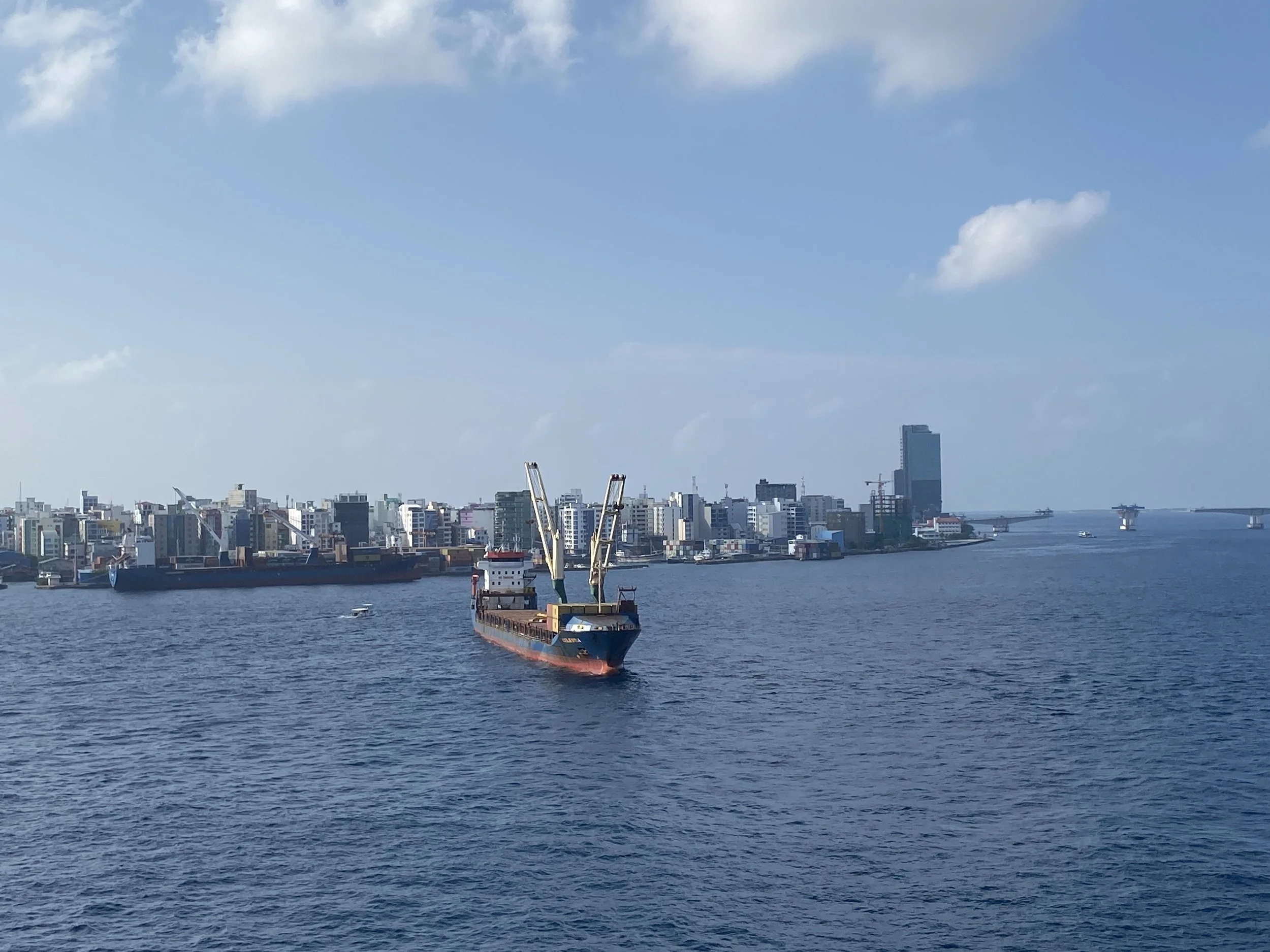
Malé, Maldives.
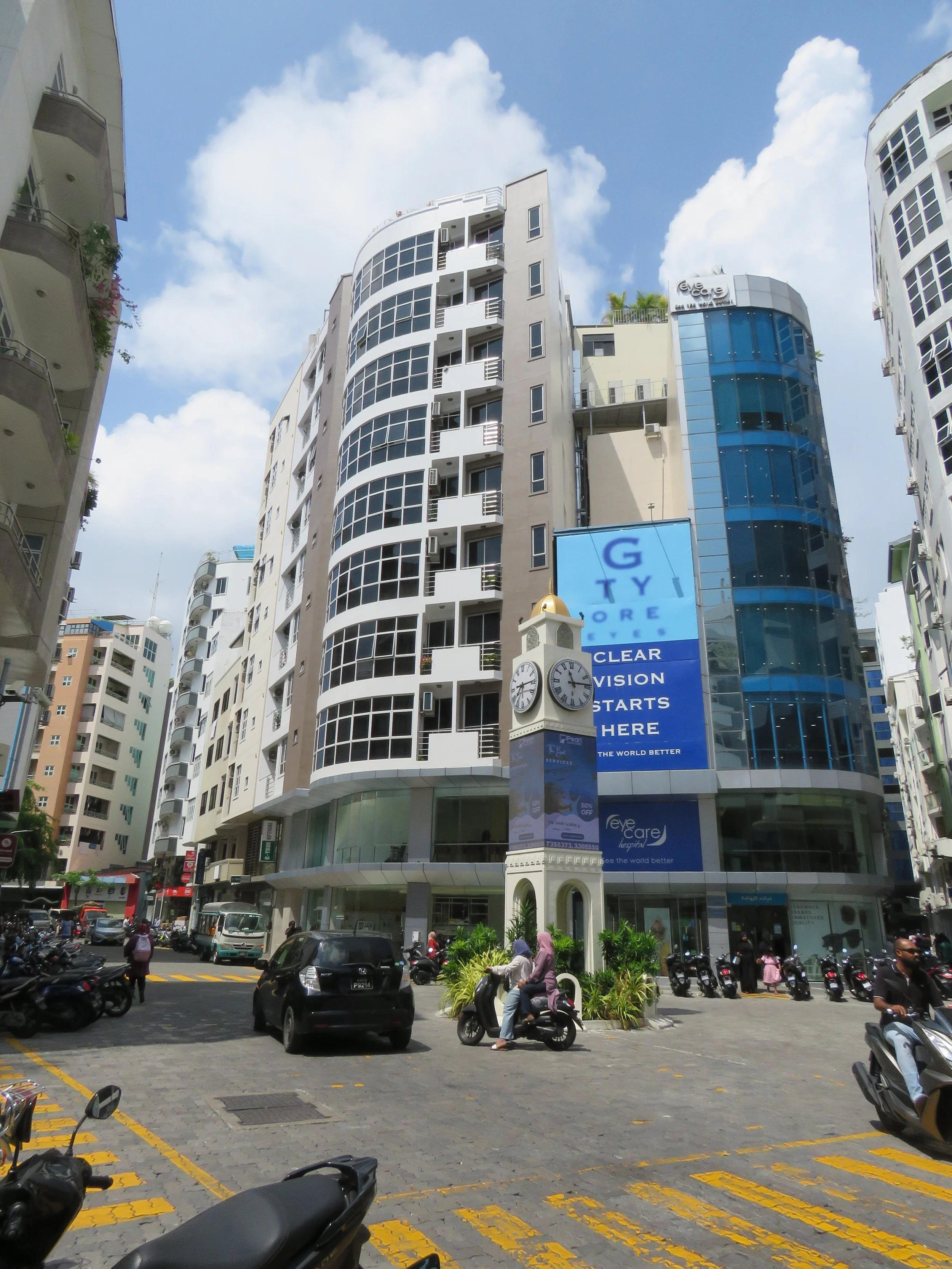
Malé, Maldives
There is no space left to even walk around the outside of the city. High rises rise straight from the water, clinging to the atoll as if it’s a liferaft. And in a way it is. The Maldives face threats from climate change, with 80% of its islands less than one meter above sea level, risking submersion by 2050 due to rising sea-levels. The construction of population centers and resorts caused incredible damage to the coral reefs. Waste management is a huge challenge especially with increasing numbers of tourists. And even for this remote ‘paradise’ governments issue this warning: Exercise a high degree of caution in the Maldives due to the threat of terrorism. We walked around Malé in a bit of a shock. It seemed surreal to be on an atoll in the Indian Ocean, chockful of highrises, narrow streets completely clogged by trucks and motorbikes… It was a rude awakening to what I had always pictured as paradise…