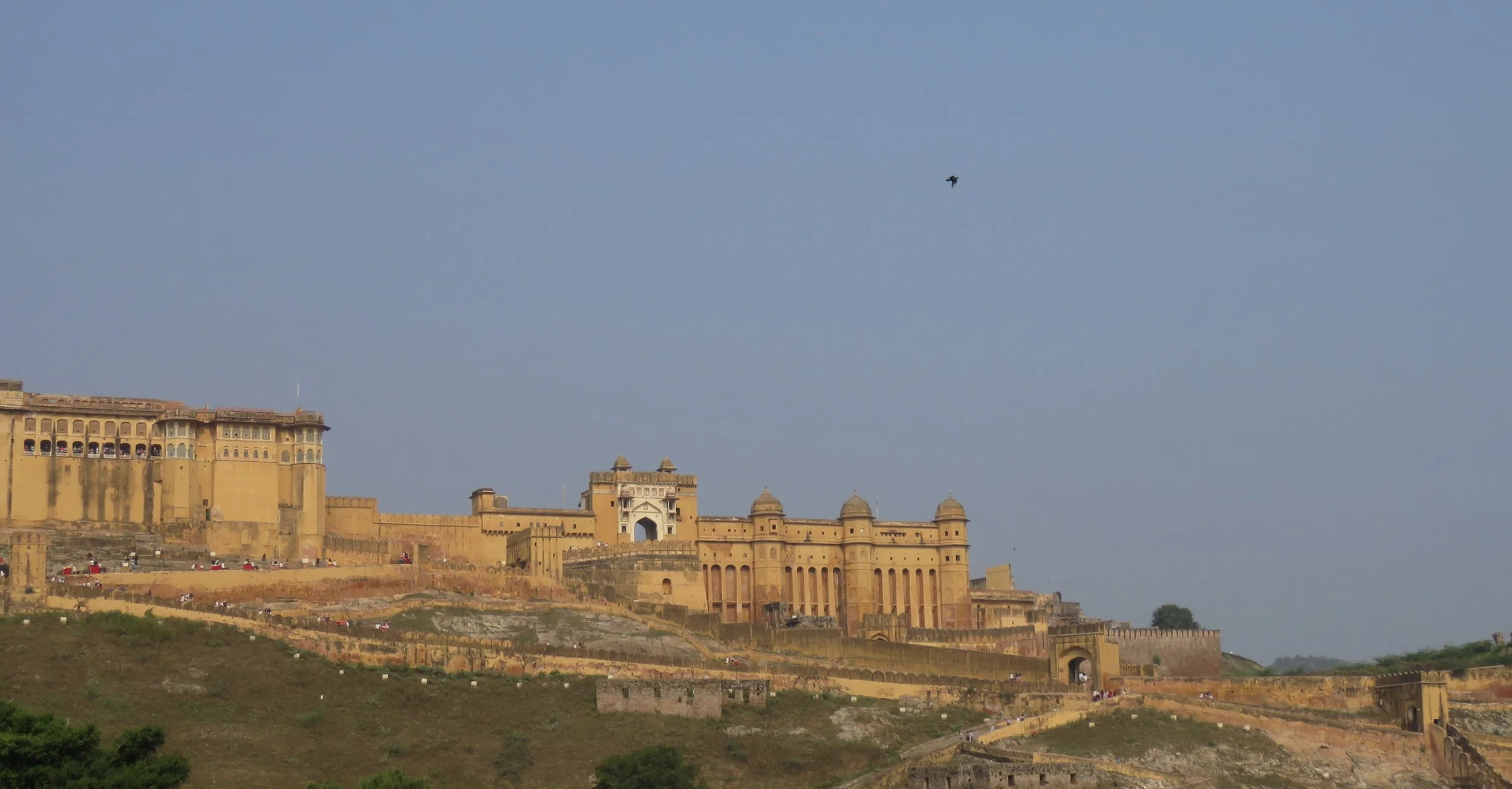
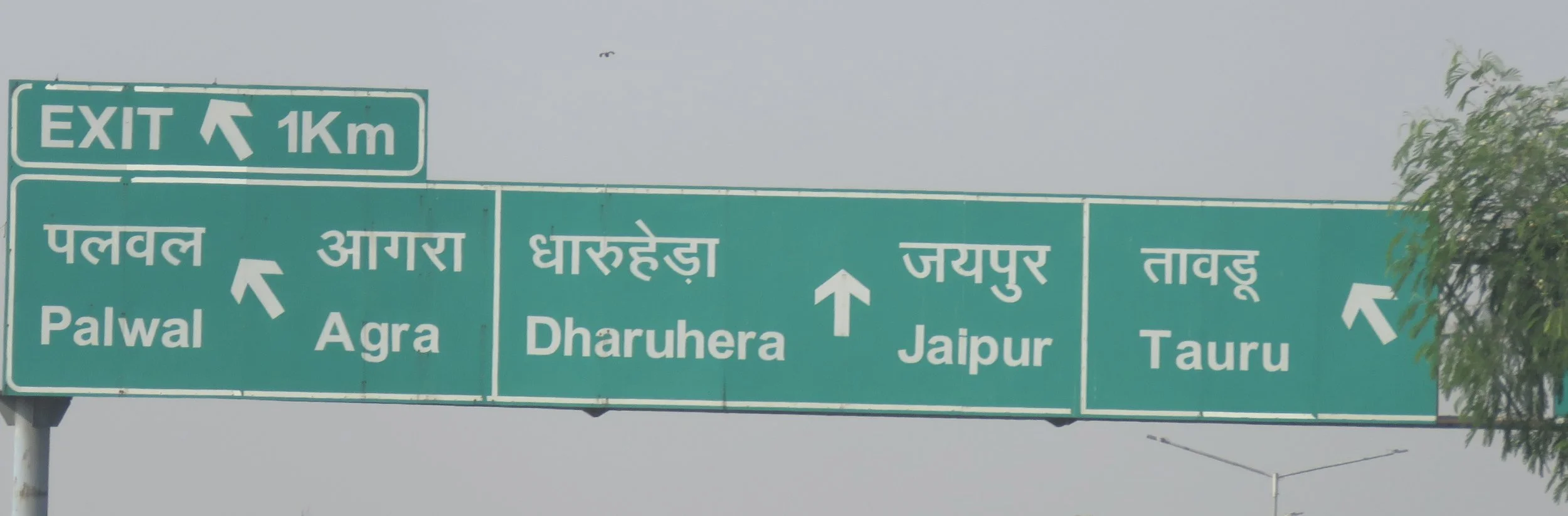
After a good night sleep in the wonderful Vivaana Culture Hotel , we continued our tour of India’s Golden Triangle. Nothing fazed our great driver, Guru Singh: fly-overs, crazy traffic, cows in the fast lane… But there were also newly paved and nearly empty roads today on our long drive to today’s destination: Khimsar Fort.
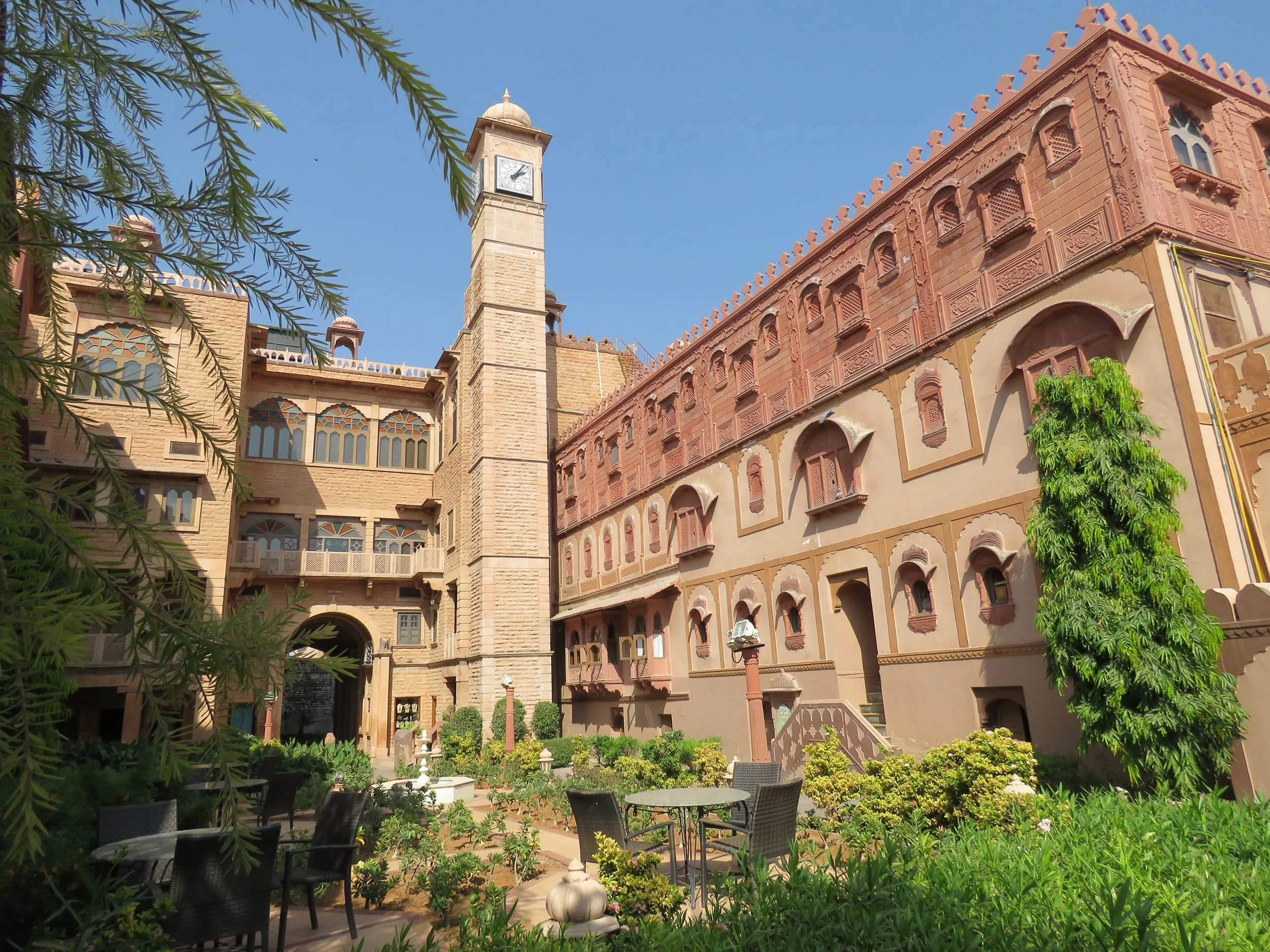
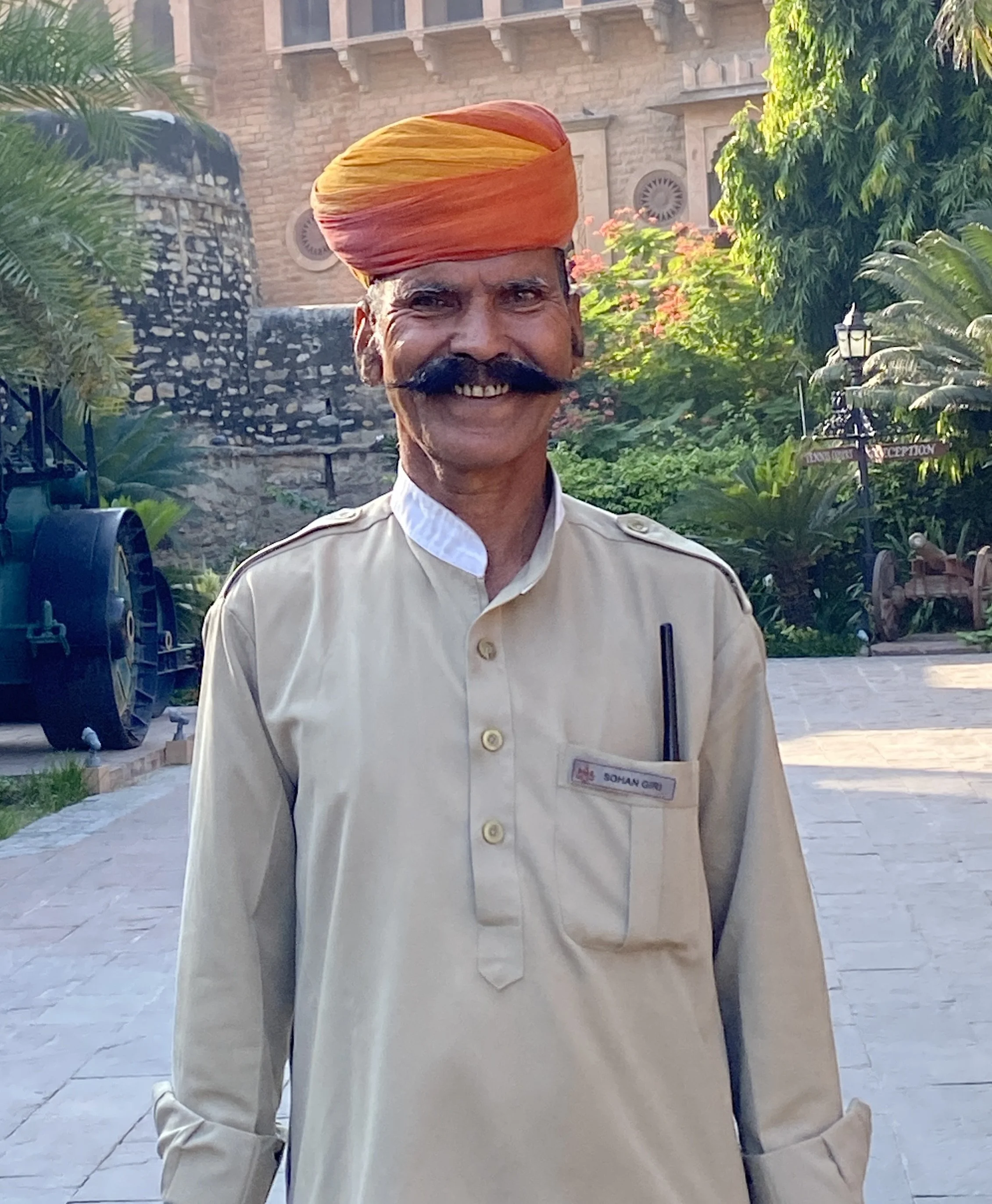
This 15th century royal fort was built by Rao Karamsiji, son of the Maharaja of Jodhpur. The website told us that “The heritage palace radiates elegance, honour and luxury. The Royal Family of Khimsar is delighted to host you in their ancestral home, which is a true reflection of their legacy.”
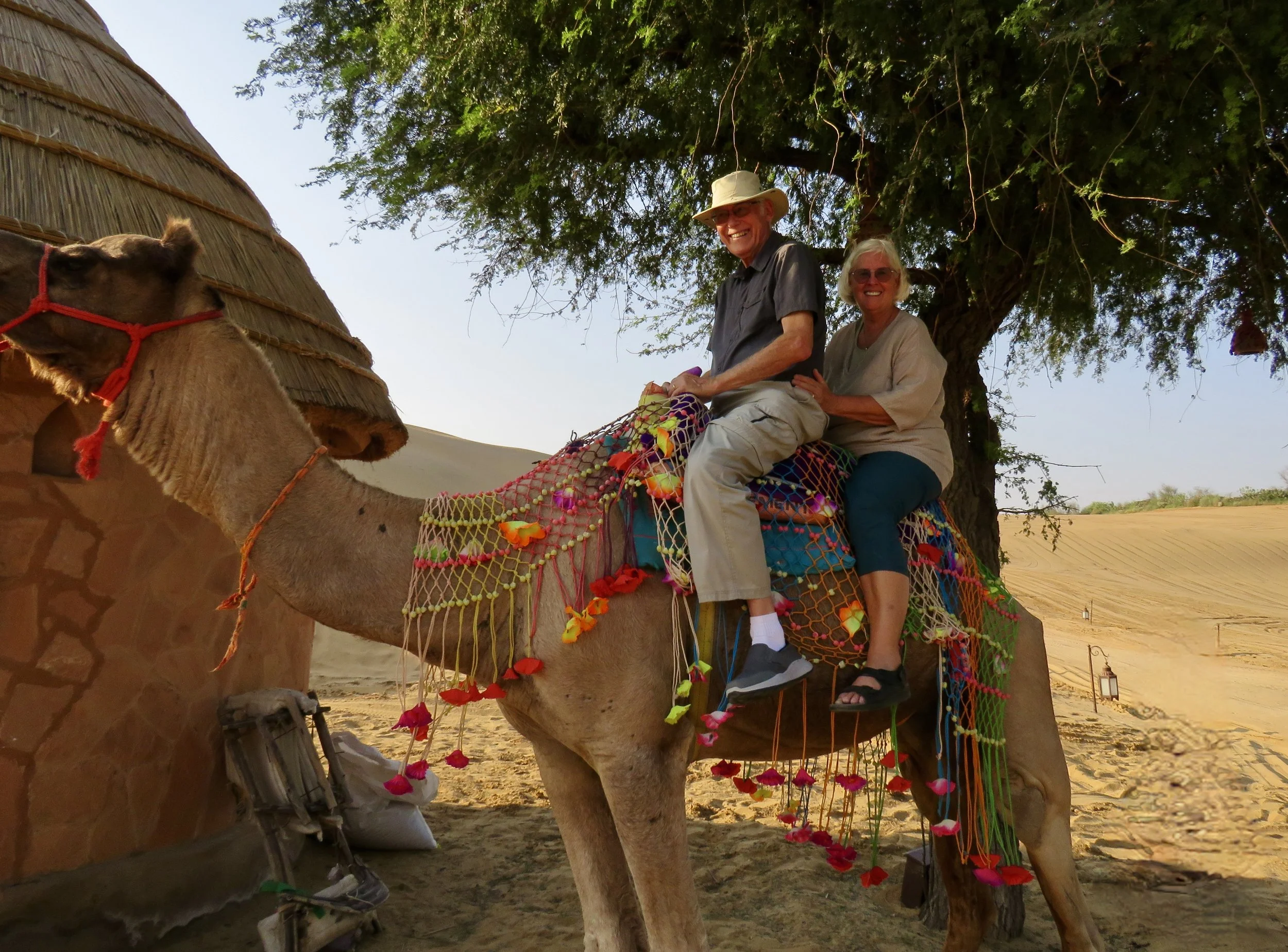
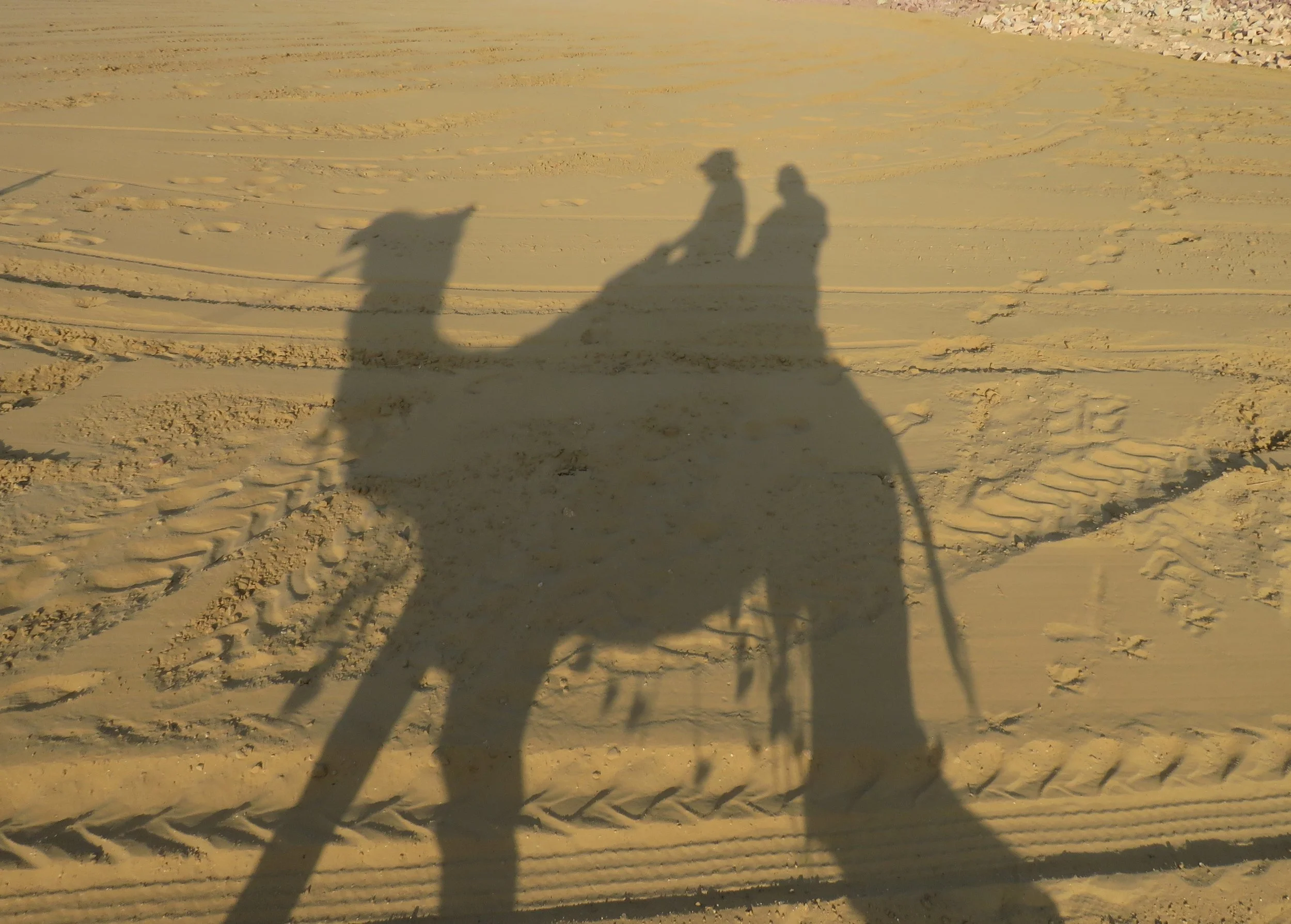
But what completely floored me was the drone footage of the fort in which we would spend a night! I felt it would be a waste of time to sleep in such a beautiful place. We walked the grounds, explored the watch towers, and visited the nearby Sand Dune Village. And while the Fort Hotel couldn’t have been better, we found the Village a touristy trap. It is a very small plot of sand, grandly labeled a desert. It was dotted with little huts you can rent. And of course, it offered a camel ride. Sharing a camel and wobbling around the sand box was not exactly our cup of tea. But It was Kees’ birthday and how often can I treat him to a camel ride on his birthday? So we did have our camel ride in India. Last year on this day I treated him to a traditional kava ceremony in Fiji… I wonder what next year will bring?!
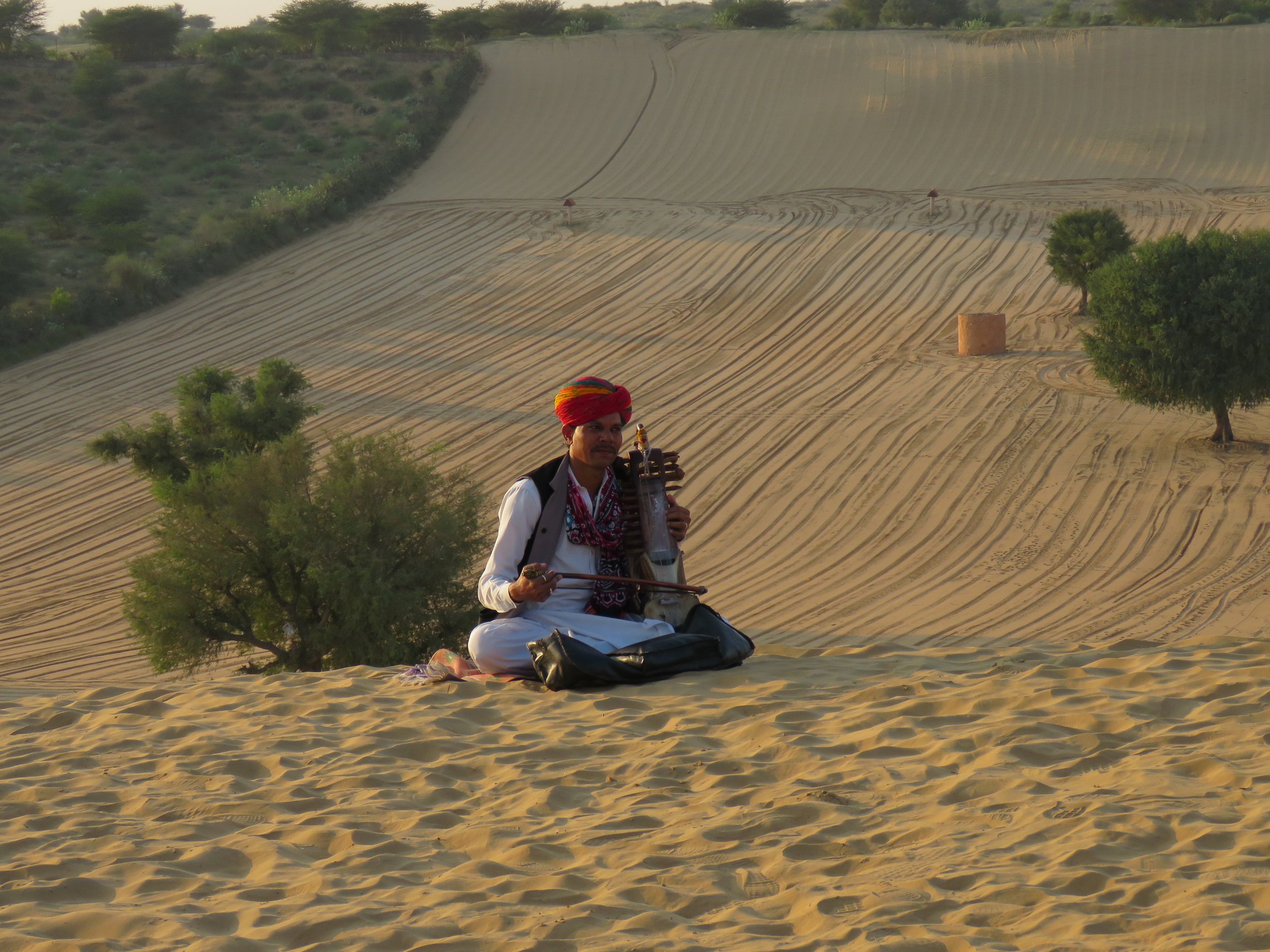
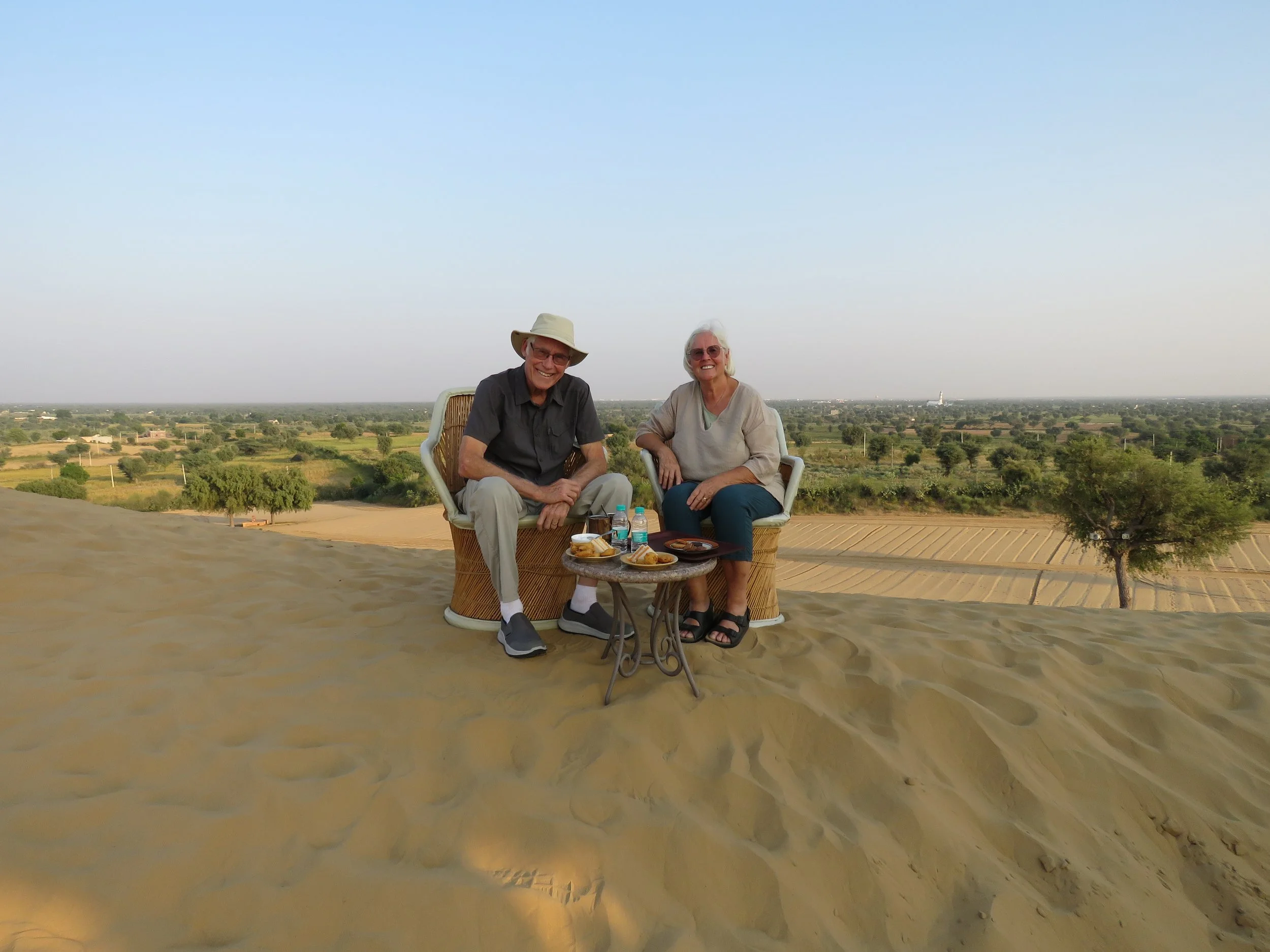
And we did have our cup of tea, too! High on a sand dune overlooking the mini desert, we were served tea and spicy cheese sandwiches. The nicest part was to watch the sun set while listening to the mournful sound of a traditional Indian sitar.
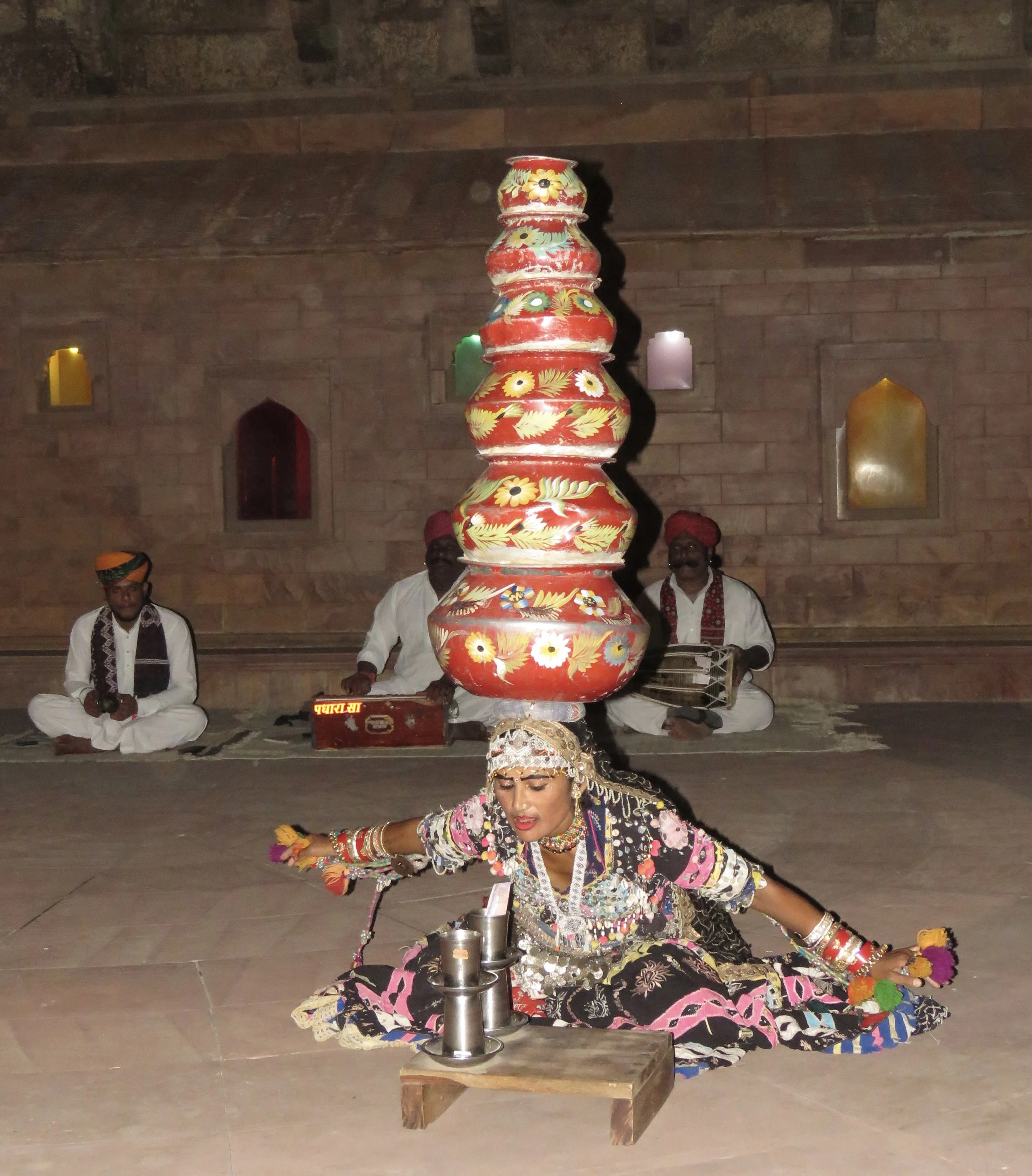
After dinner, we strolled the grounds to see traditional dances and a magic show.
Breakfast the next morning was in a gorgeous dining room. The food was not very good but the ambiance made up for it.
Then we were off to Jodhpur, the city famous for its beautiful horses. And for which jodhpurs, the typical jockey pants, are named. The horses of Jodhpur are the unique Marwari breed, famous for their distinctive inward-curving ears, spirited nature, and historical role as Rajput warhorses for royalty, symbolizing grace and strength in Rajasthan's heritage.
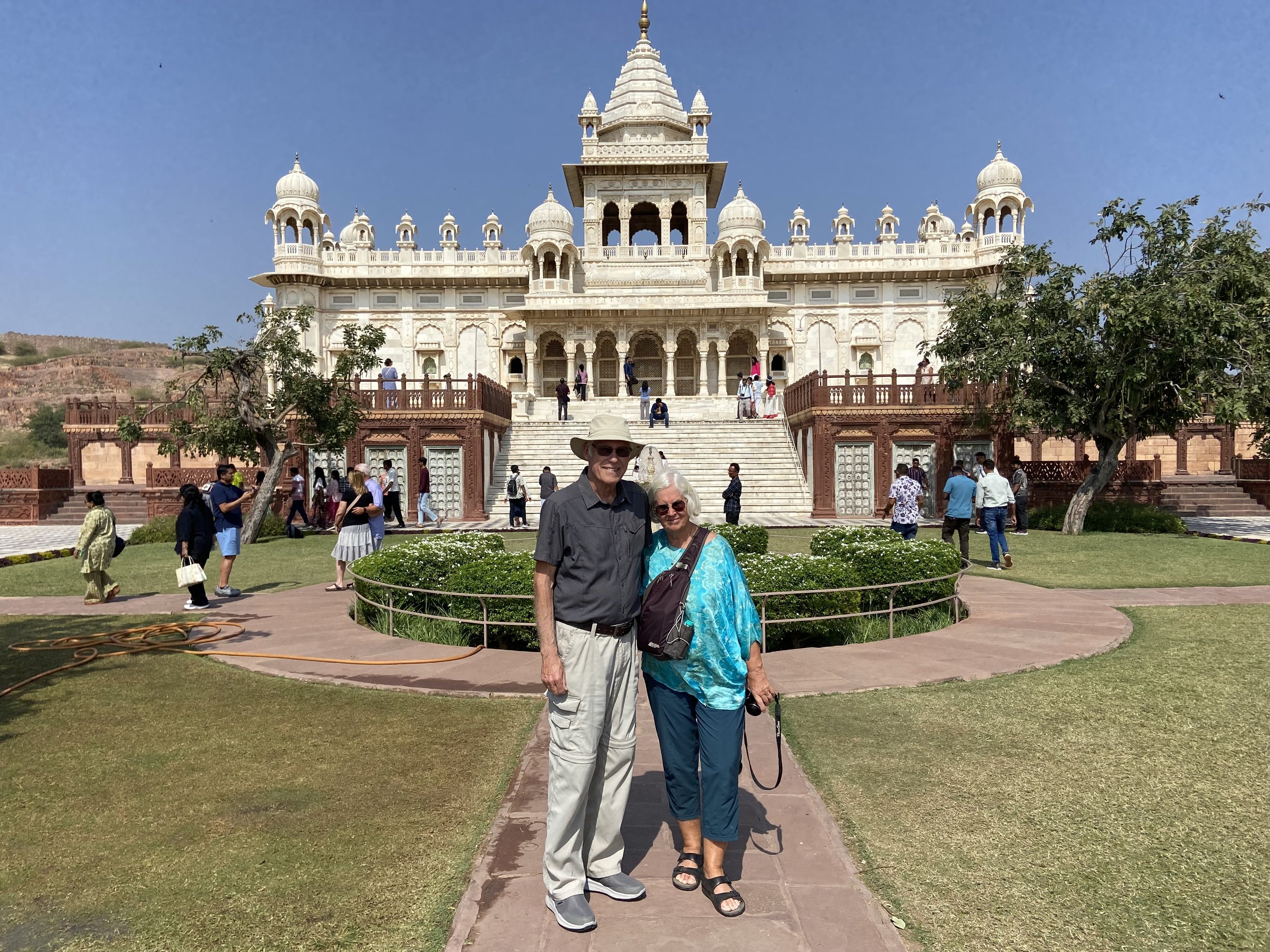
With our local guide, Guldip, we visited a white marble Mahal (mausoleum) for the maharajahs and learned fascinating tidbits. Hindu’s need water nearby to wash after a cremation. The ashes need to return to all three elements of earth, water and sky because Hindi believe this breaks the cycle of life after life and lets people into heaven when they are cremated. The aim is to achieve nirvana - to go to heaven and that happens when the body’s ashes return to water, earth and sky via fire. When I asked our guide if the aim was to achieve afterlife, he said, “Oh no! Life is too harsh and difficult. We hope to achieve nirvana! But karma keeps us bound to rebirth.” Fascinating! This is why I love to meet people all over the world and learn from them.
We also asked about the infamous Indian Caste system. Does it still exist?
Most people we asked said vehemently no! However, especially in smaller cities and the countryside it does still seem to exist even though it was abolished by law in 1950. Caste still seems to limit your choices of whom to marry and your success in life. However, in the cities we were told, “He belongs to the carpenters caste”, or “He is from the plumbers caste.” Which seemed to indicate more common levels of employment. Brahmin is the highest caste, or social class. This includes preachers; then the warriors, then the business men and finally the cleaners and workers. So much more than merely a social order. Interestingly, the first group are all vegetarian, the second are not. And everywhere, restaurants have signs proclaiming they serve vegetarian food.
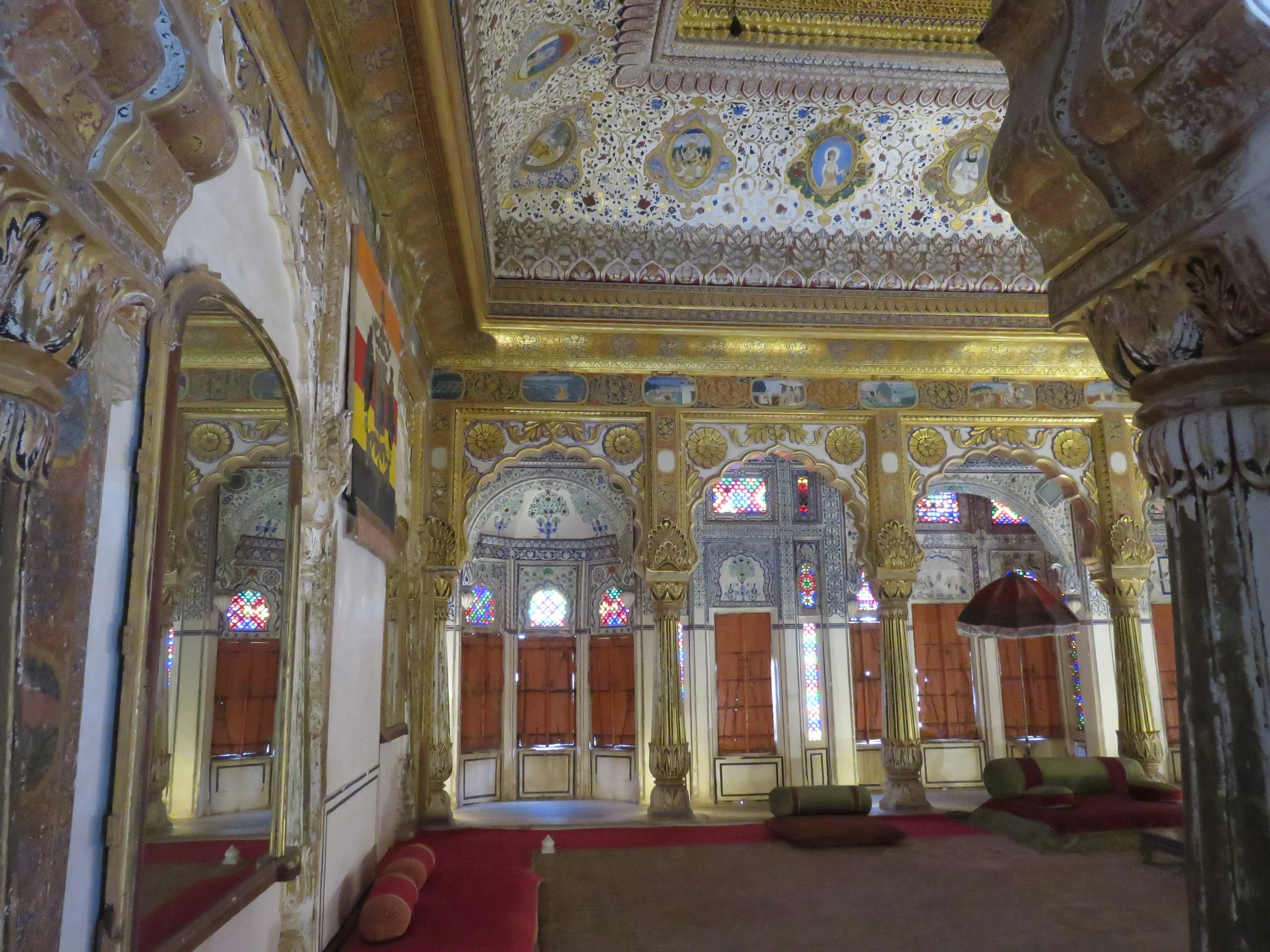
Mehrangahr Fort
We visited the crowded Mehrangahr fort in Jodphur, dating back 500 years. Perched high on a hill, it overlooks the blue city. Lots of palanquins, seats for on elephants, were on display. We wandered the hallways and vast rooms with amazing woodwork, mirrors and ornate ceilings but not much furniture like European palaces. Because we were here at the tail end of Diwali, it was crowded with families and quite hot.
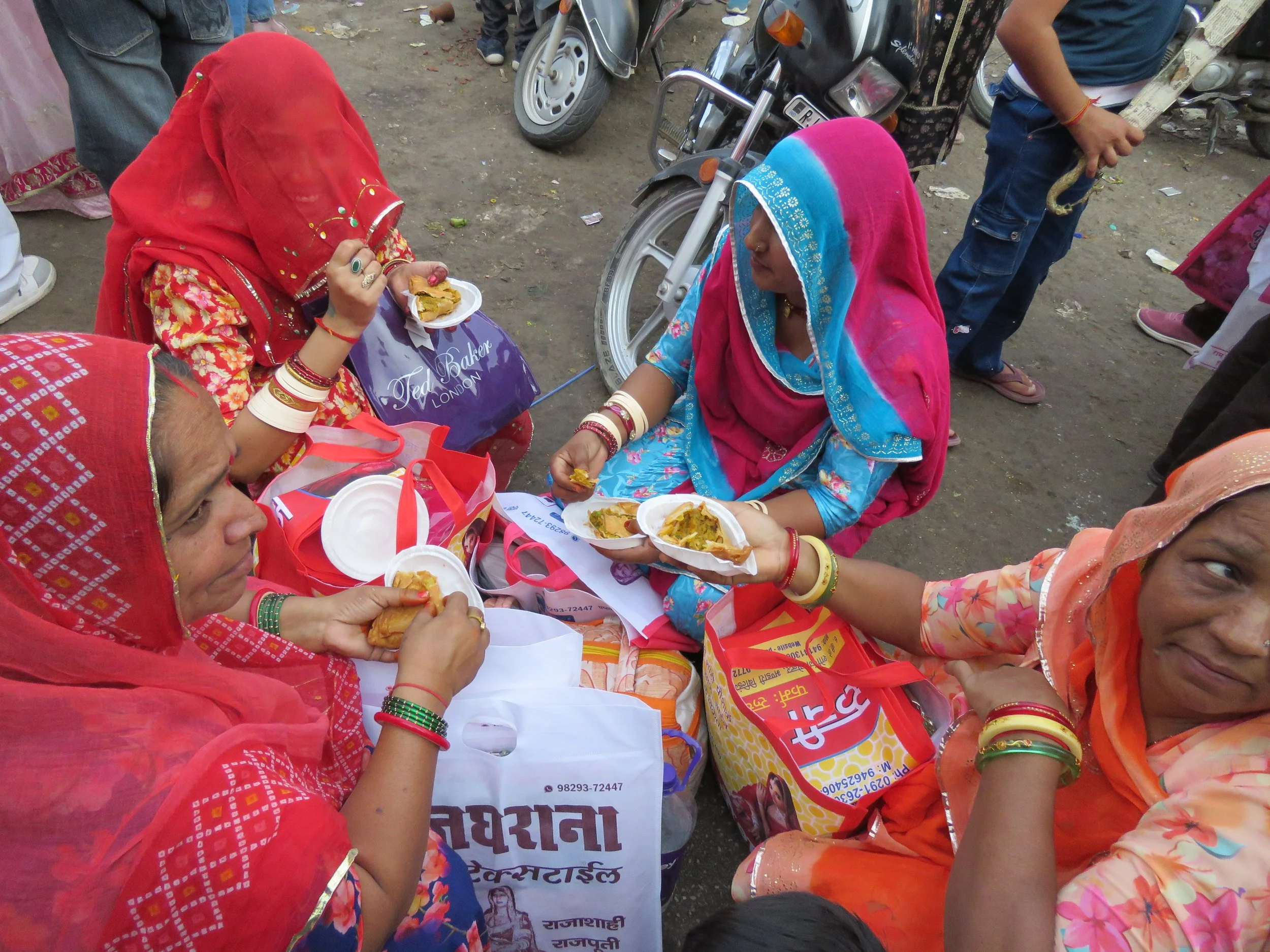
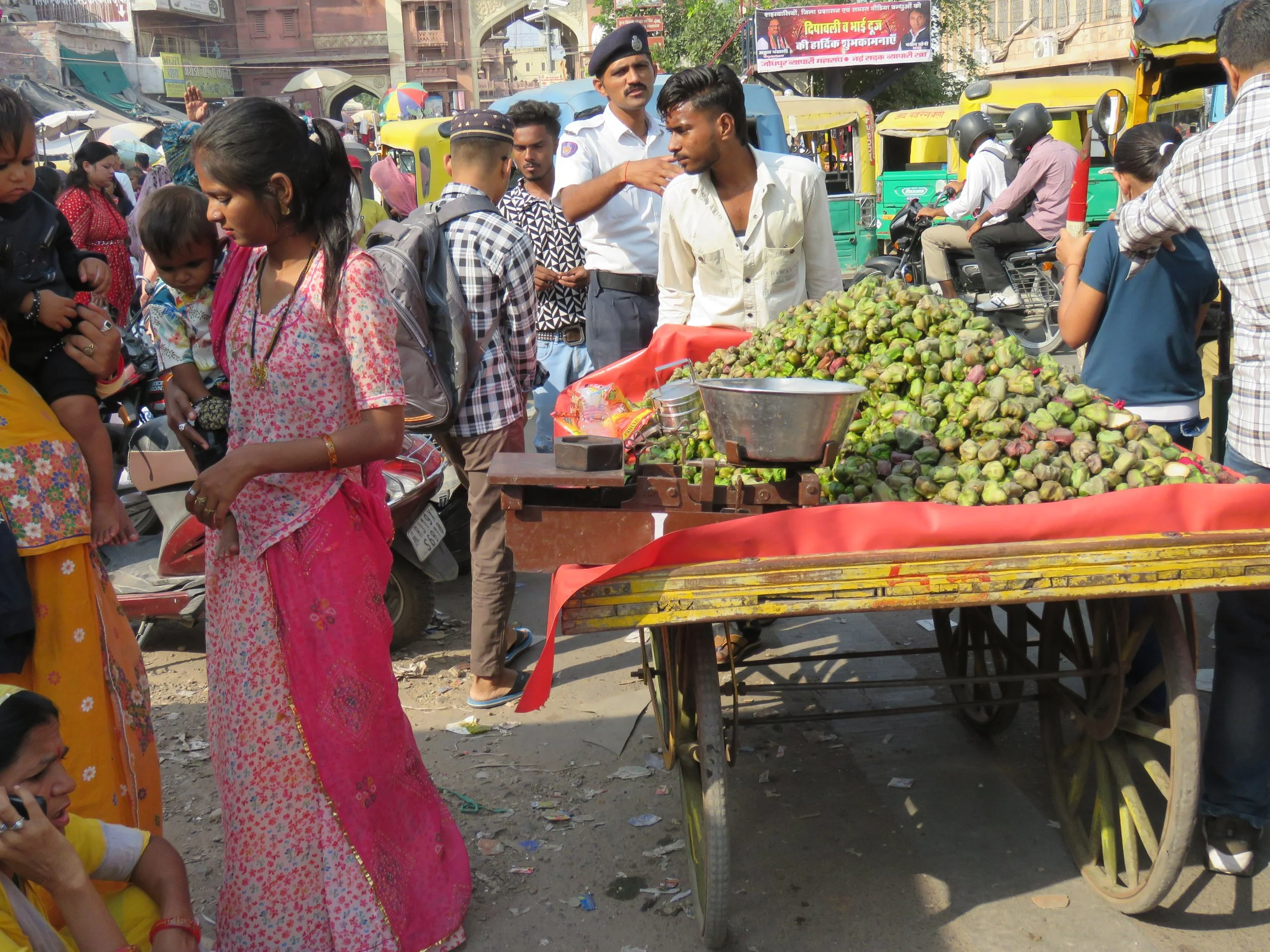
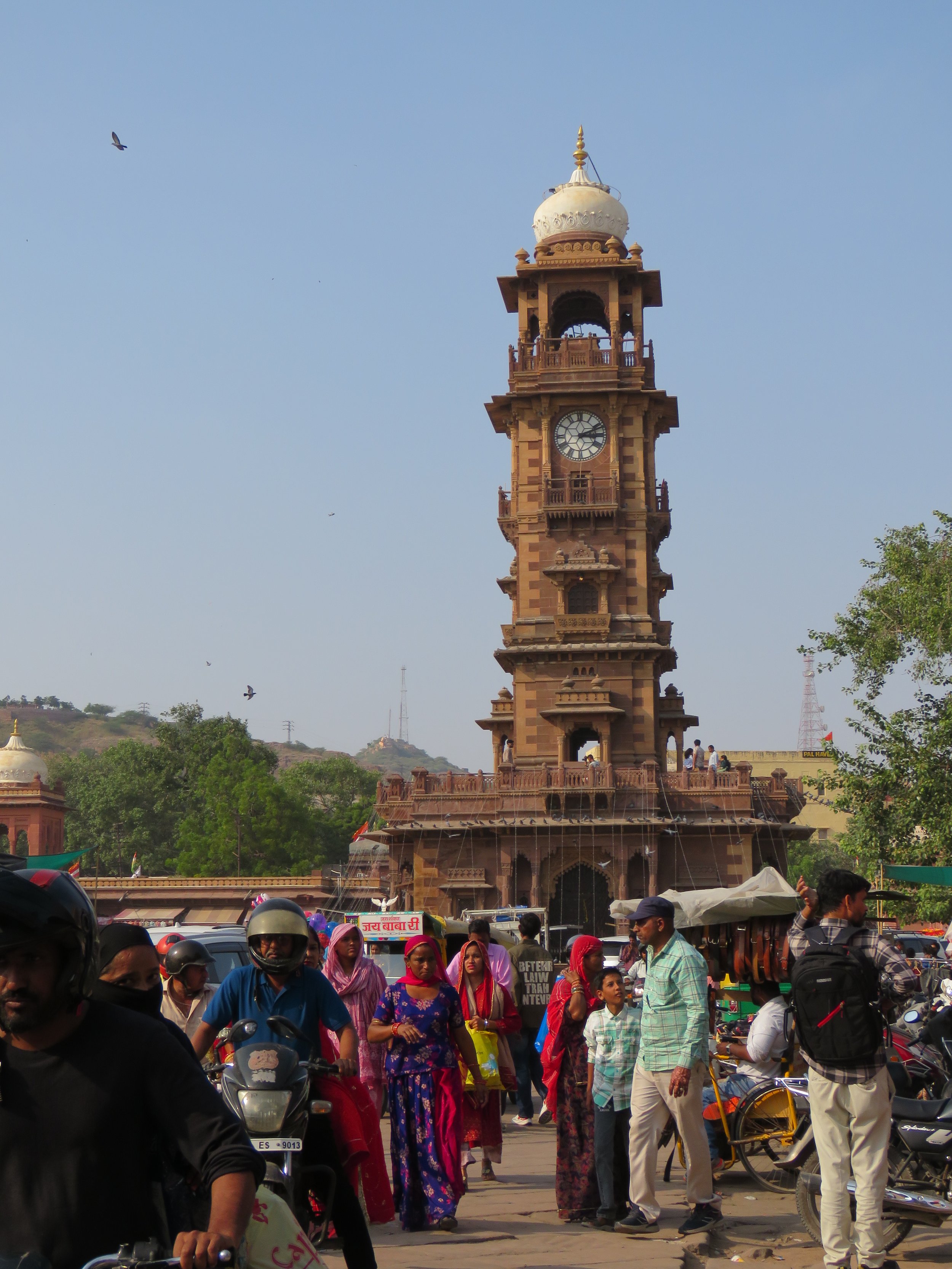
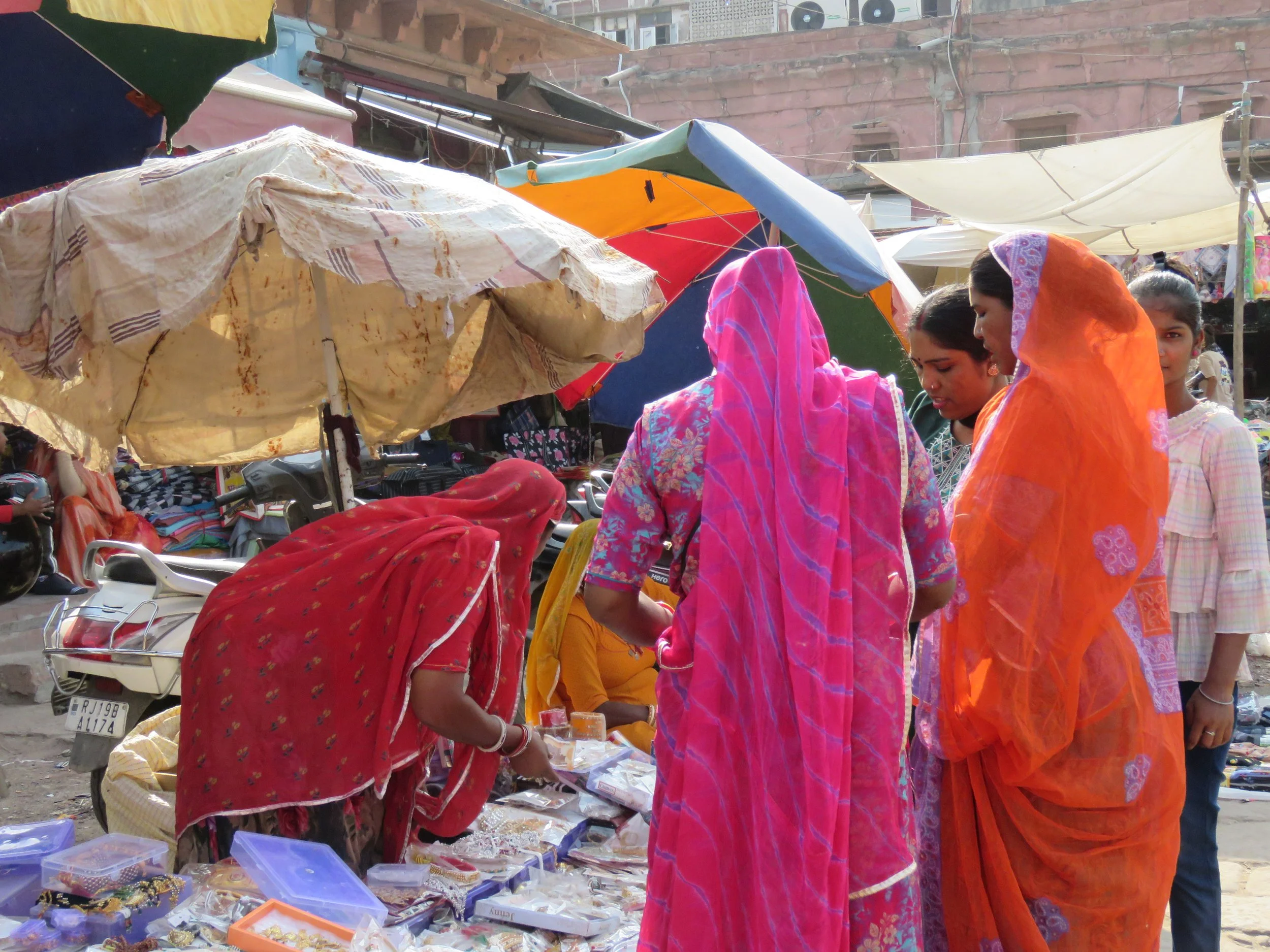
My favourite time was to just wander the crazy busy market downtown with its distinctive clocktower. We slurped the best mango lassi anywhere and strolled through the Fabric market streets, admiring shops with baskets of rice, vegetables, nuts, and fruits. It was packed but the people were so friendly, the red and orange saris so colourful, that it was a feast.
That night, we stayed in a lovely hotel called Ratan Vilas. We had another gorgeous, spacious room and swam in a quiet pool surrounded by greenery. The wide veranda was decorated with chalk diwali drawings and candles and the court yard was a perfect place to sit for dinner. A true oasis in the middle of a bustling city. And tomorrow? Tomorrow we will finally see what we came to India to see…
RESOURCES:
We booked our entire trip through VACATION INDIA.
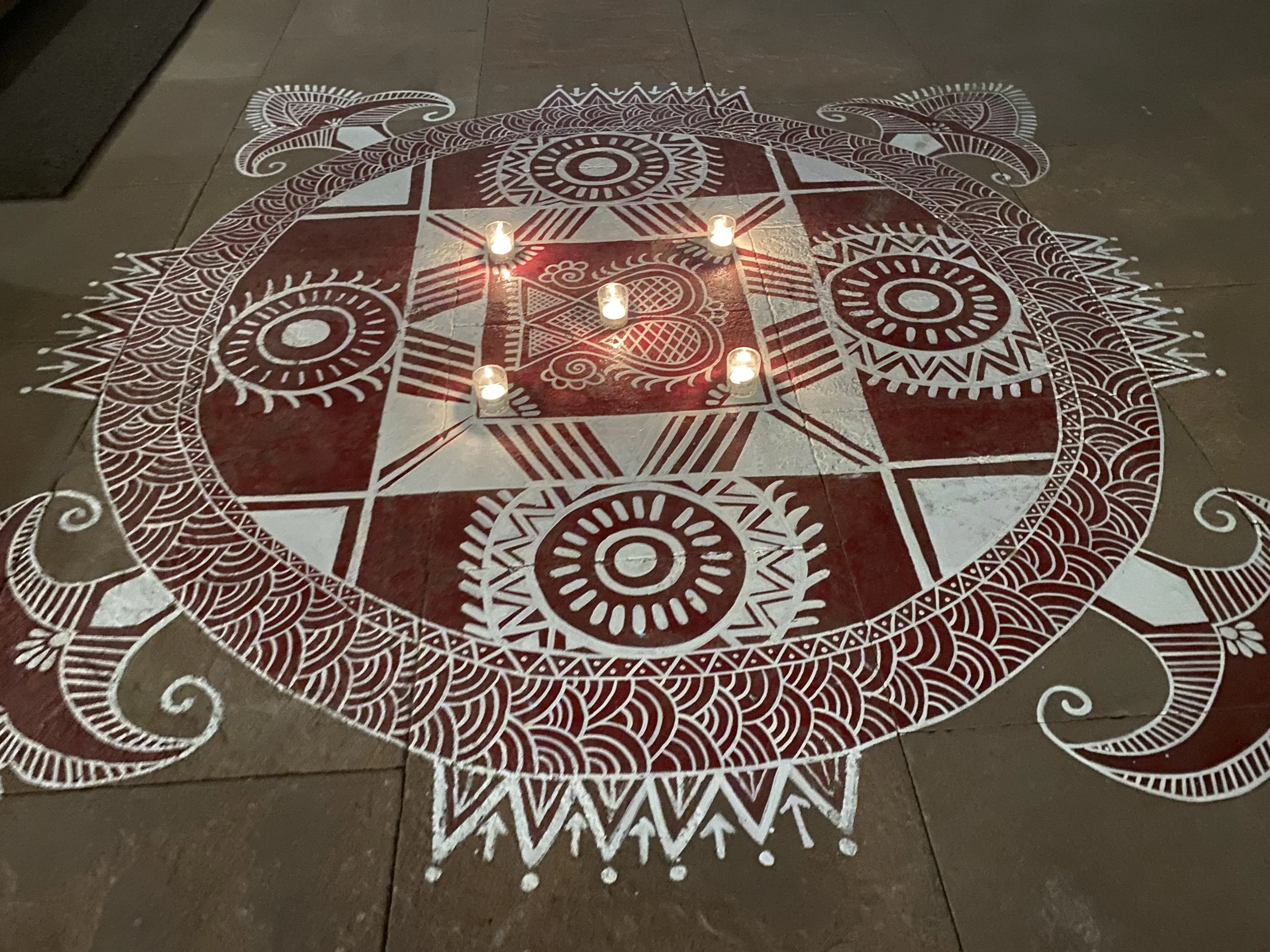
Happy Diwali!