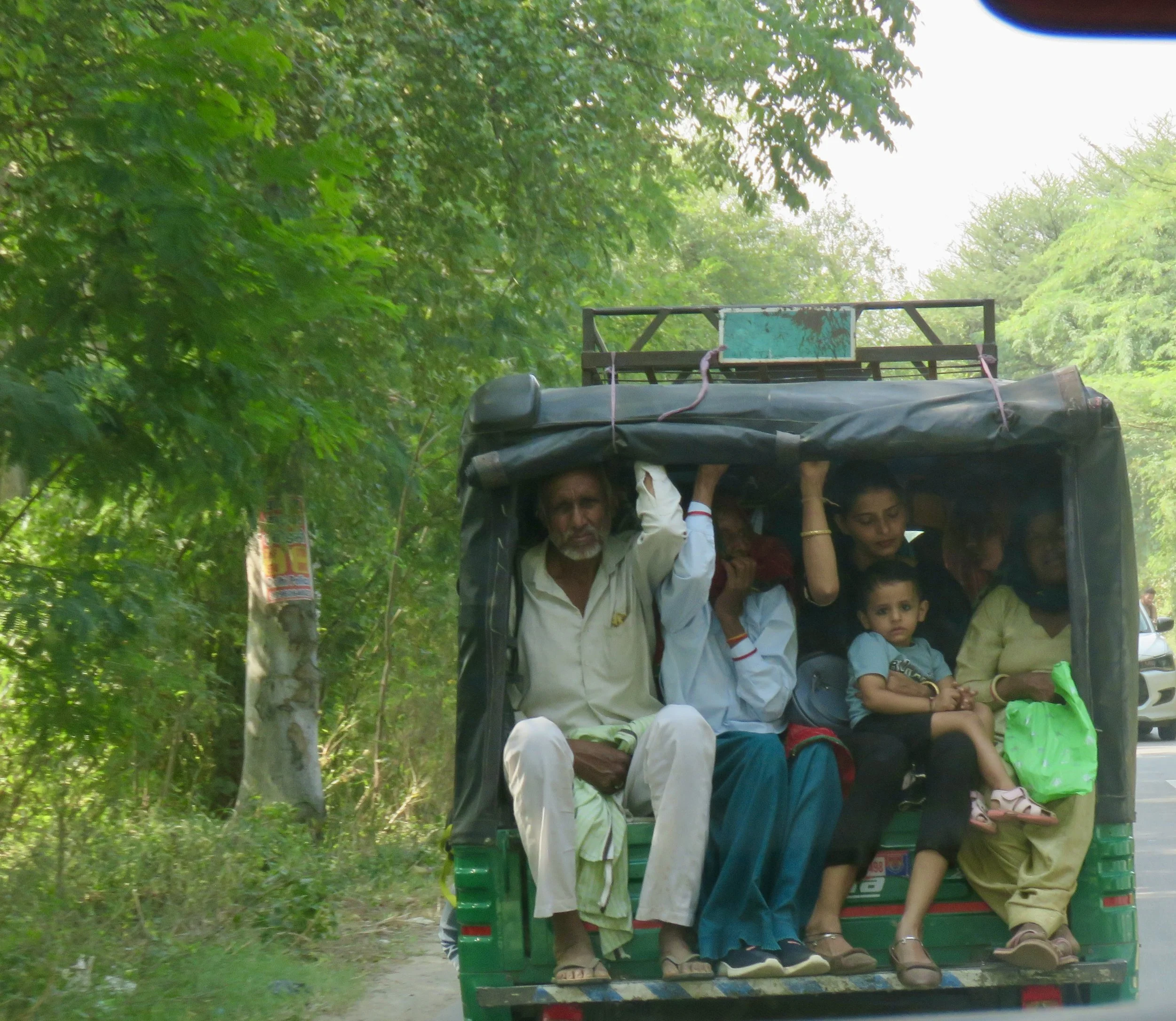
How many people can you get in a tuk-tuk? We often counted 14…
We were impressed with the fact that many of Delhi’s tuk-tuks and busses are now electric and no longer spewing out diesel fumes. We also found that there are no more plastic bags in shops, no straws in restaurants and generally people are aware of the environment and the need to reduce, reuse and recycle. Delhi was also a very green city with tree lined streets.
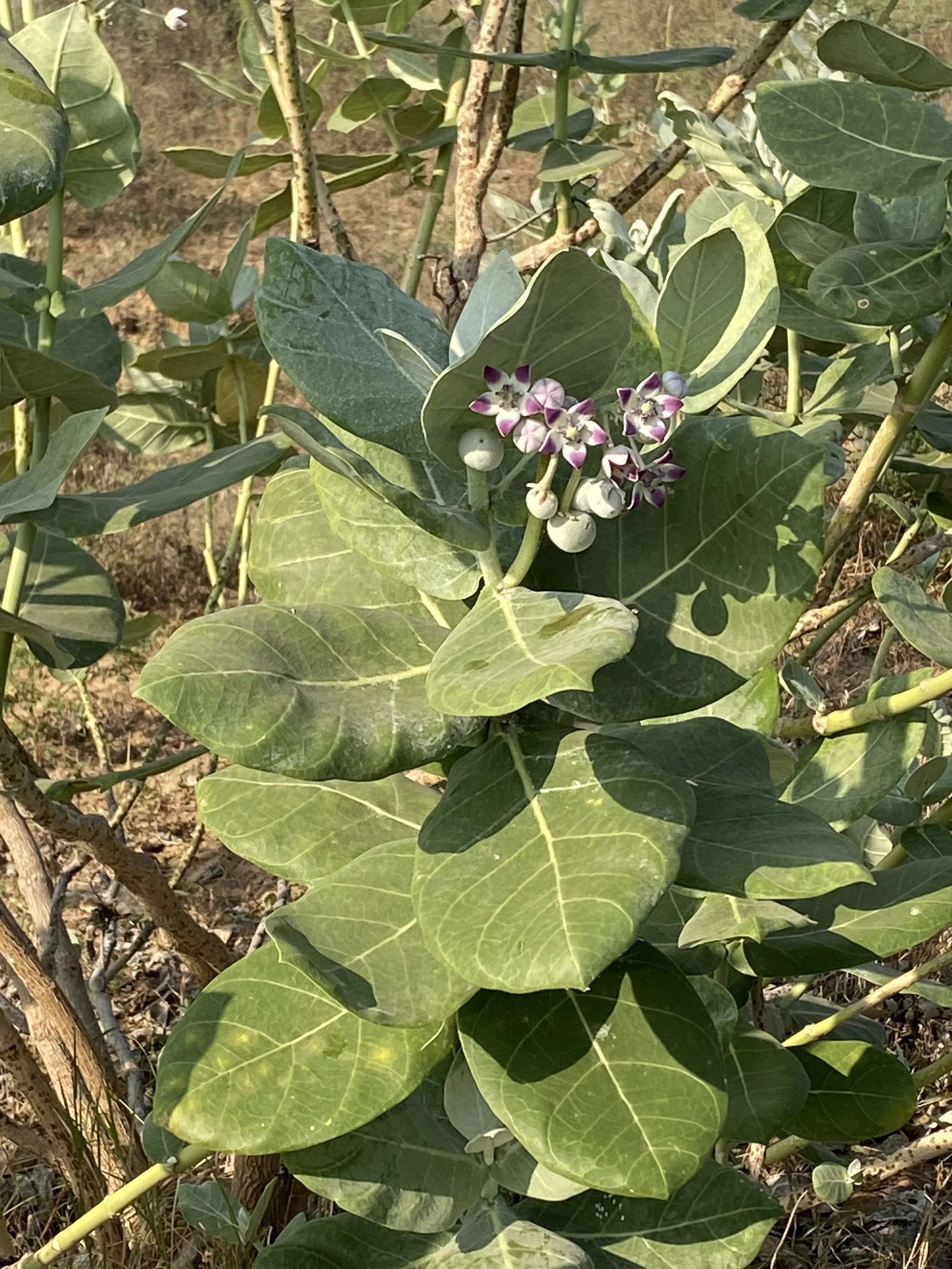
Miles and miles of milkweed.
As we left Delhi to drive to Mandawa, I was surprised by how much green countryside there is. With such a densely populated country I had imagined less open spaces. But green fields and hills stretched to the horizon. Oh sure, the towns we came through were bedlam with people and traffic... The traffic is something to be experienced. Like in many other Asian countries, the lines on the road are completely ignored. A 4 lane road will have 6 or 7 actual rows of vehicles in it. And cars don't all necessarily travel the same direction... With 2 lanes going south and 2 going north, there will often suddenly be a car coming north in the south bound lane... Or cars coming up the off ramp.
Mixed in between cars are motorbikes, often with 4 or 5 people on them. Most wear helmets but not everywhere. Then there are push carts loaded with vegetables and fruit, dogs, bicycles and, of course, cows. You'll be coming down a 4 lane highway and there are a couple of cows lazing in the fast lane. I constantly felt like I was in a videogame, one of those driving ones where more and more objects appear out of the blue into your lane and you have to try and avoid them.
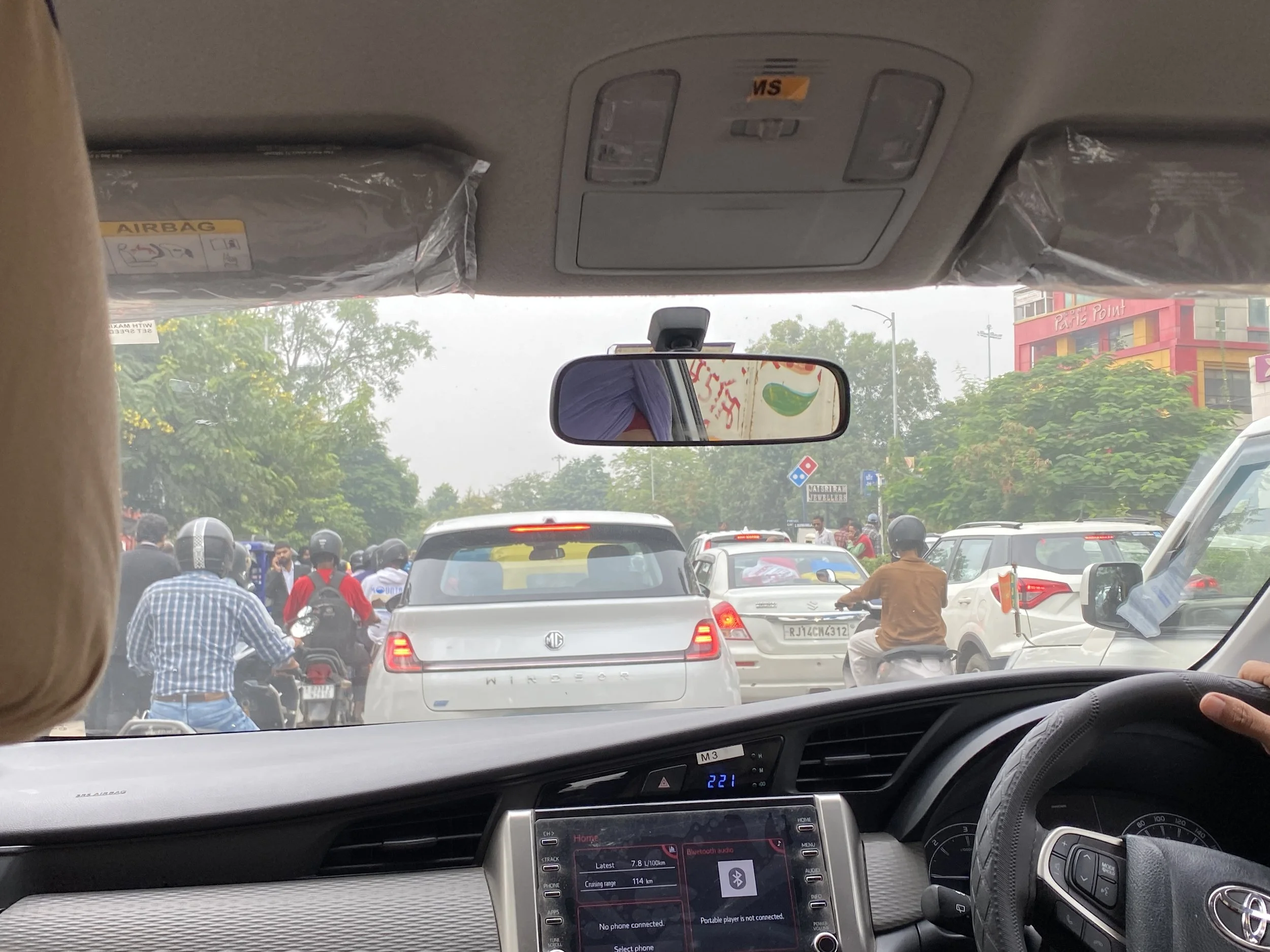
6 rows of traffic in 3 painted lines on the road.
But the entire traffic scene feels like a well choreographed dance. Cars don't go fast - 40 or 50 max in the city, 85 max on the highway. And they all move over for those wanting to pass (they honk from behind non-stop but not in an aggressive manner). They all flow around round-abouts and intersections in a chaotic pattern but without mishaps (mostly). In 2,000 KM we only saw one accident...
As I explained in the first India post: Rajasthan is India’s largest state by area and has a royal heritage. Its history dates back thousands of years. Ruled over by many leaders, invaded by Moghuls, Arabs and others it has an unsettled past. In its recent past, the British made treaties with rulers of Rajasthan who were allowed to rule their princely states. After India’s Independence in 1947, the princely states of Rajputana were integrated to form the present day state of Rajasthan on 1 November 1956. Today, the former royal Maharajas still retain their titles and often still own their vast palaces. However, they lack the resources to maintain these huge, often crumbling properties so many are now being turned into hotels.
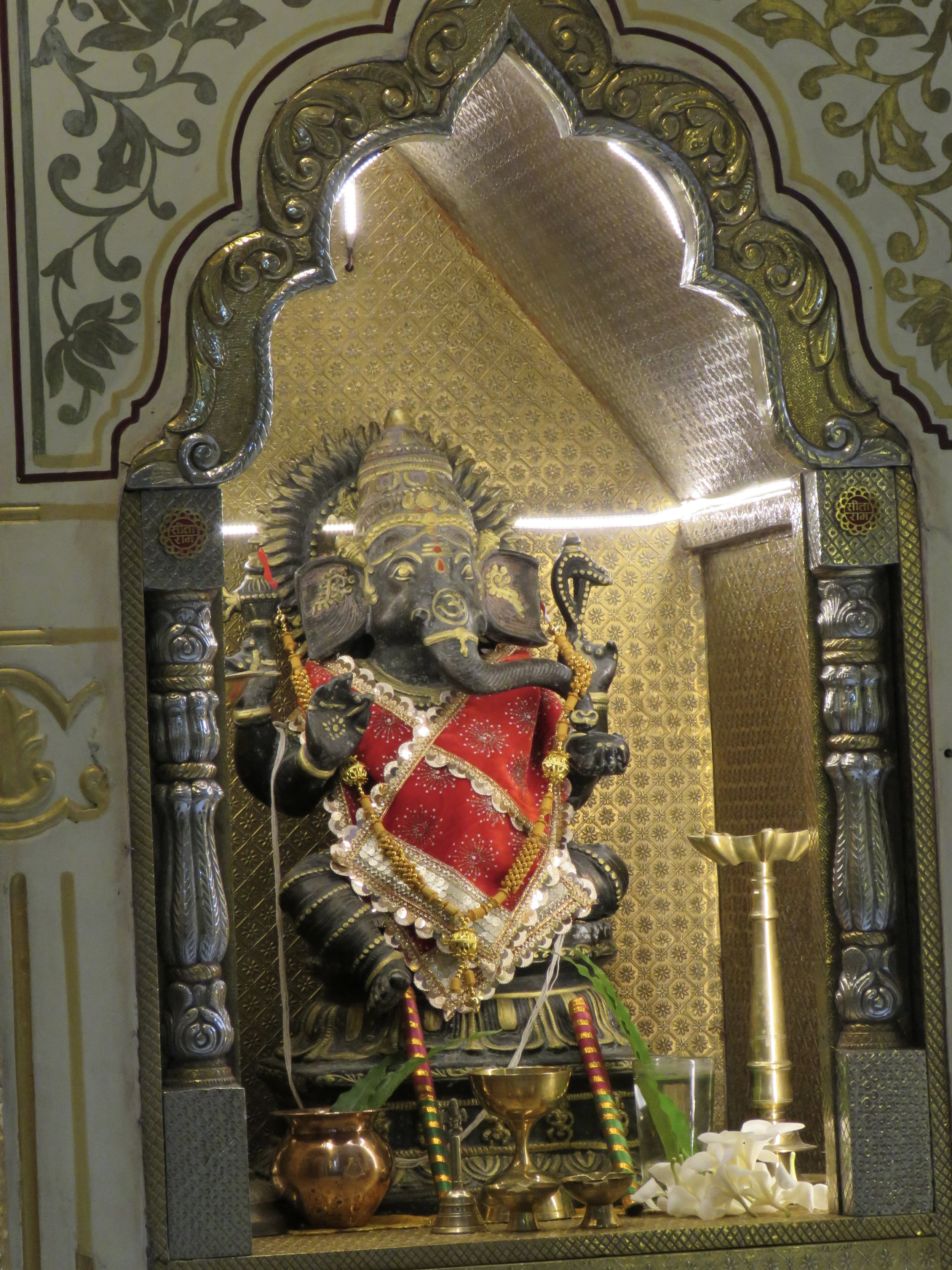
Along the way we stopped in towns and at temples. Lots of ornate Hindu temples. And we heard many stories of the gods: Brahma (the Creator), Vishnu (the Preserver), Shiva (the Destroyer/Transformer) and much about their offspring. The Hindu gods look very interesting, often with multiple arms or even with elephant trunks. Each different god serves a different purpose, is revered on a different day of the week and has relationships with all the other gods. It all sounded very complicated to us but also fascinating.
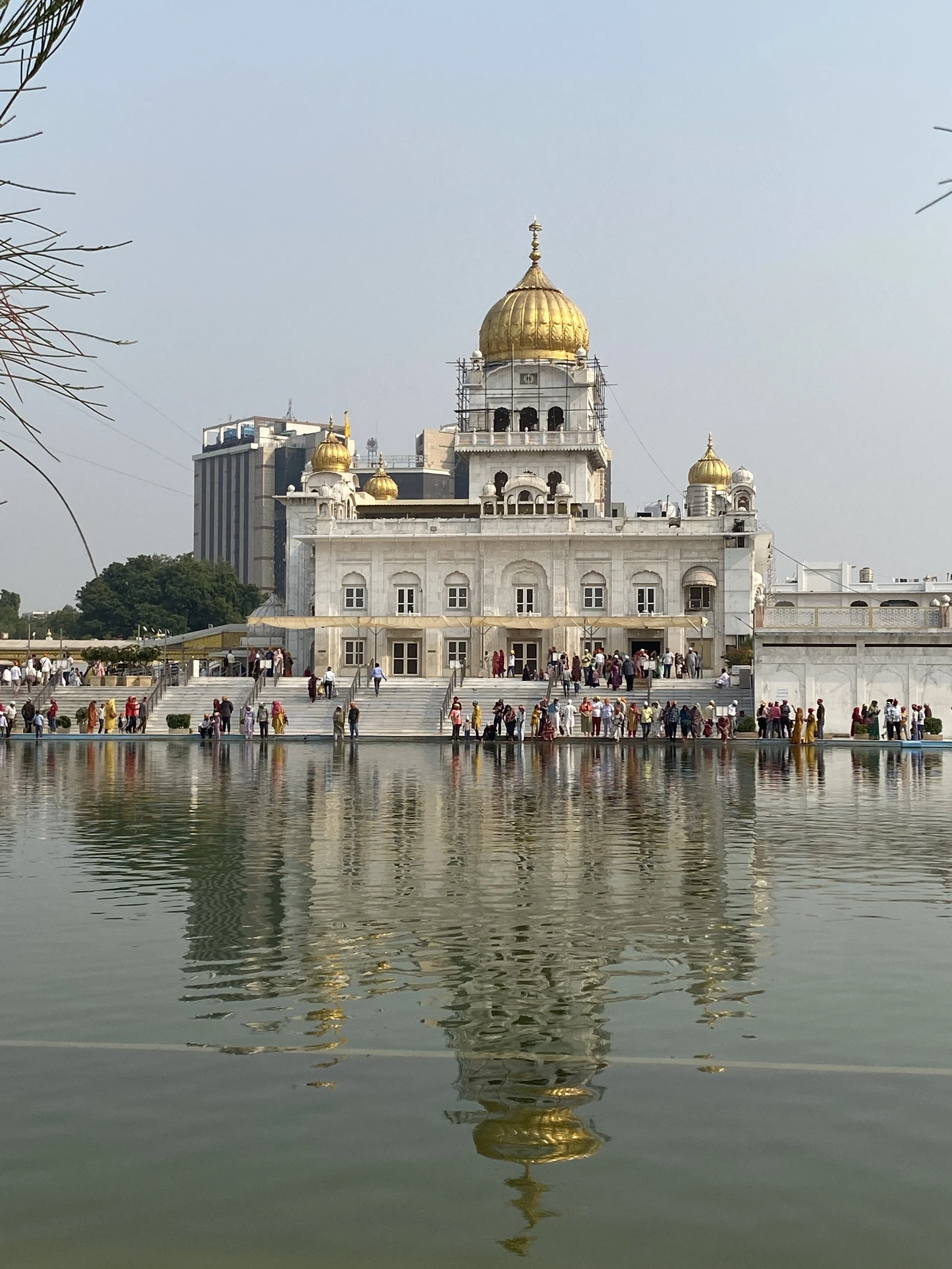
Gurudwara Bangla Sahib Sikh Temple
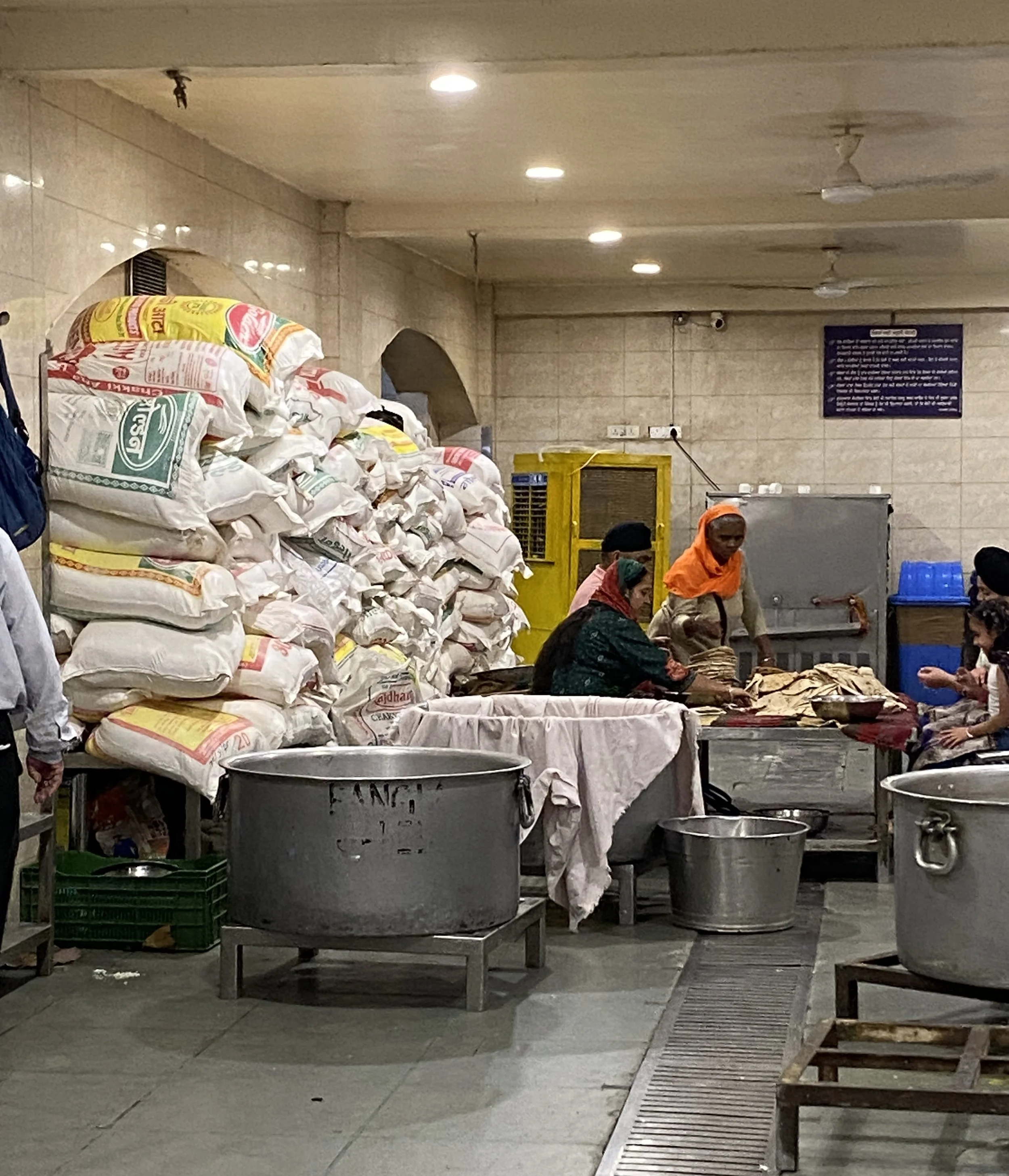
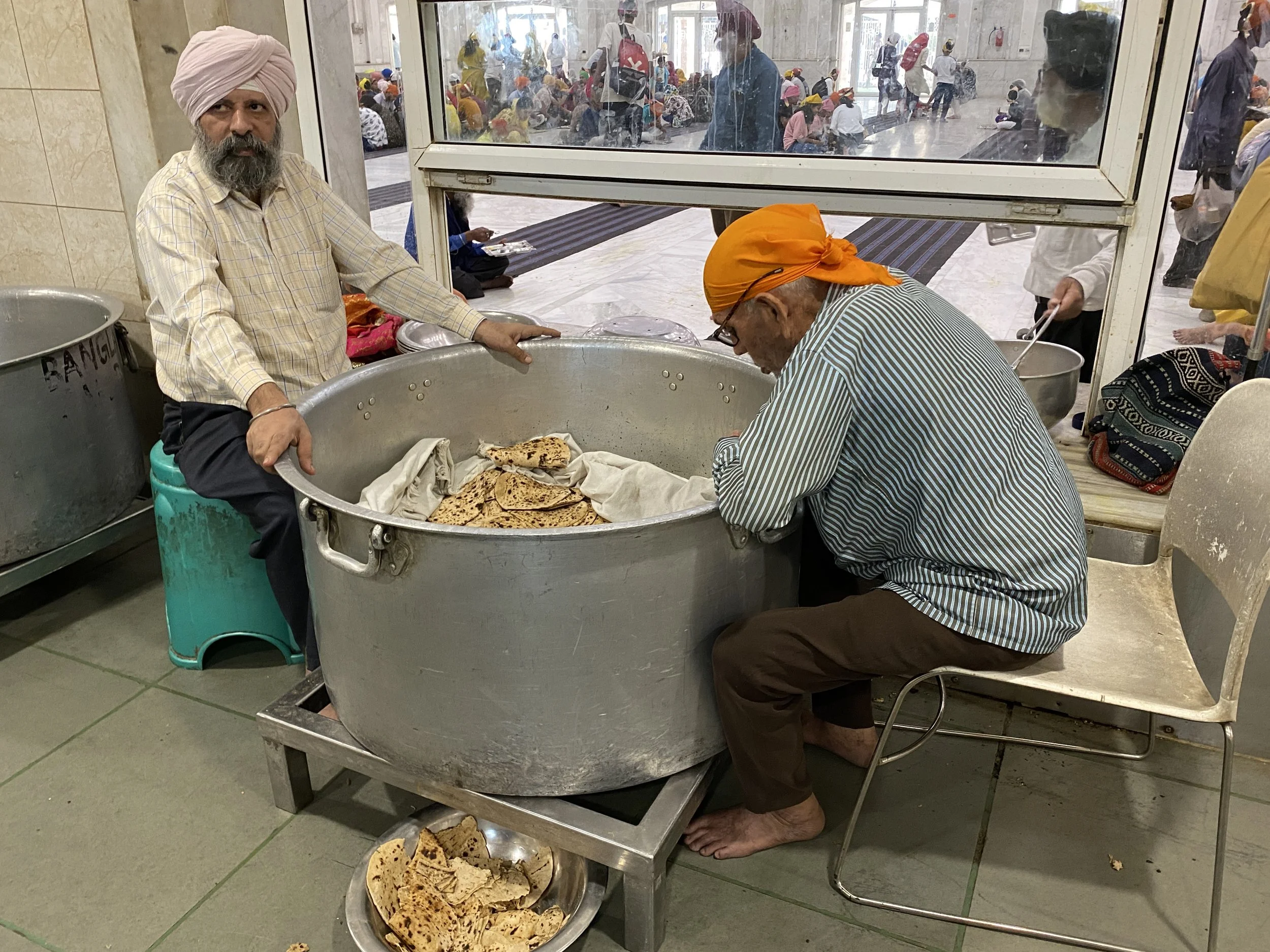
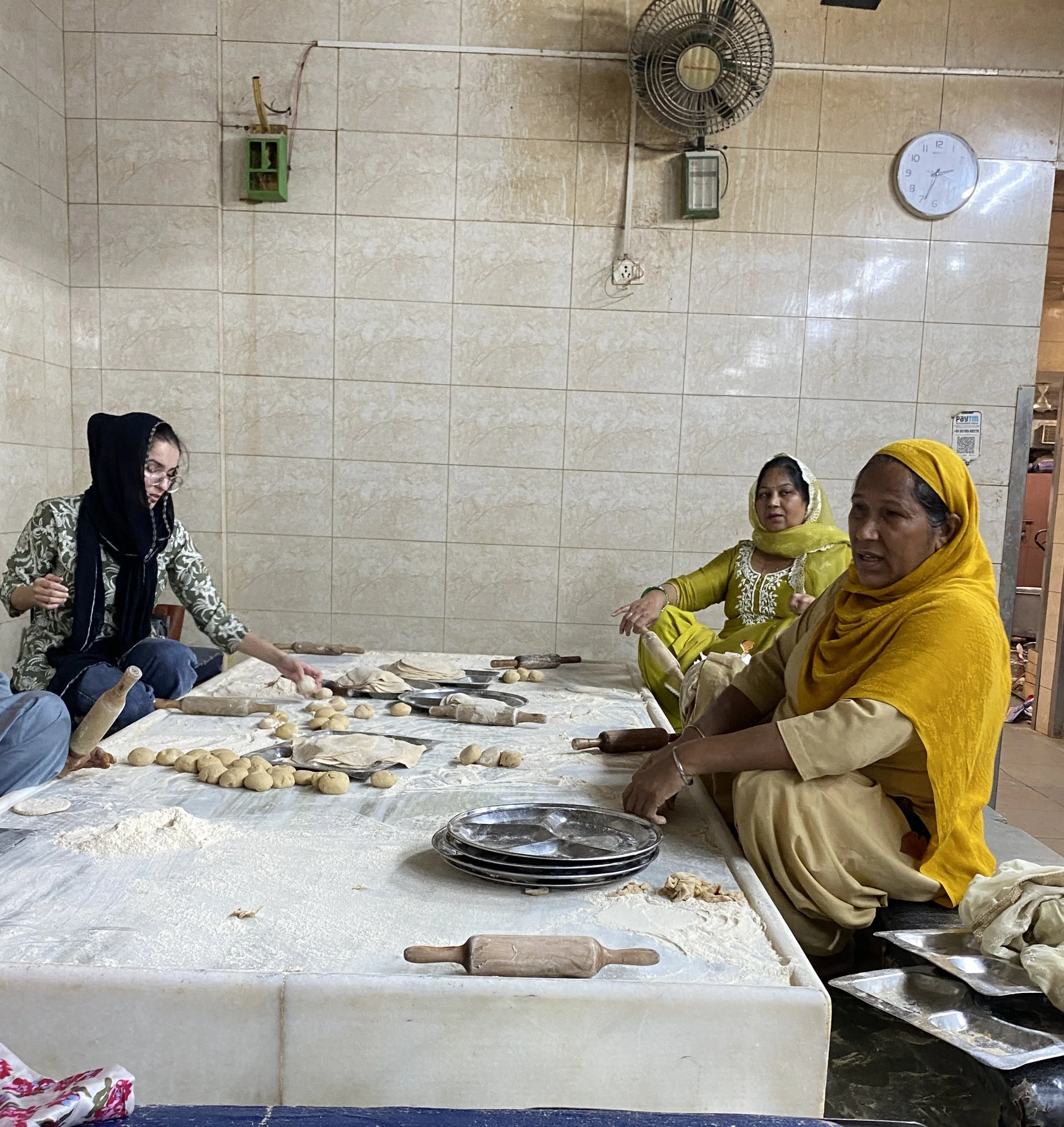
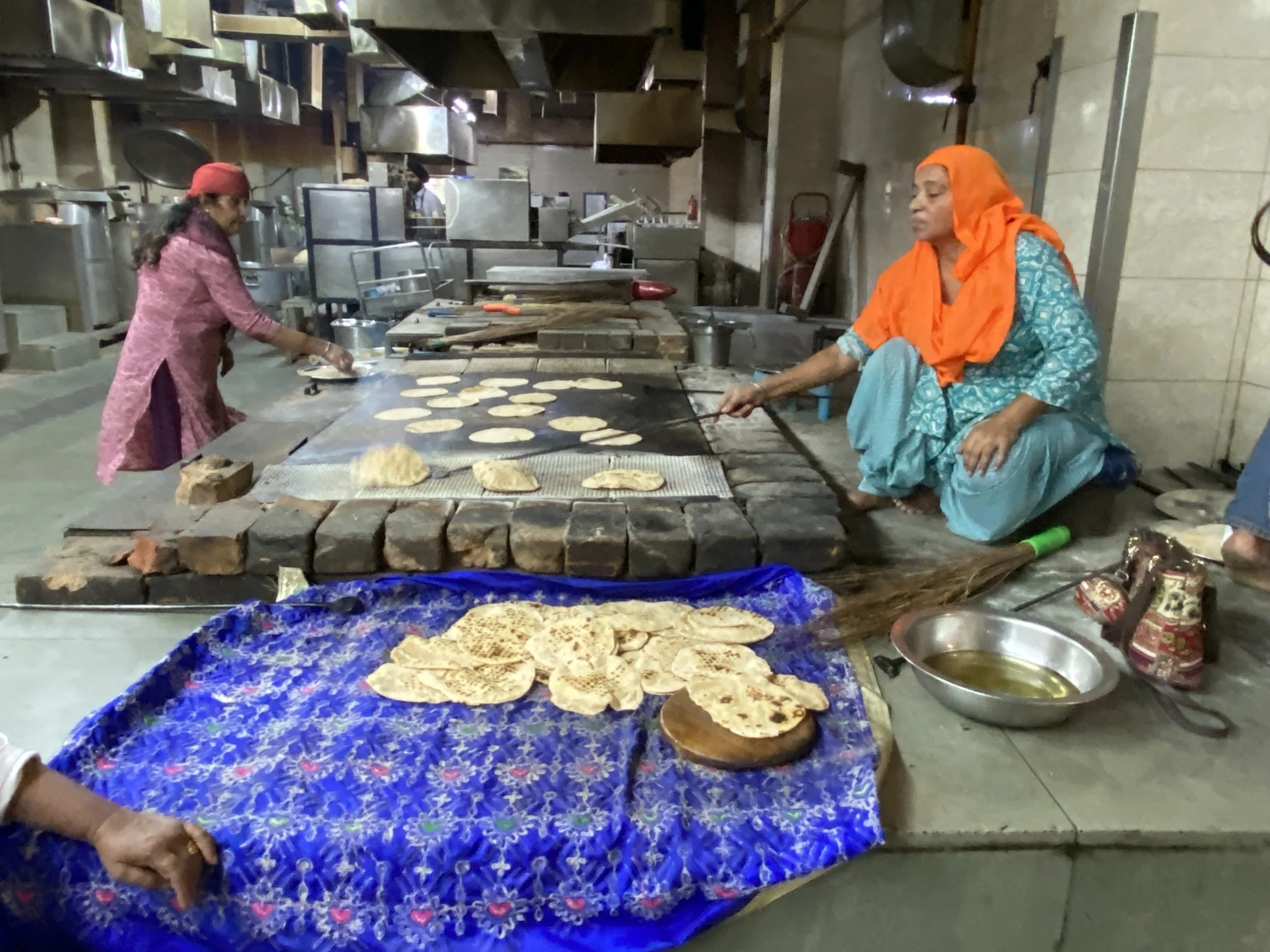
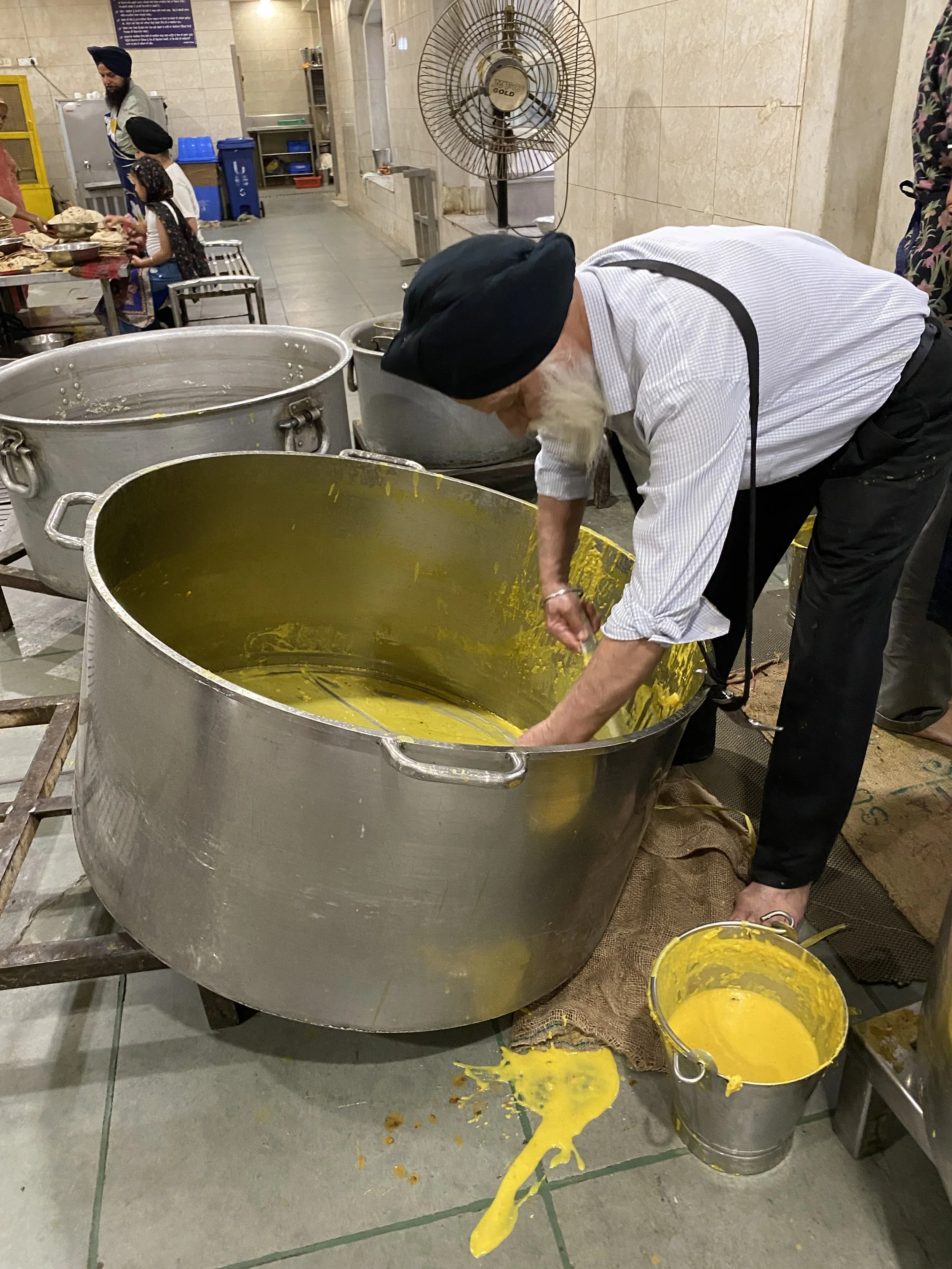
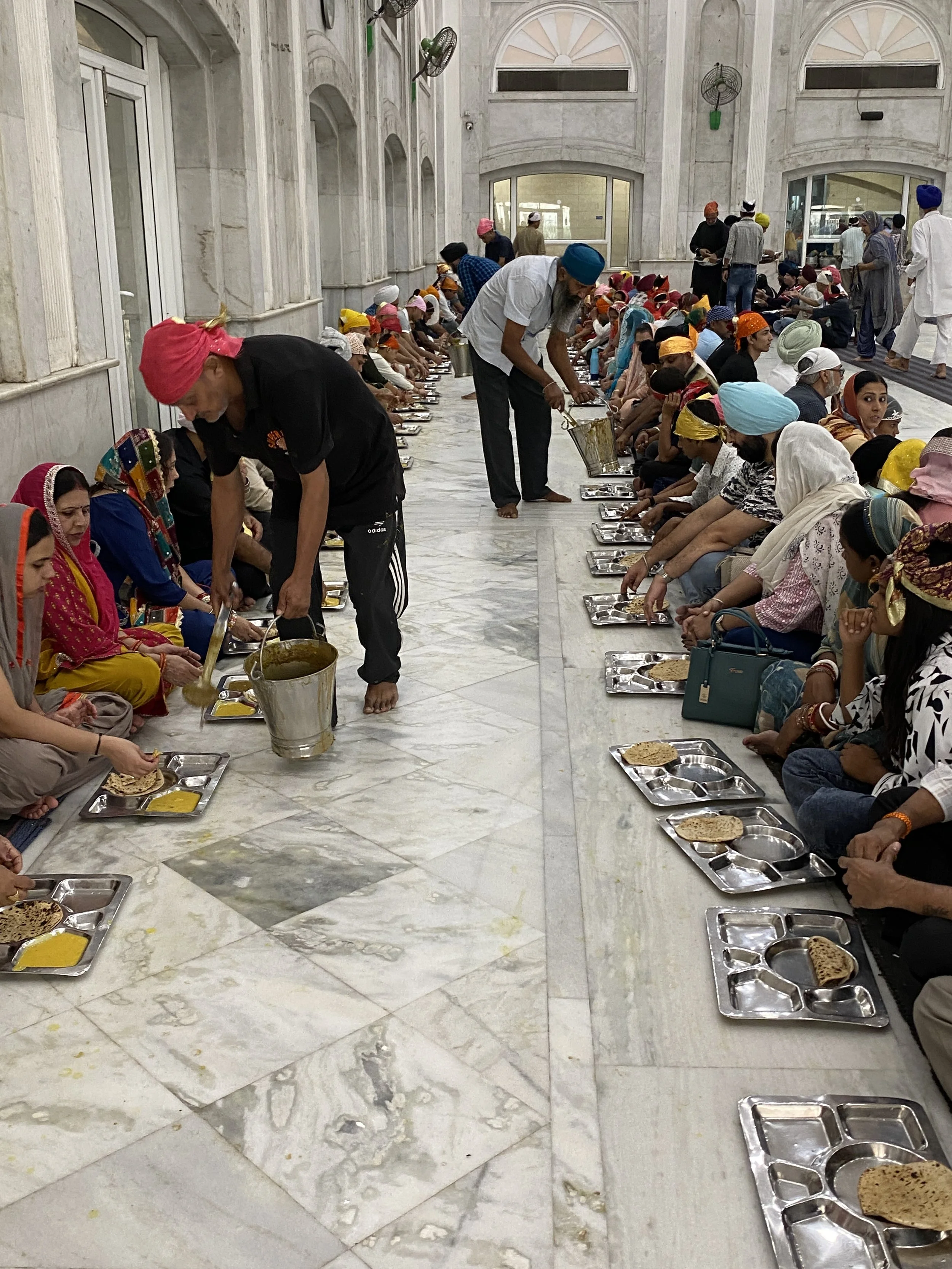
By the way, the people in some of the temples are also very impressive: in one Delhi sikh temple, Gurudwara Bangla Sahib, thousands of visitors are daily served a free meal, regardless of faith or background. The temple operates 24/7 with massive volunteer-run kitchens serving vegetarian meals as a core Sikh principle of selfless service. These kitchens can feed tens of thousands daily, using large-scale cooking and donations to sustain this massive humanitarian effort, a beautiful example of faith in action. Needless to say we donated to this noble cause.
The process of feeding a few thousand people each day:
It took us about 6 hours to drive the 280 KM from Delhi to Mandawa. For Indian standards, Mandawa is a village of just over 20,000 people. It feels like a sleepy country town with its unpaved roads and crumbling houses. But, oh boy, what a hidden treasure this town hides. National Geographic is wondering if this is India’s next new tourist destination… (see link below).
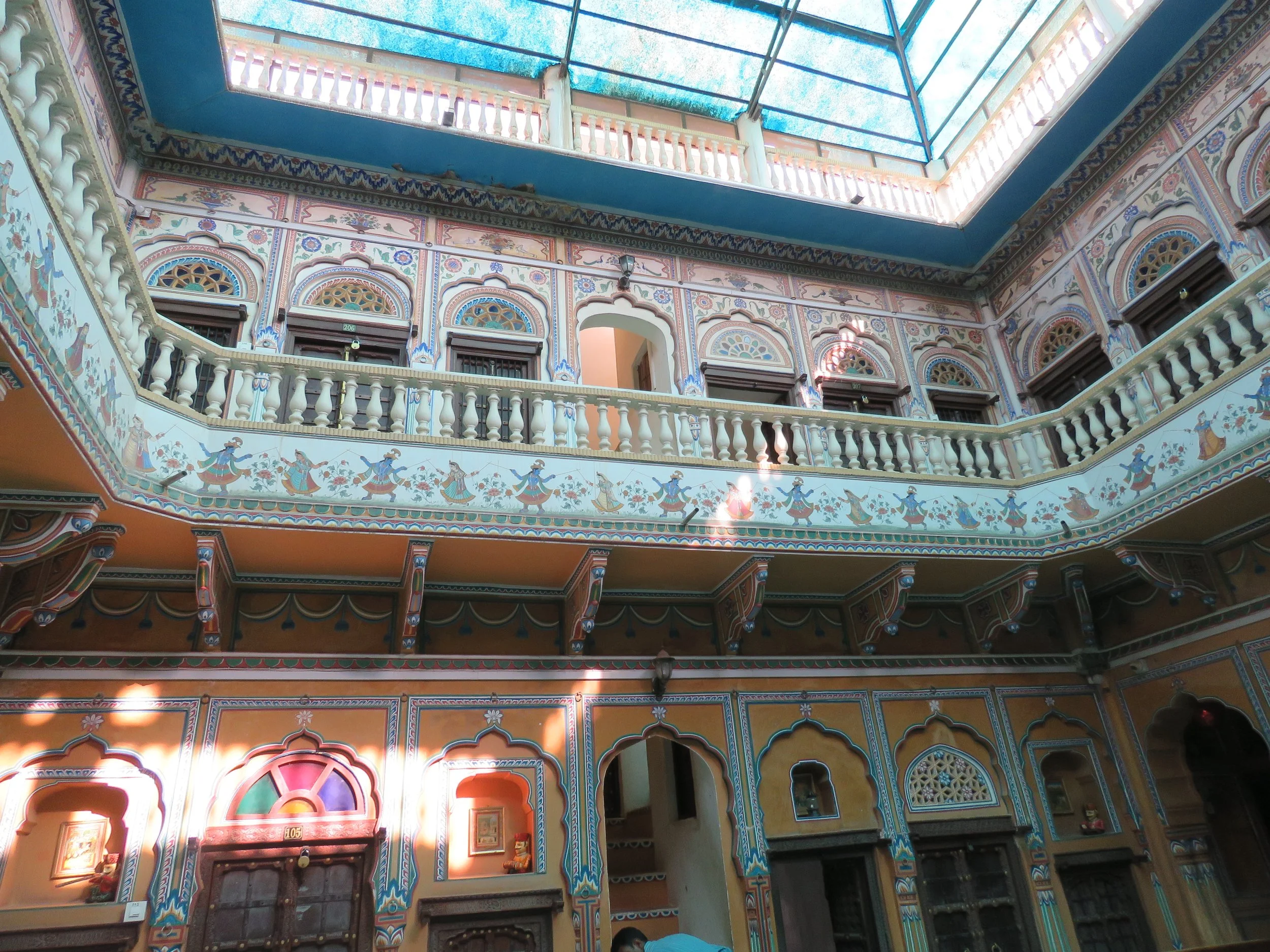
Inside a haveli
Mandawa is a treasure trove of havelis — traditional Indian mansions — which have courtyards and many rooms covered with a distinct style of fresco. The paintings on walls and ceilings depict the meeting of many worlds — of local Rajput chieftains, Mughal rulers, Hindu deities and Englishmen of the British Empire. But the havelis are crumbling… The frescos have faded over the decades, some are covered in soot from cooking inside. The outside facades have gaps and stones missing. Owners of the havelis are often still related to the royal families of the past but have no funds to restore the havelis. And the houses are often owned by many relatives who need to all agree before restoration can even take place. Hopefully this town will be designated a UNESCO World Heritage site so that funds will become available to save the havelis for the future. They are worth saving, with their scenes of people, animals, flowers and events painted on every surface. Luckily, locals are realizing their value, both as cultural heritage and as tourist attraction.
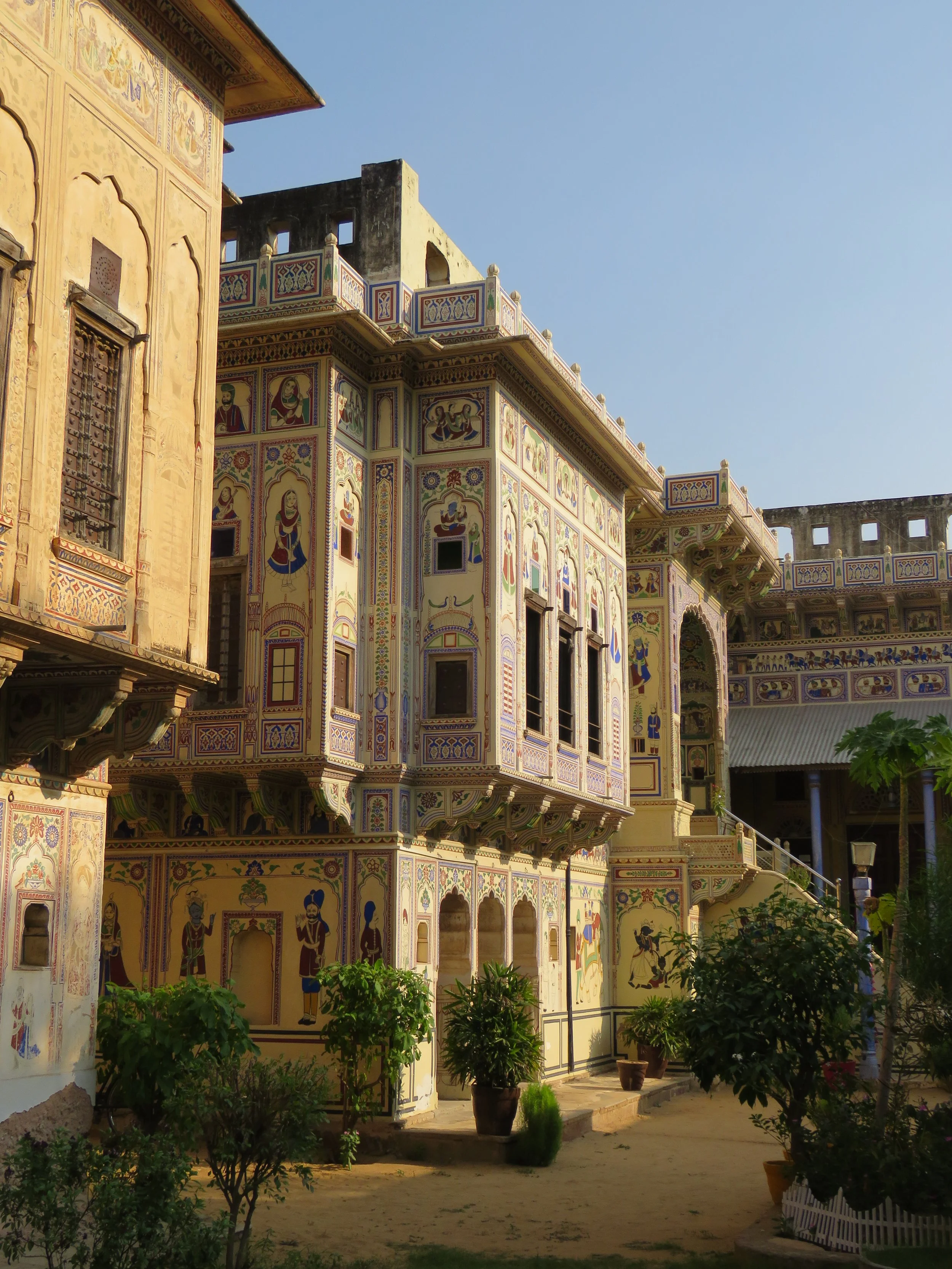
Havelis in Mandawa
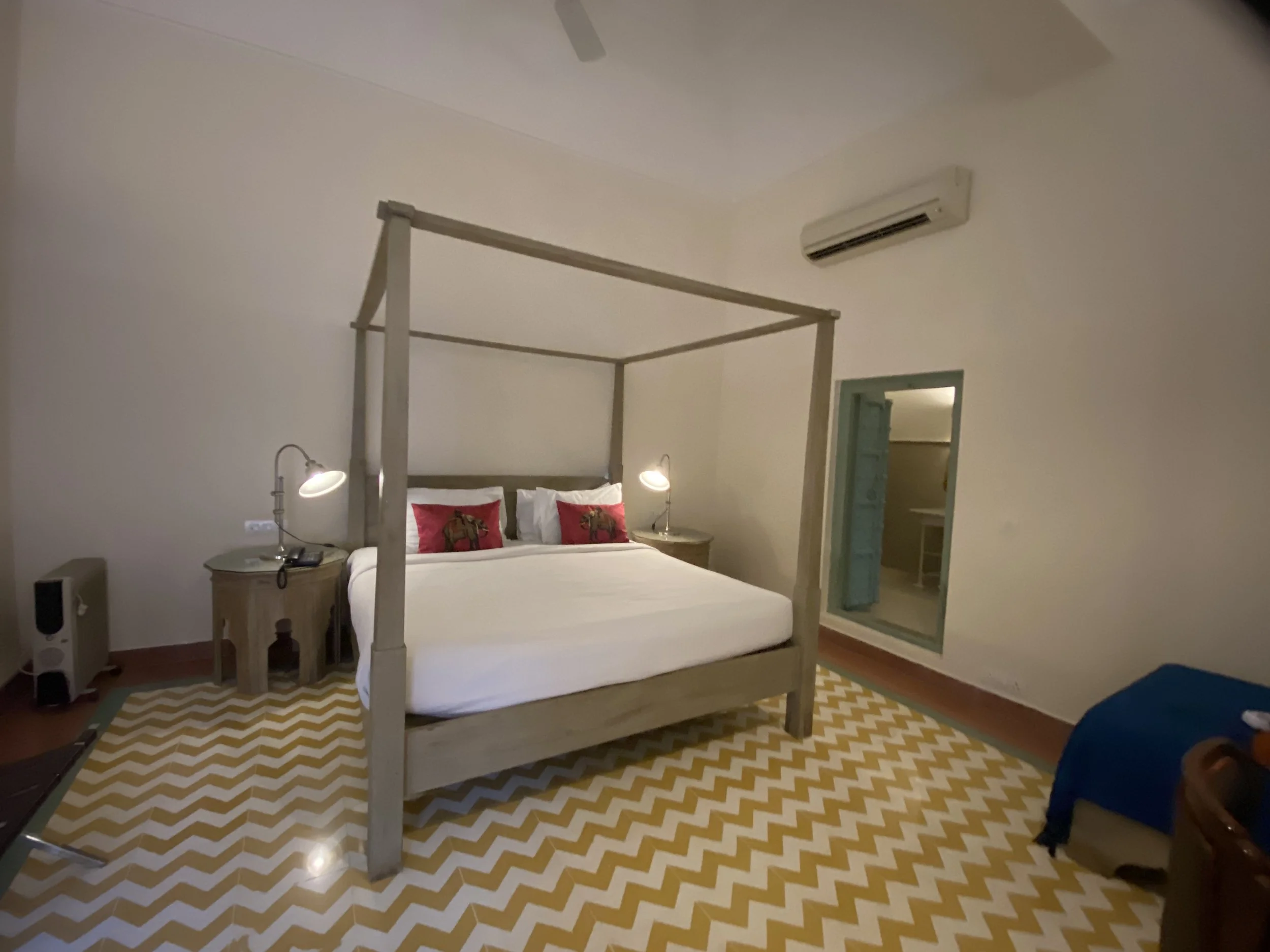
Our room in a hundreds of years old haveli.
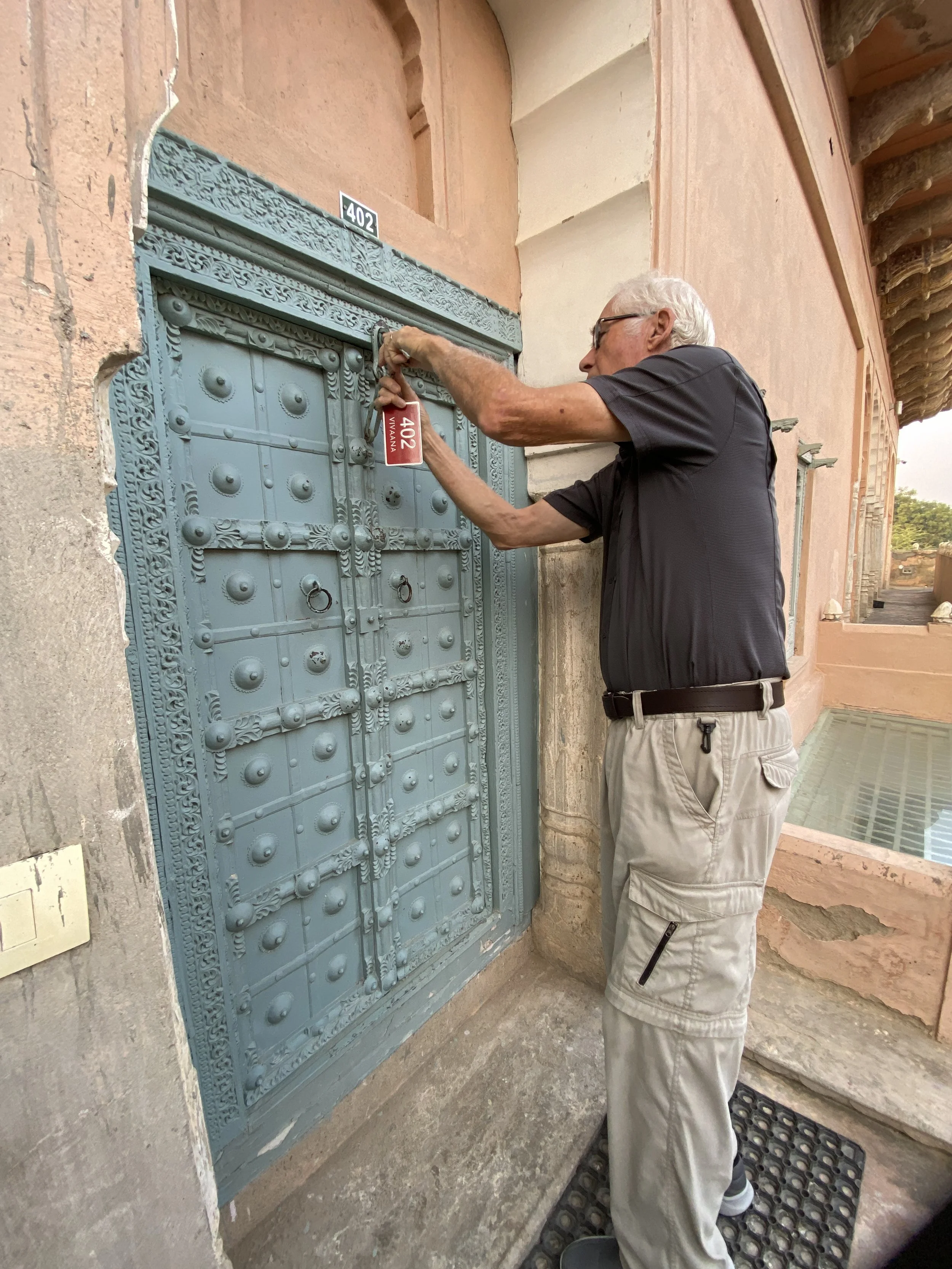
The door to our room…
Our accommodations in Mandawa were in a restored haveli! Not only did our room have fescos and ornate ceilings, the door was an original heavy wood door with a fun lock on it.. But the bathroom boasted an ultra-modern glass shower and state of the art marble counters. We enjoyed dinner and breakfast in the picturesque court yard.
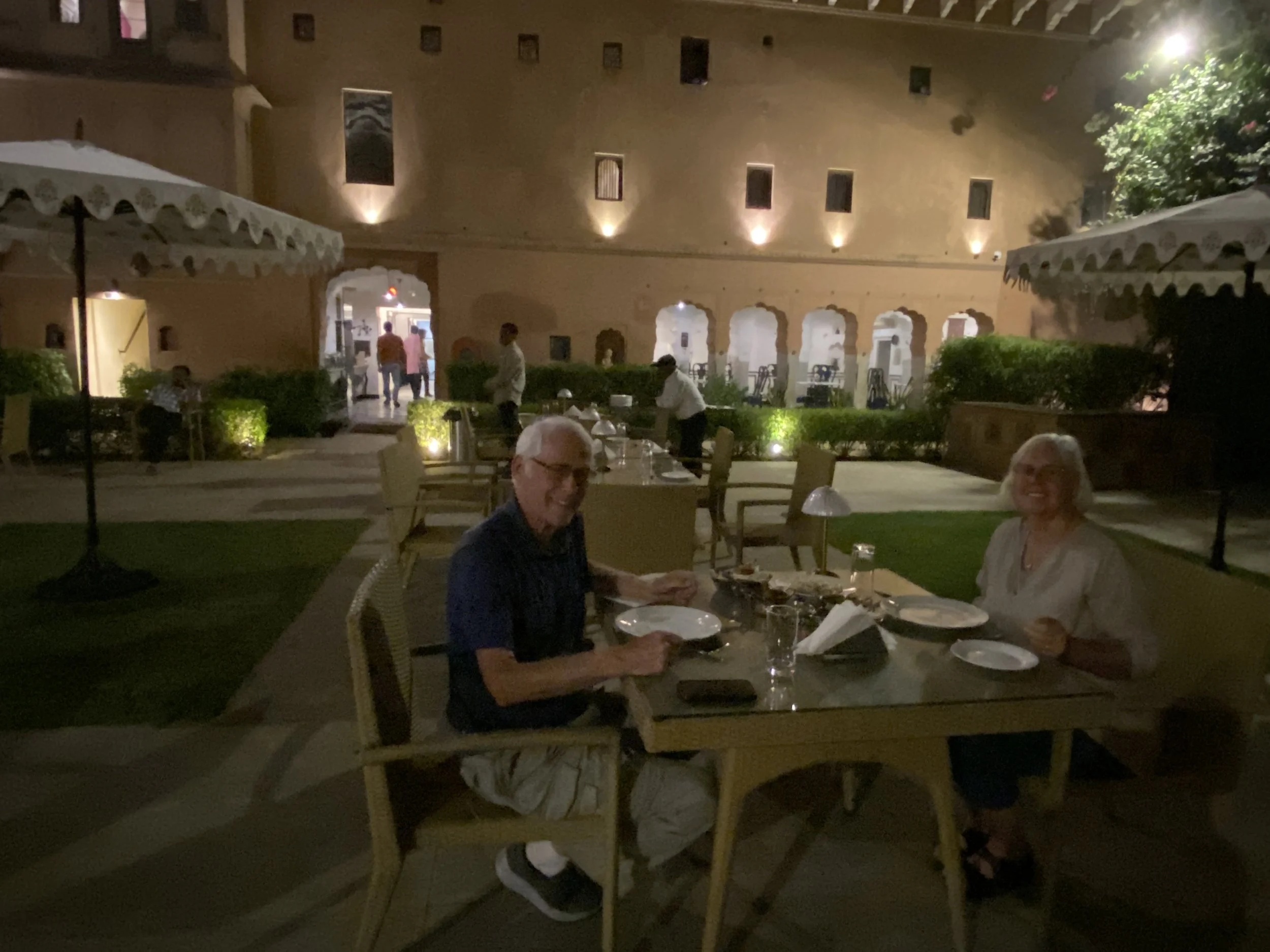
Courtyard meals
We walked all around the town, amazed at both the restored and the still crumbling mansions. We walked to the original city water well and toured several havelis and a local fabric store. Women in bright orange saris did their shopping, children ran around the dirt streets, even the odd camel cart wobbled by. It felt like time travel.
And after all the temple visits, wasn’t surprised when our driver pointed, “Look! God and the sheep!” Alas, it was merely a goat and sheep…
BOOKS about India
RESOURCES:
Mandawa: https://www.nationalgeographic.com/travel/article/is-mandawa-rajasthans-next-big-thing
Havelis: https://www.thegrandindianroute.com/a-heritage-tour-to-mandawa-rajasthan/
We booked through: vacationindia.com
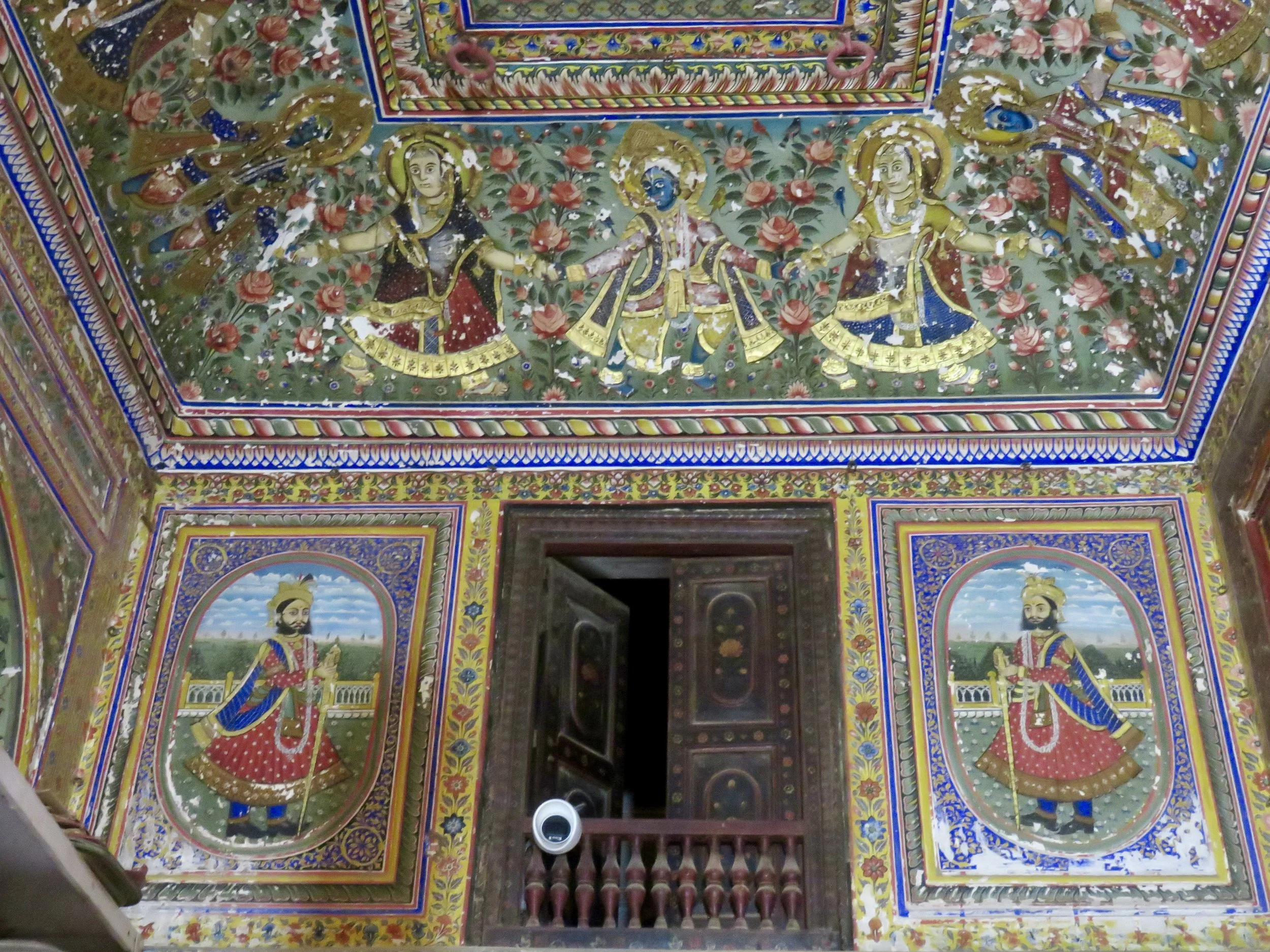
Ceiling and wall detail, haveli.