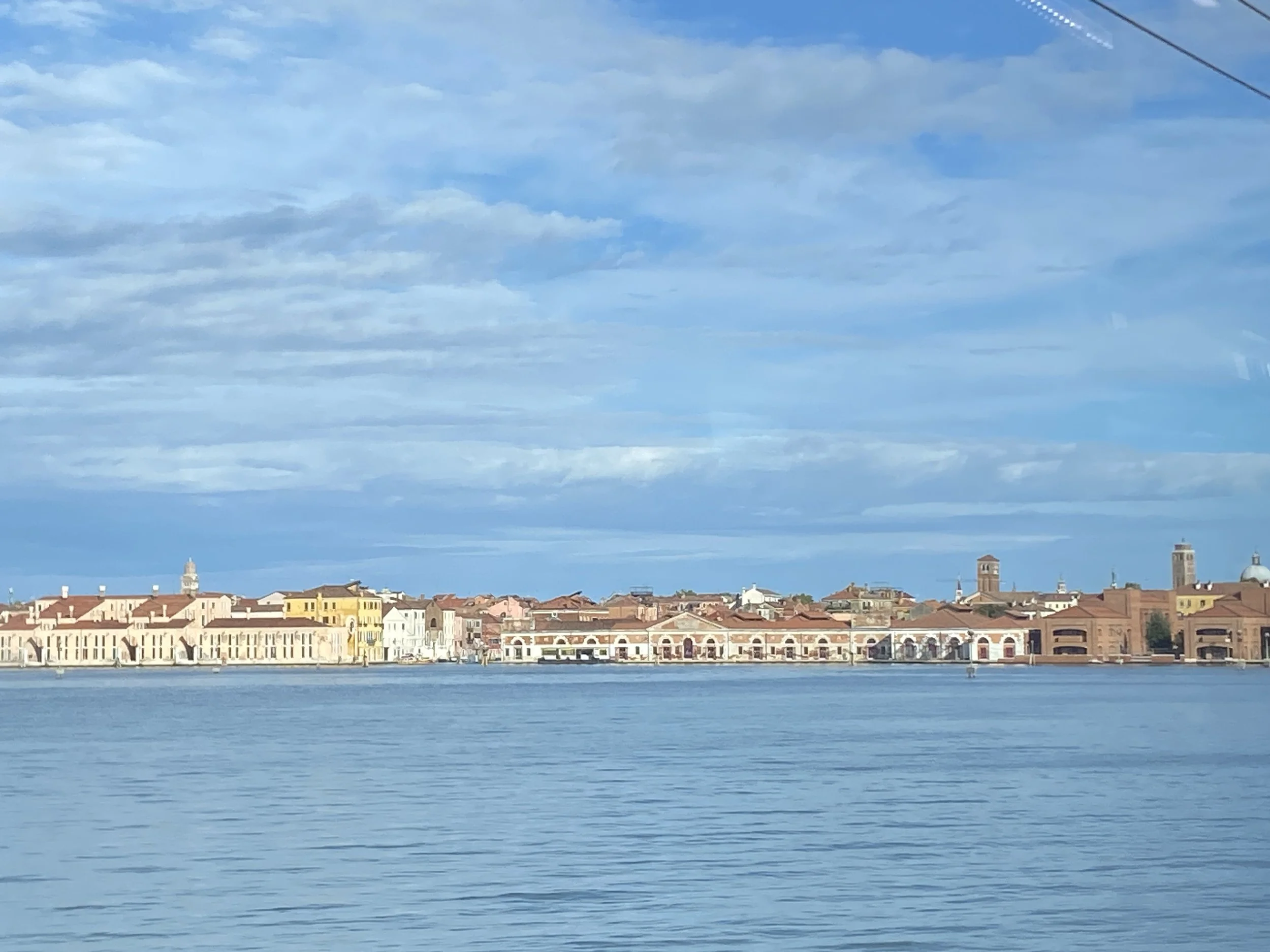
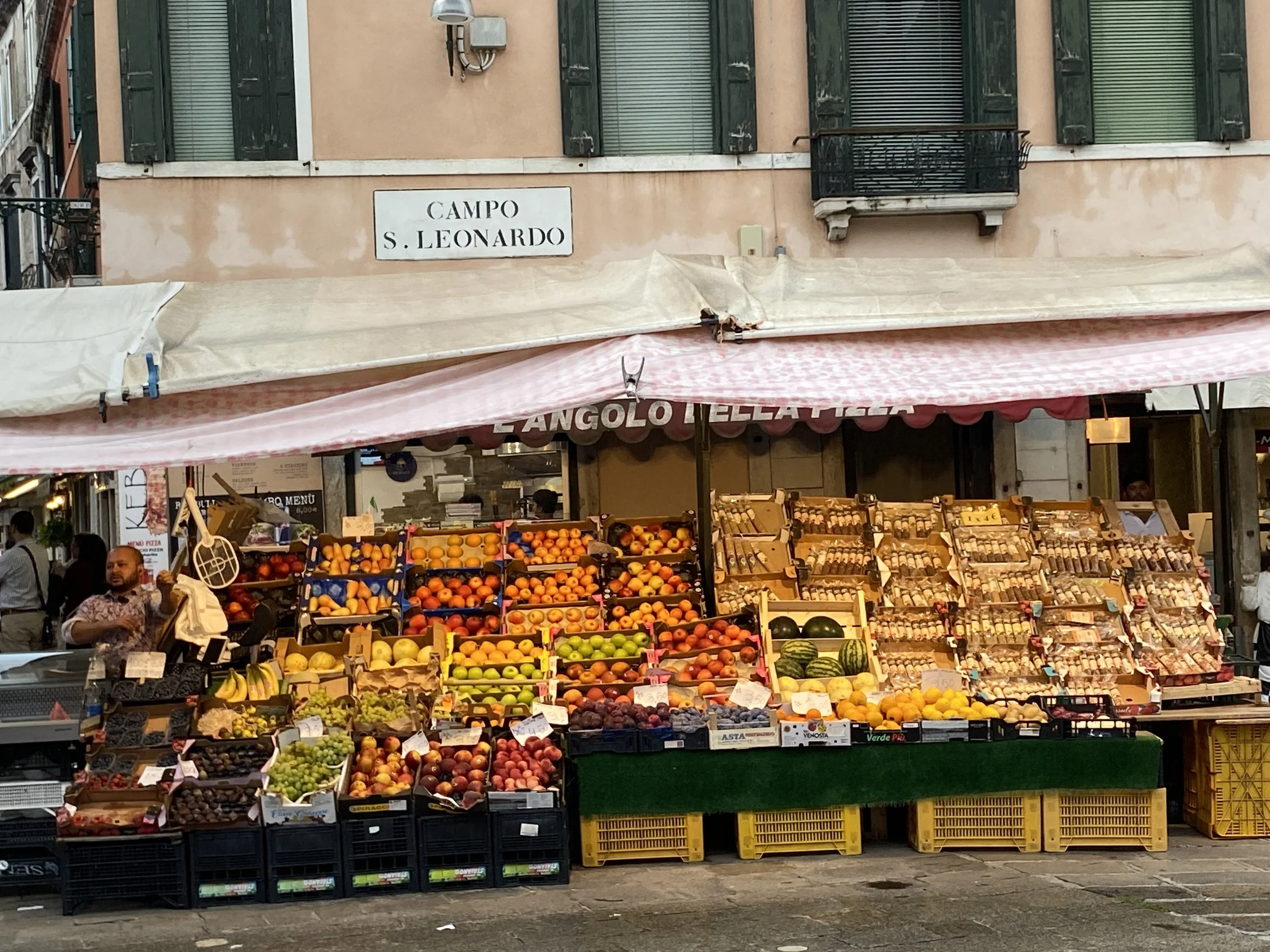
I don’t really consider myself a cook or a foodie. But when I read about a culinary tour of Italy, I was interigued. I do like eating. And when I read ‘gelato’ I was sold.
Intrepid specializes in small group tours. We are not into busloads of people, so small is good. The itinerary sounded wonderful, the dates worked for us and so we signed up for Intrepid’s Culinary Tour of Italy. On the day the group tour started, we left Florence by train to travel, via Bologna, to Venice.
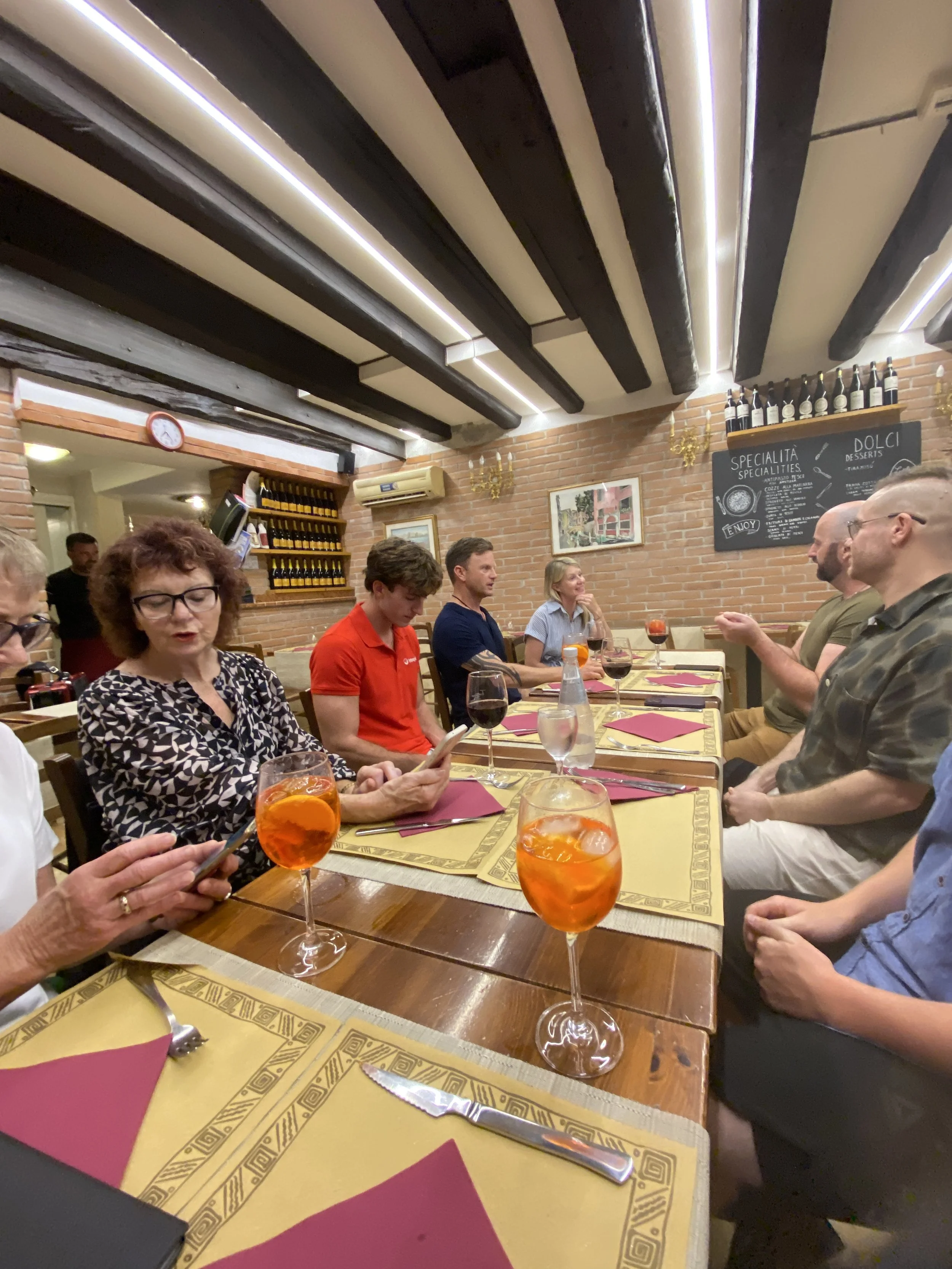
Small group, large Aperol Spritz!
I had never been to Venice before and was excited to visit this unique city. I had heard stories of having to buy an entry permit, of having to pay to enter the city, etc. But none of that turned out to be applicable. We simply disembarked at Venice’s Santa Lucia station and walked the 5 minutes to our hotel and meeting place.
We met Giordano, our Italian guide and our fellow foodies from Australia and New Zealand. over a fun first night dinner in one of Venice’s many restaurants, complete with an accordion player singing O Solo Mio! We ate pasta and sipped Italy’s signature drink - no, not wine but Aperol Spritz.
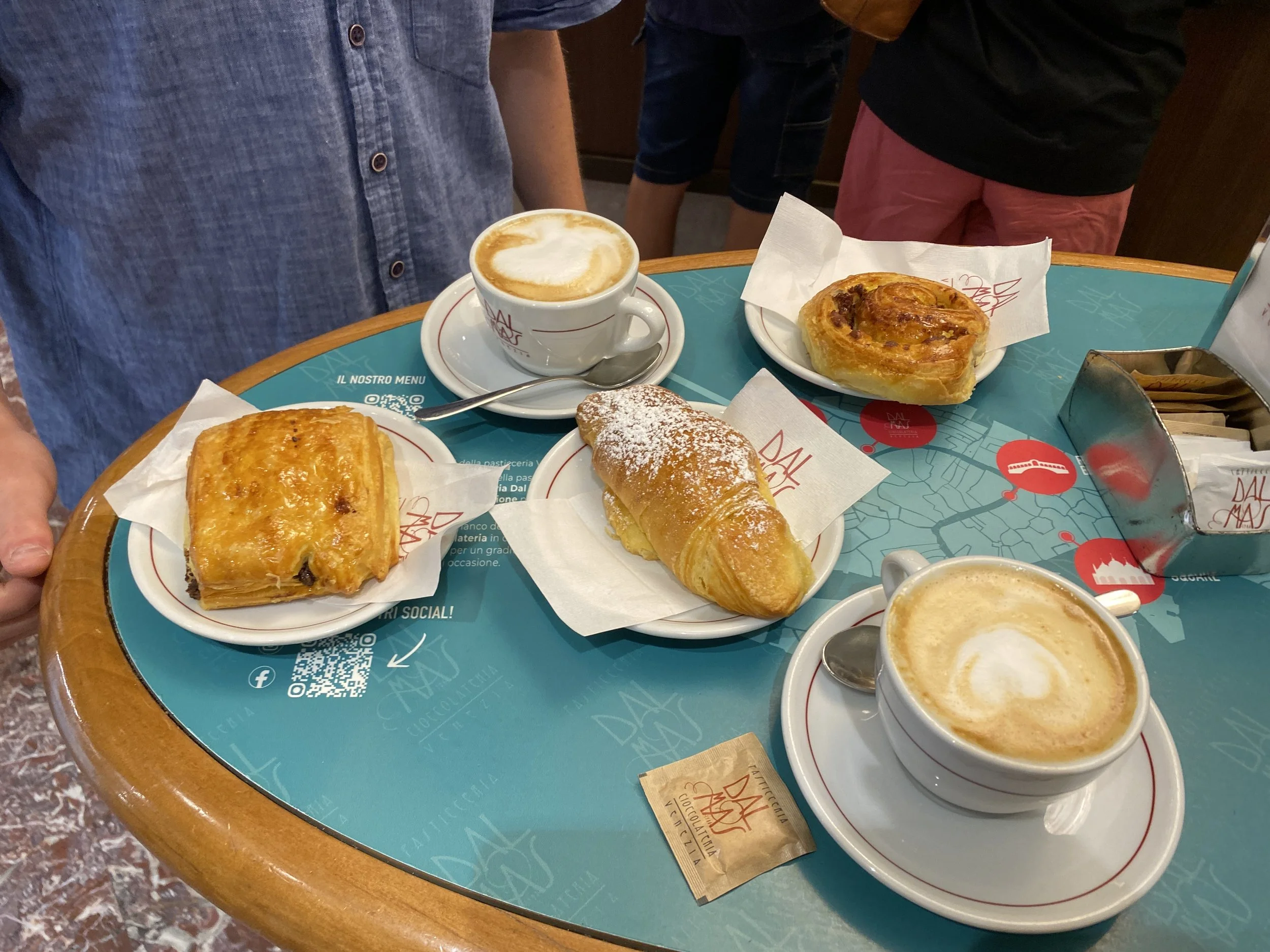
Typical Italian breakfast.
The next morning, we walked three minutes to a nearby bakery to have, what our guide called, a typical Italian breakfast: cappuchino and a croissant, eaten standing at a tall table in the bakery. Instead of then rushing off to work, we strolled the streets, piazzas and many bridges of Venice. I felt like I was walking from one painting into the next…
By mid day, the streets and squares were crowded with tourists. Due to mass tourism, the permanent population has changed drastically. Most residents have left the historic center island and moved to the mainland part of Venice. The houses that thus became vacant have turned into B&B’s and other vacation rental accommodations. This, essentially, leaves the heart of Venice as a kind of museum with almost no permanent residents.
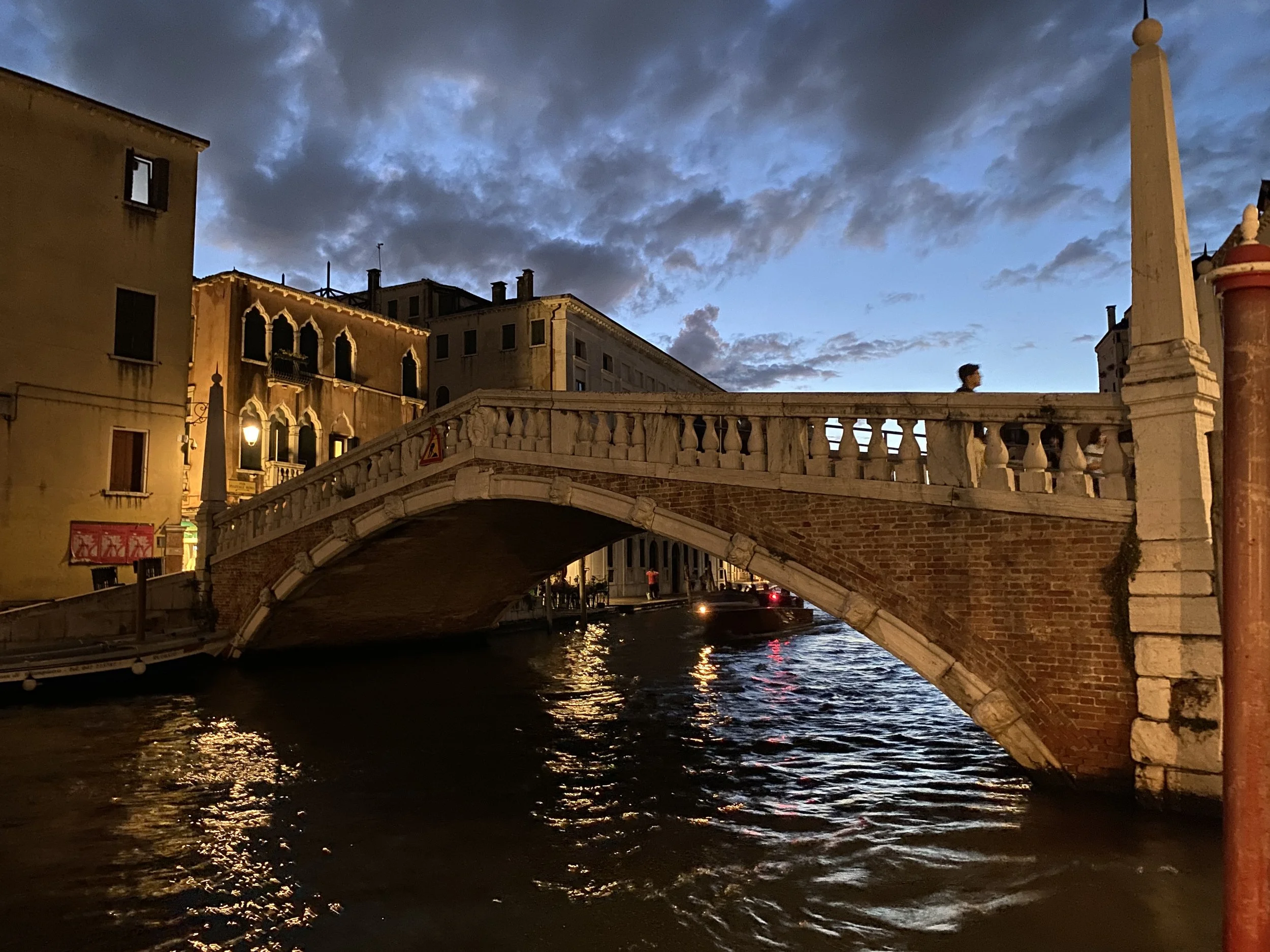
One of Venice’s many picturesque bridges.
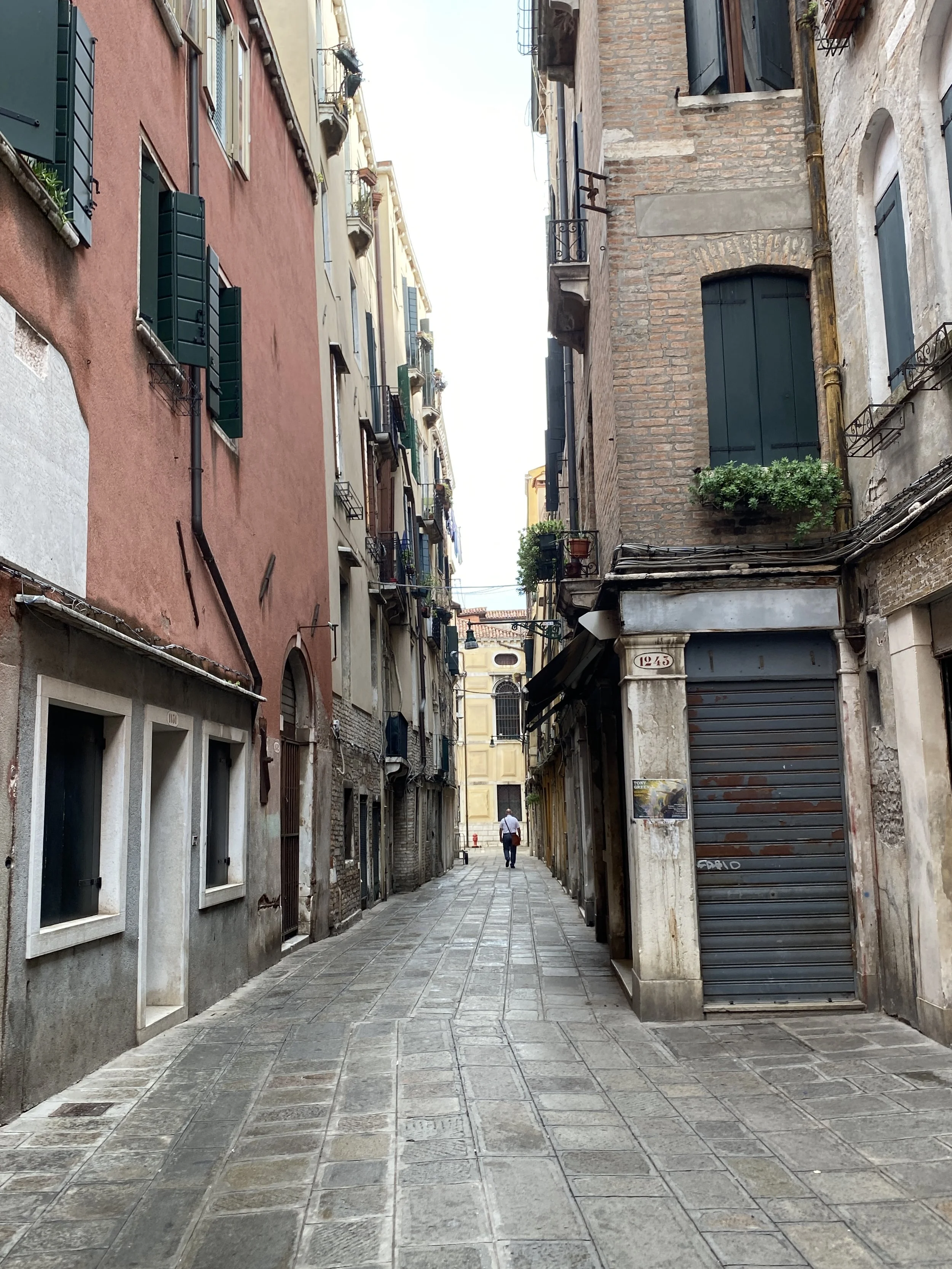
Jewish Ghetto in Venice.
But the ancient city is still glorious, alive with history, waterways and picturesque bridges. One of the most fascinating areas was the Jewish Ghetto. Here, the tall shuttered houses looked down on almost deserted streets and shaded squares with leafy trees. Orthodox jews scurried back and forth to houses and schools while we strolled along.
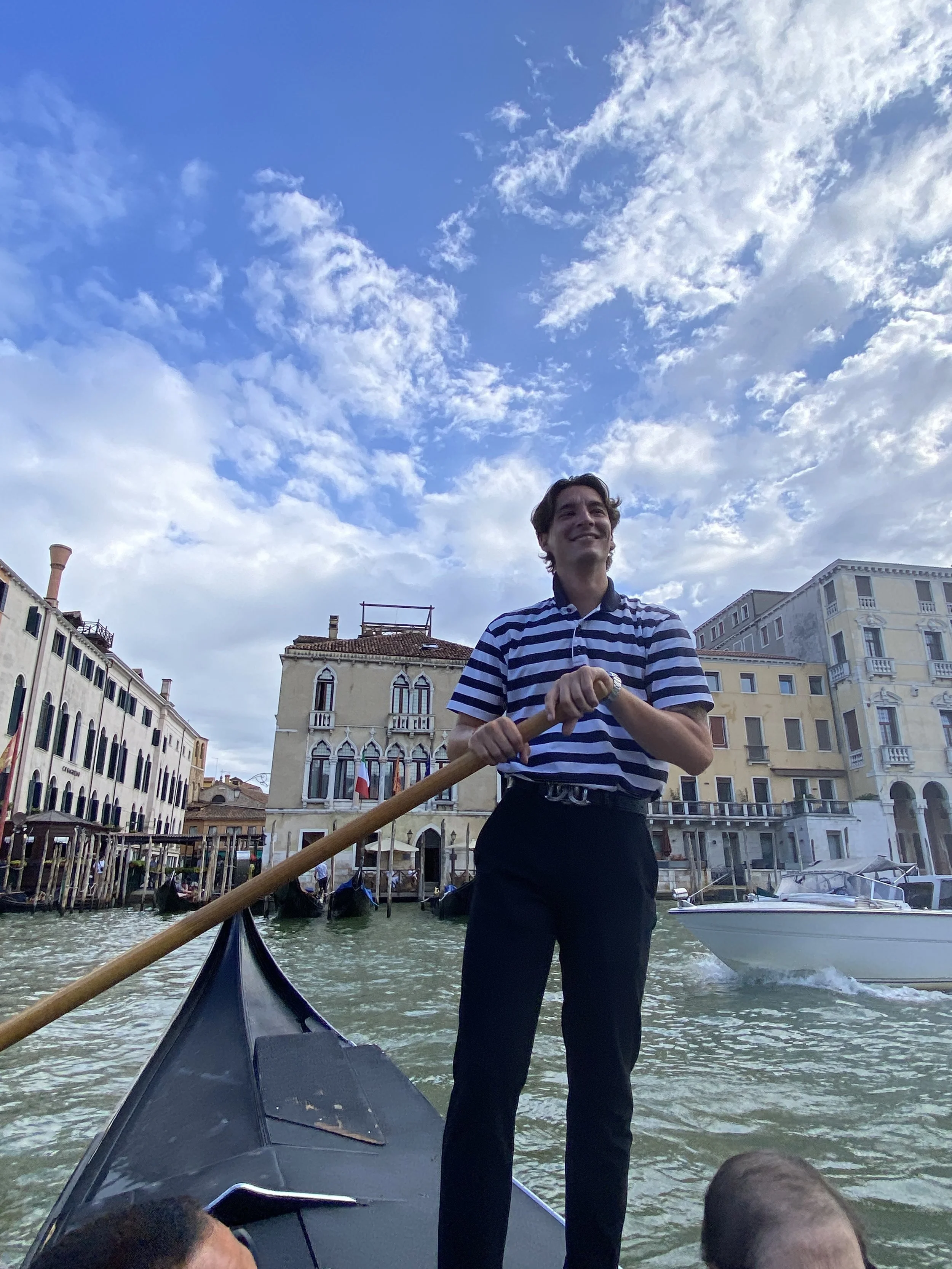
Of course, no trip to Venice would be complete without a gondola ride. Ours was short, just to cross to the fish market. We walked and walked and walked - across the Rialto Bridge (built in 1588), across the Grand Canal, to Piazza San Marco and the Campanila de San Marco, the famous bell tower and lookedout over the iconic Santa Maria della Salute church, built in the 1600’s.
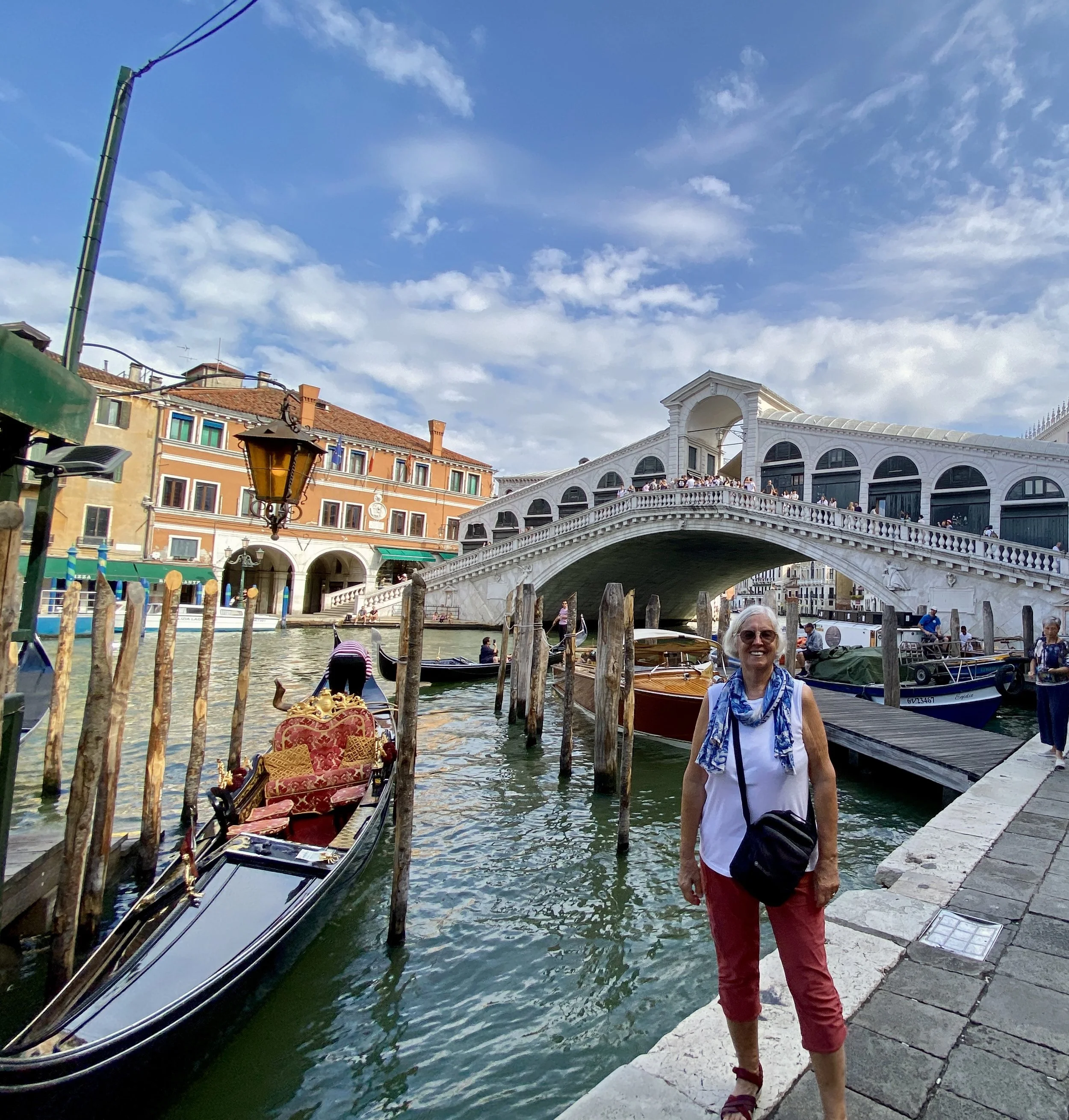
Rialto Bridge
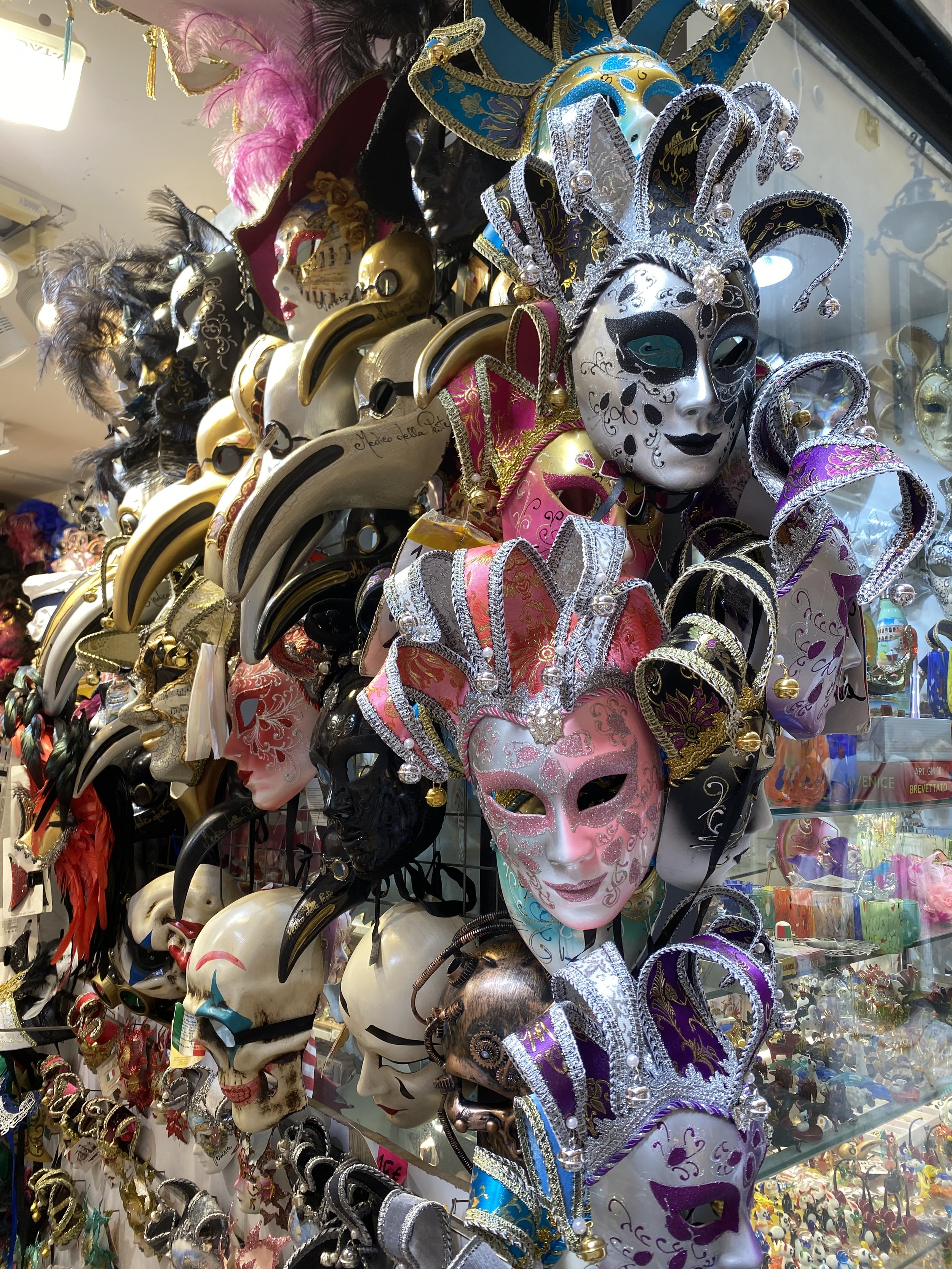
Mask stores everywhere! Apparently Venice has a history of residents going anonymous while gambling or meeting secret lovers, thus needing masks. That tradition faded over time but masks have made a come-back because they turned out to be bestsellers for tourists. We saw many mask makers practising their trade, in workshops loaded with sequined and feathered masks, each one more elaborate than the next. But also the iconic plague masks, of which physicians stuffed the long, hooked nose with aromatic herbs, spices, and camphor in hopes that this would filter out the foul odors that supposedly spread the dreaded disease.
After much eating, drinking and especially much walking, it was time for our little group to move on. To Bologna and our next culinary adventure!
RESOURCES:
Venice Tourist Information
Venice - UNESCO World Heritage site