In all our years of travel we had not been to India. Yet.
We had traveled around it - in Pakistan, China, Myanmar etc. but we had not been in India.We had read lots of BOOKS about India, most of them showing us beautiful, lush nature and beautiful people, but also very many of them. It was books like City of Joy and those about Mother Theresa that made us weary of being among millions of people in incredible poverty.
But once we had watched a You Tube about the annual Camel Fair of Pushkar in India, we were intrigued. The sites were so colourful, joyful, spectacular that we put it on our bucket list. And, earlier this year, we decided that it should be the next item on that list.
But how do you travel through India? Were we going to be brave enough to use public transportation? Friends of ours who are diehard travelers, had tried busses and trains and strongly advised against it. And we are not tour-group-in-a-bus people. So how else could we see some of this huge country?
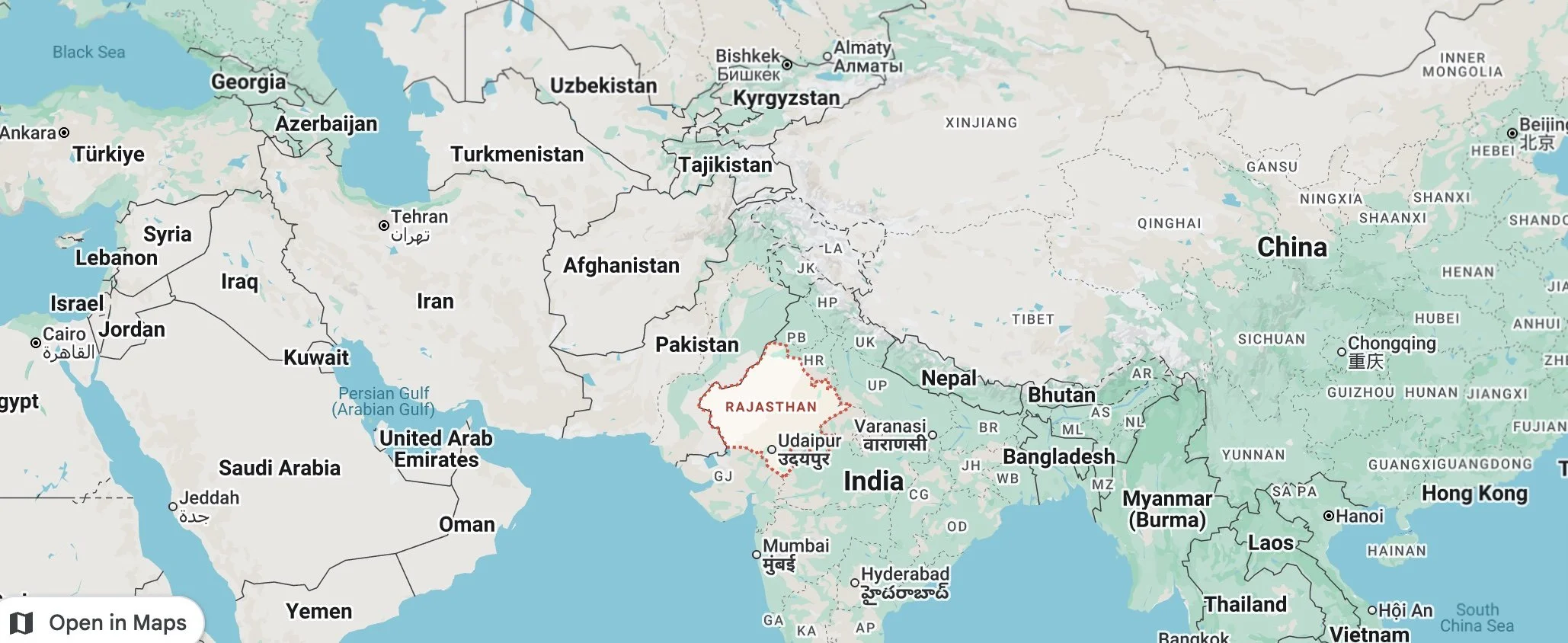
We made a list, a very short list, of our must-see places. This included the Camel Fair and the Taj Mahal. Then I googled for travel agencies like Intrepid, who offer tours with very small groups. In doing this research, I came across the website of Vacation India. Here, we found the perfect itinerary: 14 days touring around Rajasthan. Rajasthan is in northern India and its largest desert state, bordering Pakistan to the east. The more I read about what they offered, and the cost, the better it looked. I contacted the company via WhatsApp and received immediate answers to my questions. The online reviews were good. We decided to book.
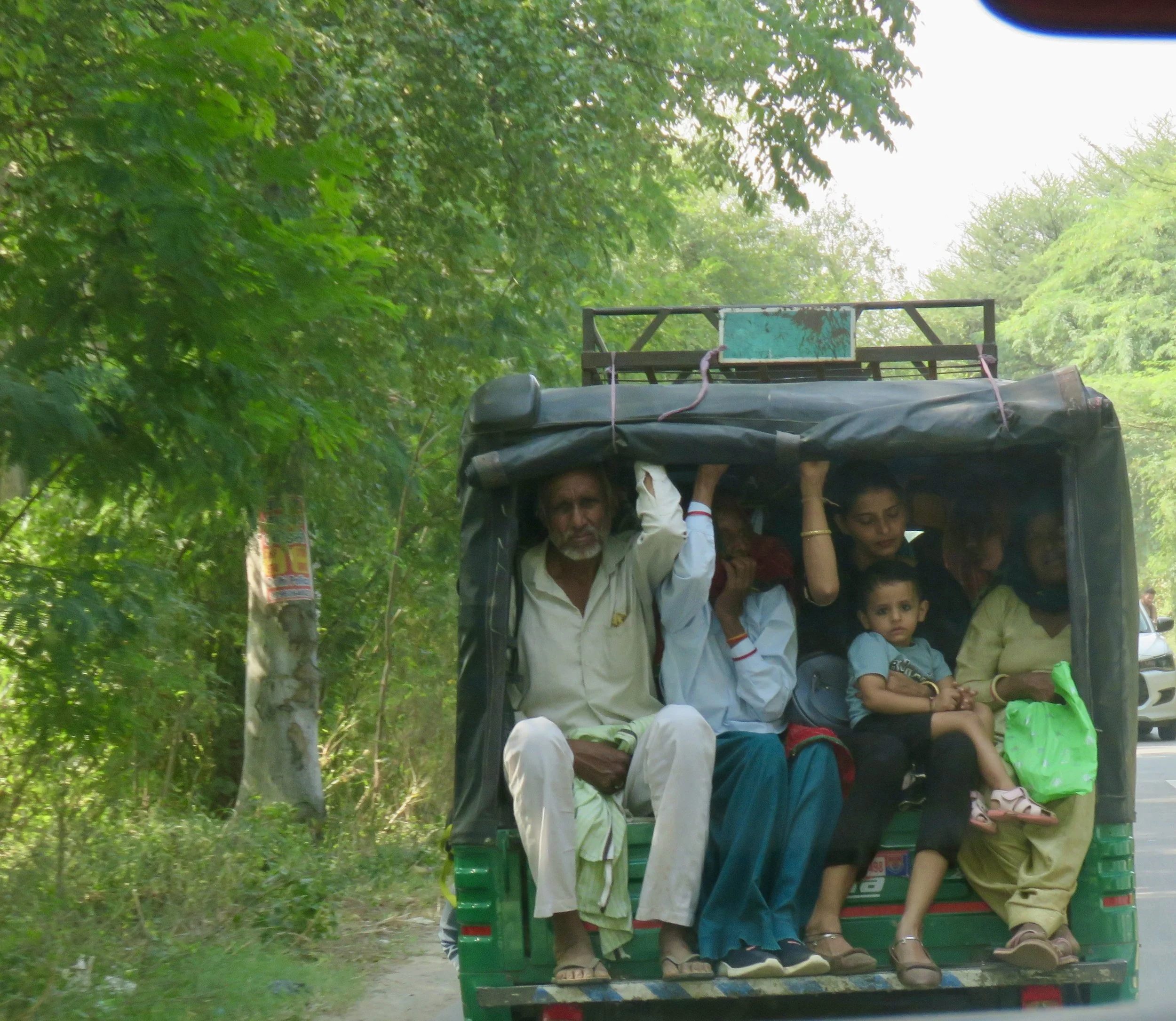
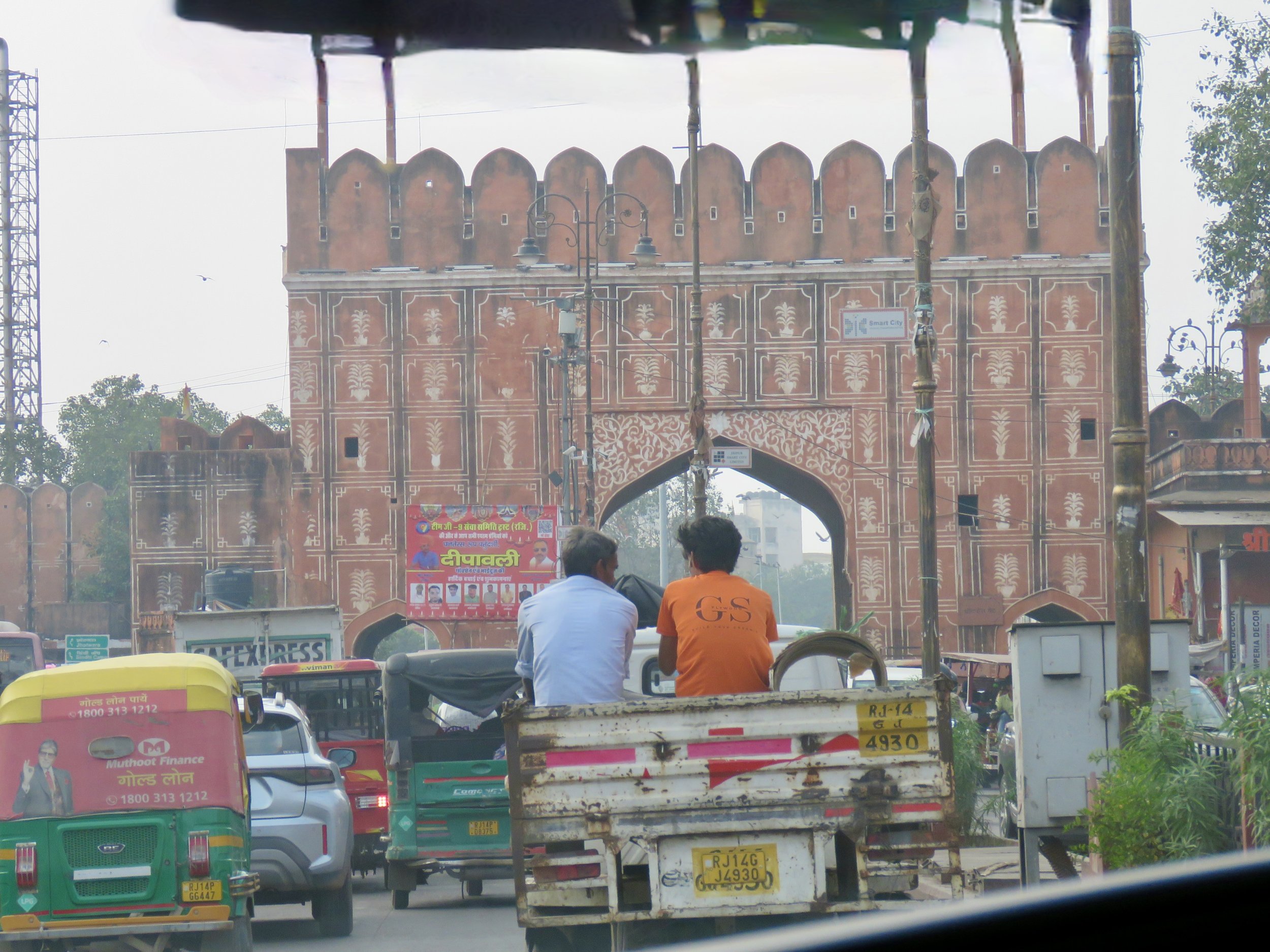
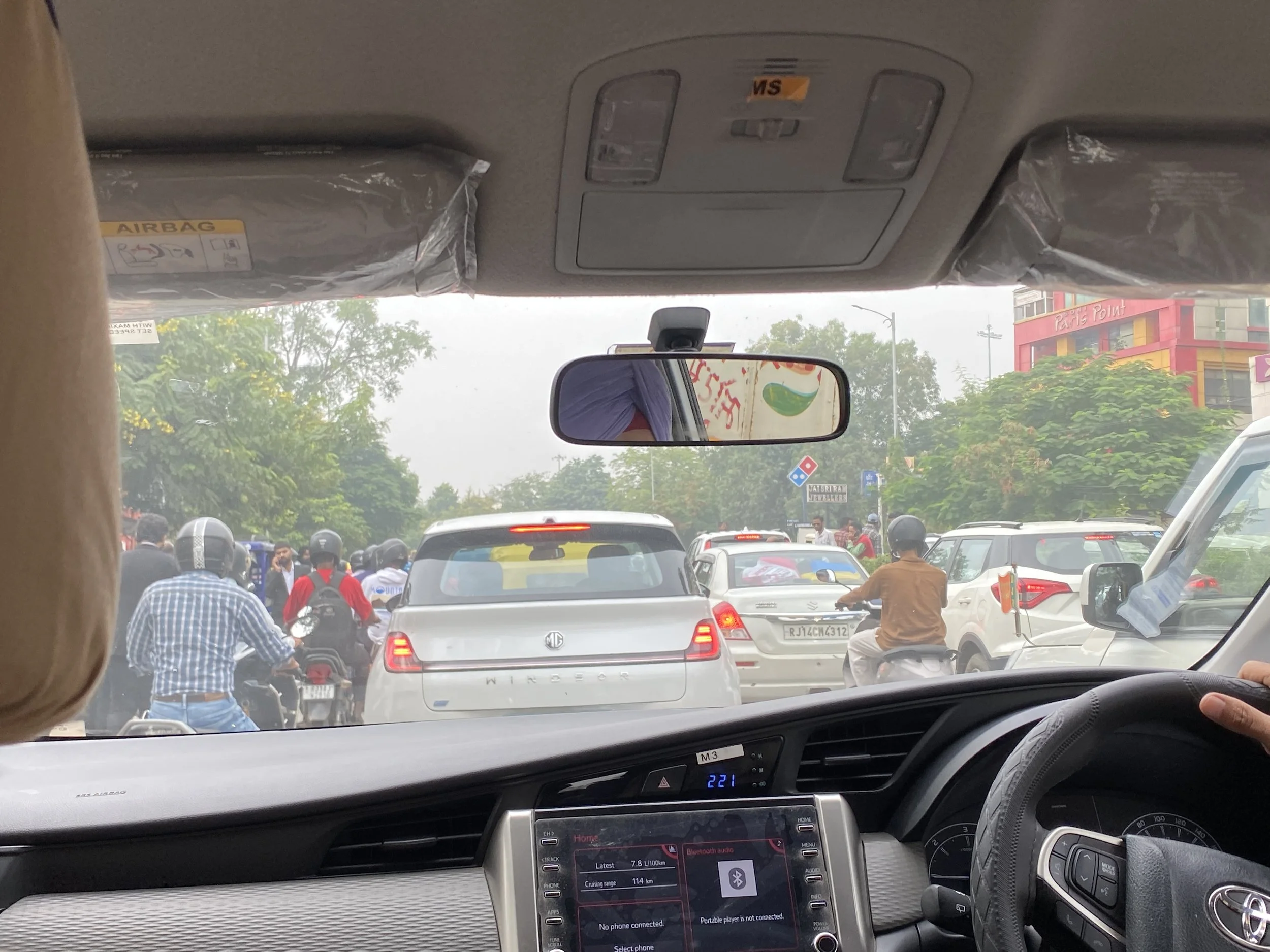
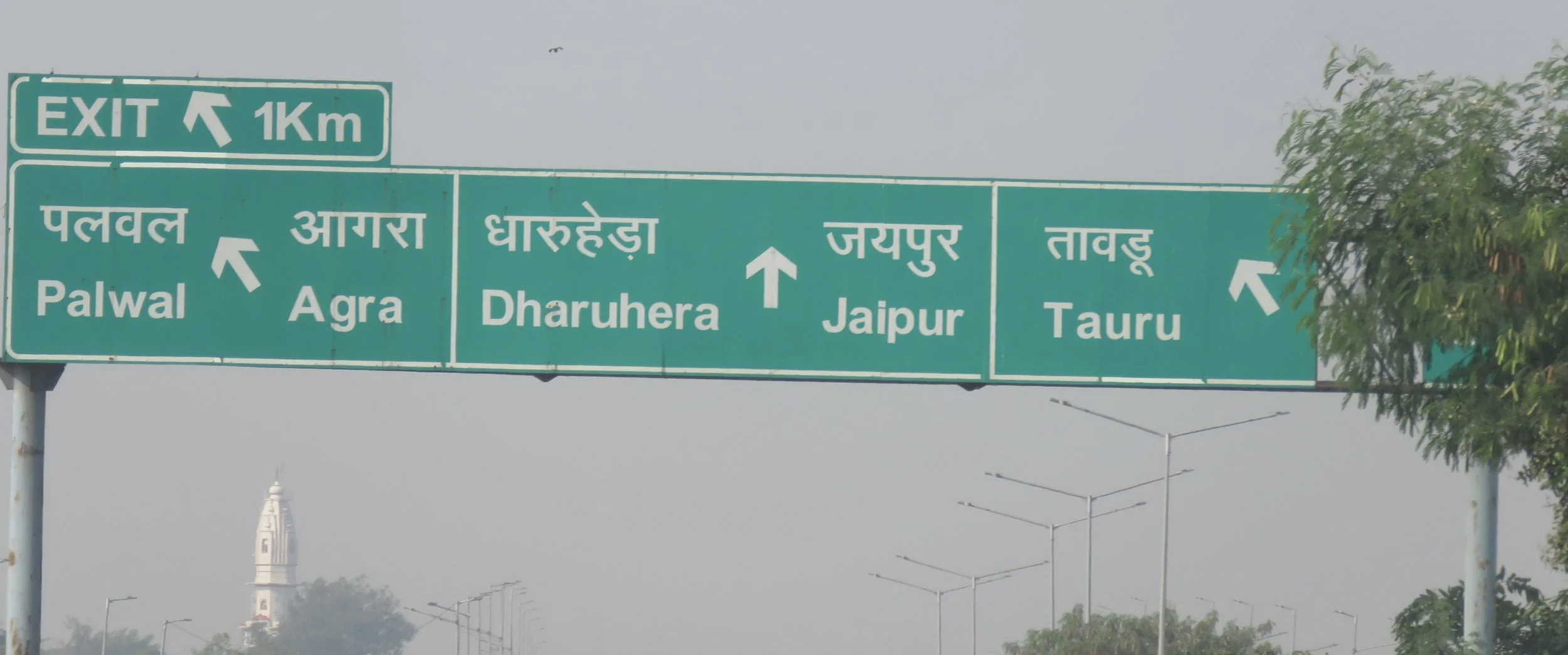
And what a treat it was not to have to find our own accomodations. Driving in India is impossible for those not initiated into the chaos called traffic. But our trip came complete with a car and driver! Just the two of us. And we were consulted every step of the way about the type of hotels and the sights we wanted to (and should) see.
Rajasthan is India’s largest state by area and has a royal heritage. Its history dates back thousands of years. Ruled over by many leaders, invaded by Moghuls, Arabs and others it has an unsettled past. In its recent past, the British made treaties with rulers of Rajasthan who were allowed to rule their princely states. After India’s Independence in 1947, the princely states of Rajputana were integrated to form the present day state of Rajasthan on 1 November 1956. Today, the former royal Maharajas still retain their titles and often still own their vast palaces. However, they lack the resources to maintain these huge, often crumbling properties so many are now being turned into hotels.
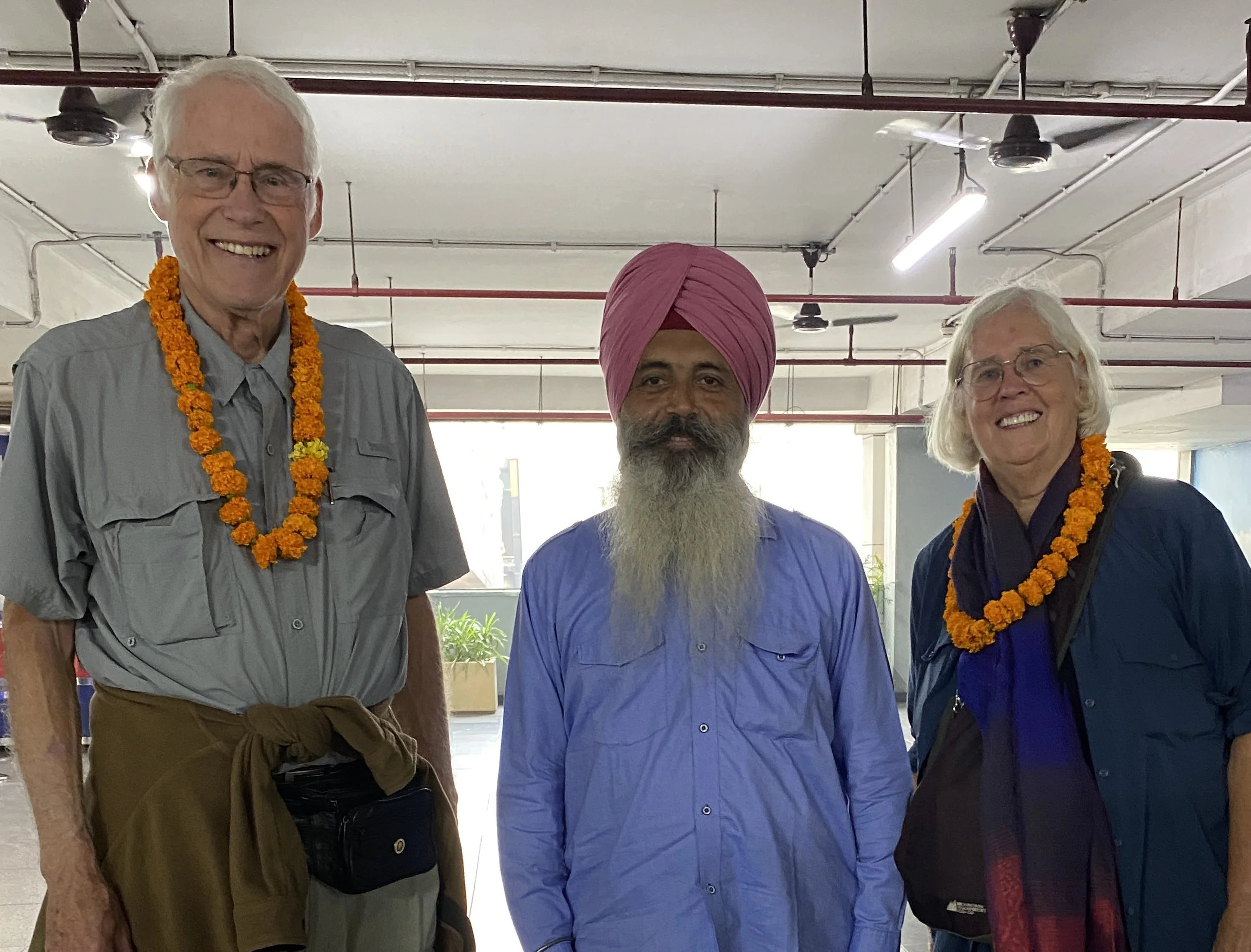
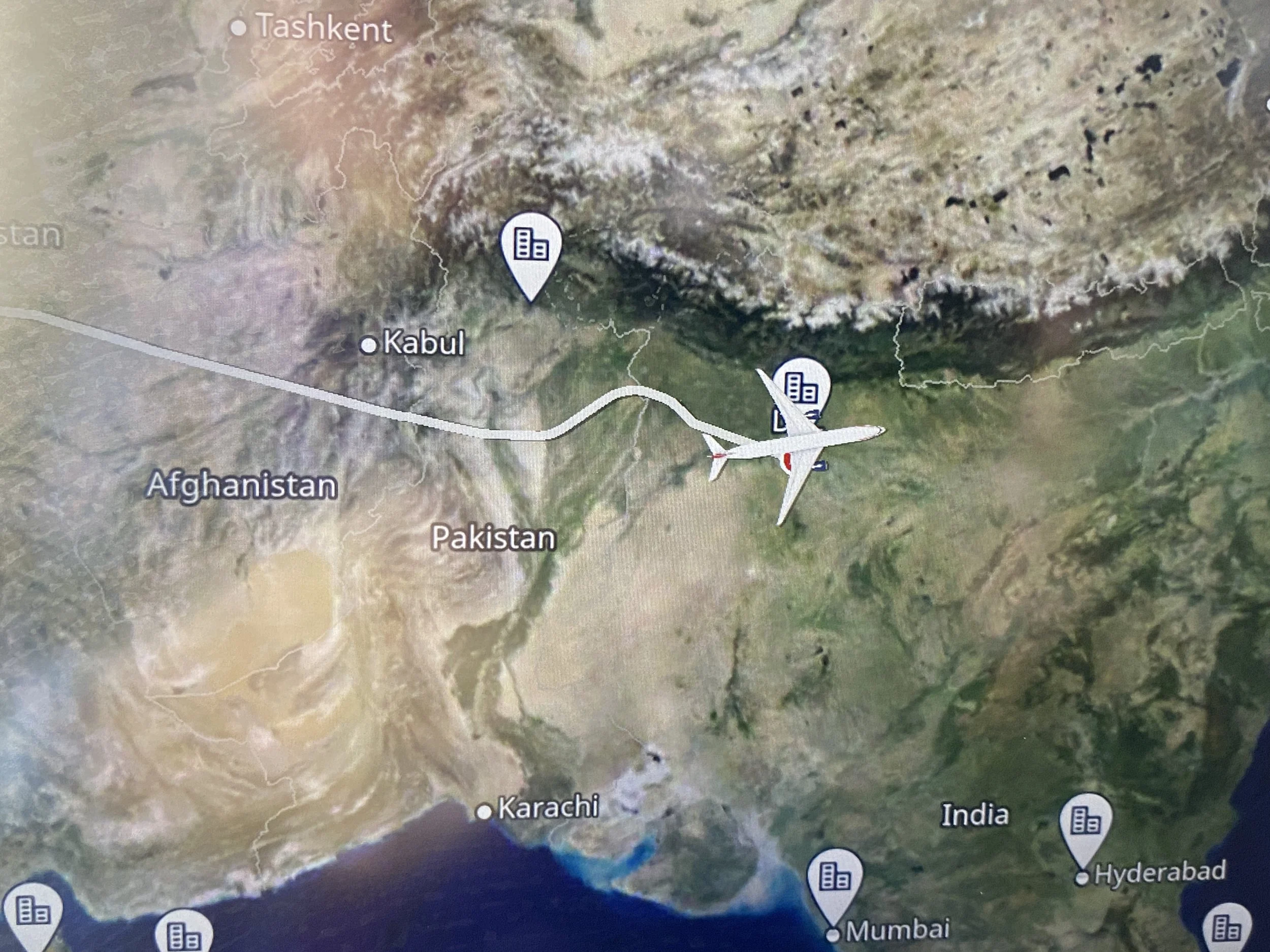
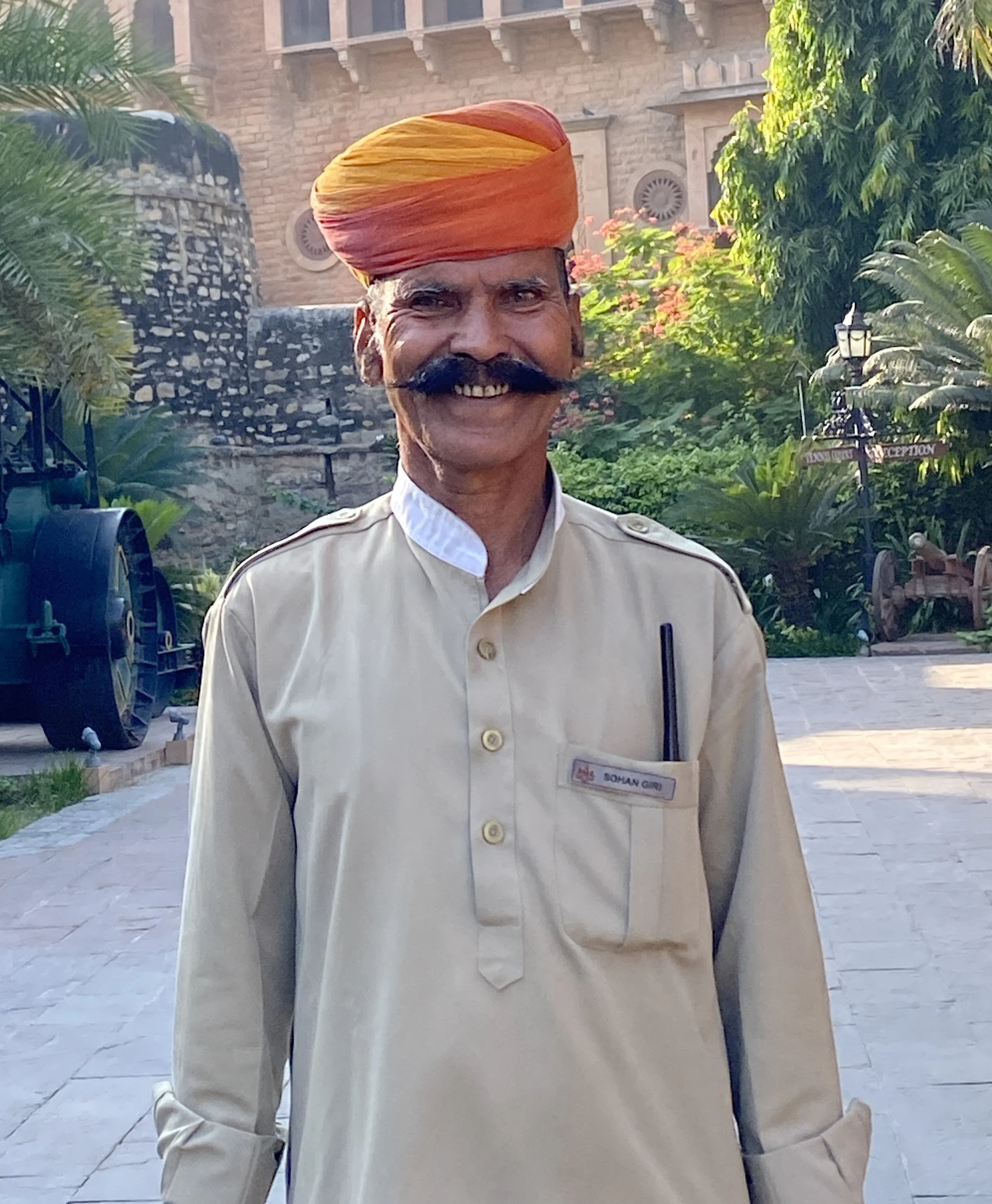
We flew from Vancouver to London and then on to Delhi. A long journey for a short, just over two weeks, trip. The efficiency of Vacation India started at the airport where we were met by a greeter who escorted us, and our daypacks, to a waiting car. Our driver for the next two weeks turned out to be a wonderful, kind, laid back man called Guru Singh. He is Sikh and spoke decent English. He promised that he didn’t mind if we peppered him with questions about the sights, sounds and smells that were all new to us.
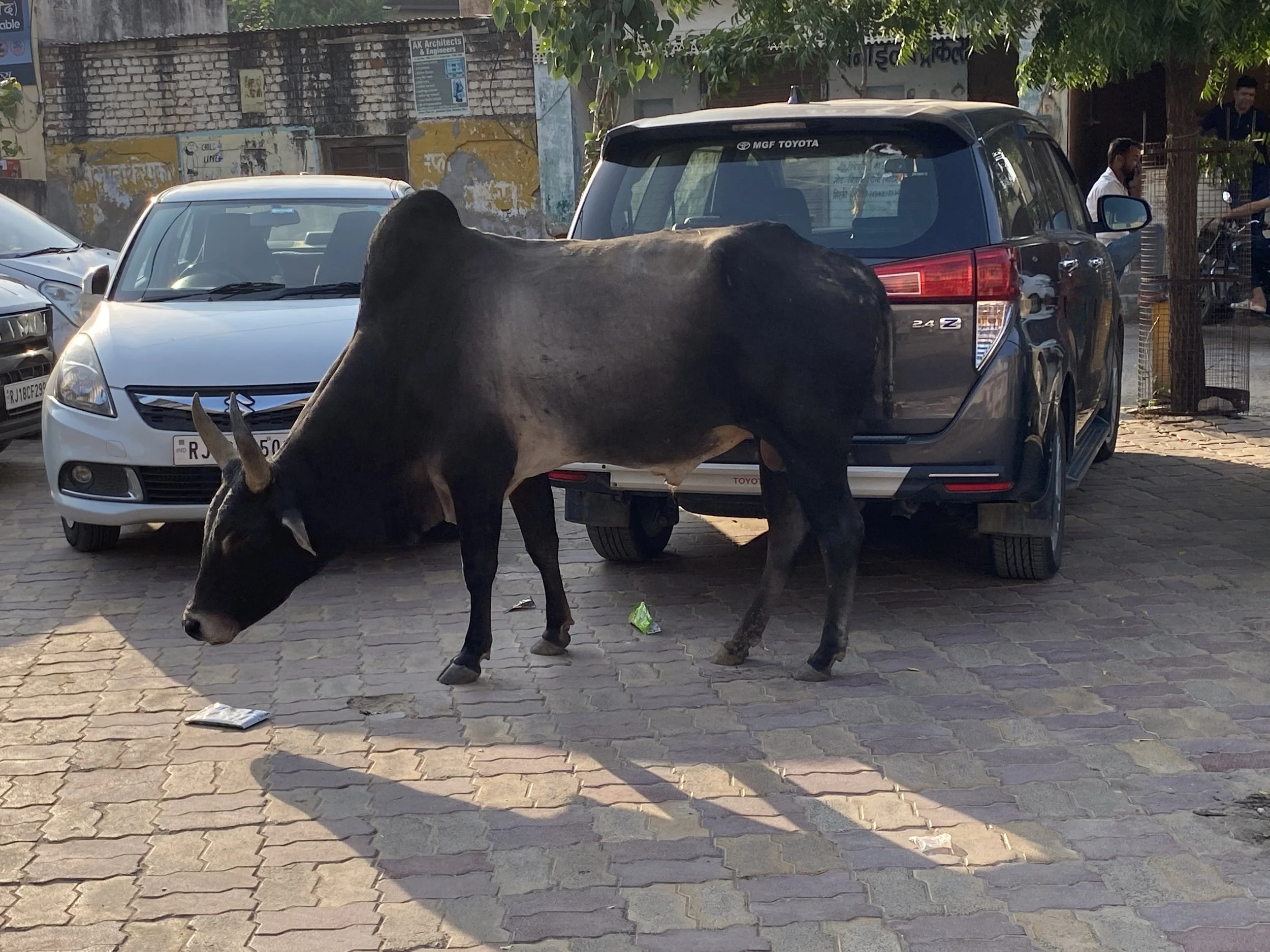
Cows calmly roamed everywhere, in downtown Delhi as well as in the countryside.
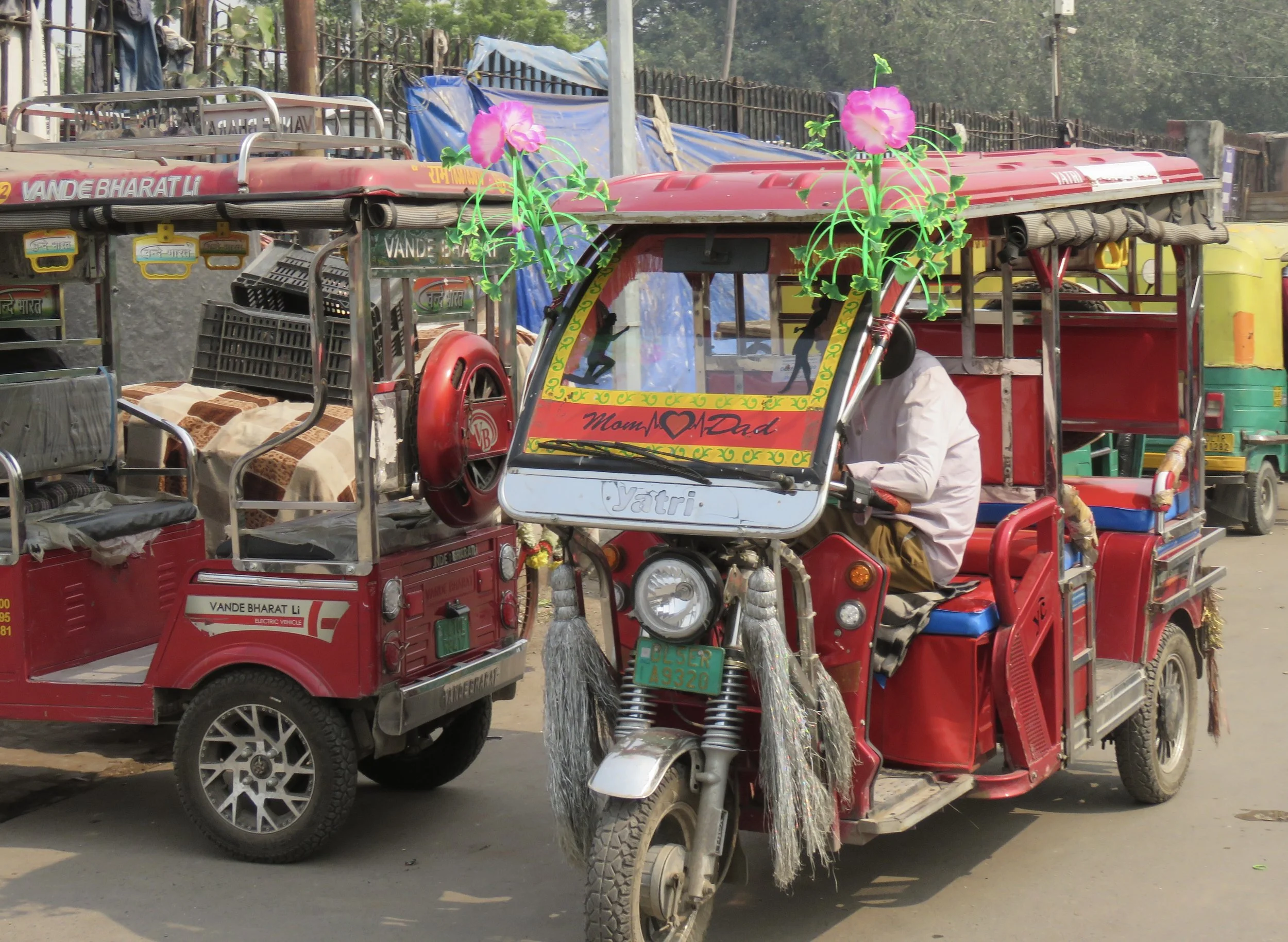
With a population of some 34 million people, larger Delhi is what we had imagined India to be. Crazy traffic, people everywhere and a jumble of houses, offices and apartment buildings. The traffic seems chaos at first as all cars honk and motorbikes weaves in and out of about 6 rows of traffic squeezed into 3 lanes painted on the road. Lines are completely and utterly ignored, as are traffic lights often. Yet, in the long run we found that the honking is not aggressive. No one fingers each other. They merely indicate that they are behind you and coming. Most cars slowly move over to make way, among ricksaws, bicycles, trucks, carts, and a lot of cows. How those cows even ended up in downtown Delhi, we don’t know but they, and even sleeping dogs, were everywhere in the middle of roads and highways. And all trucks and cars calmly swerved around them.
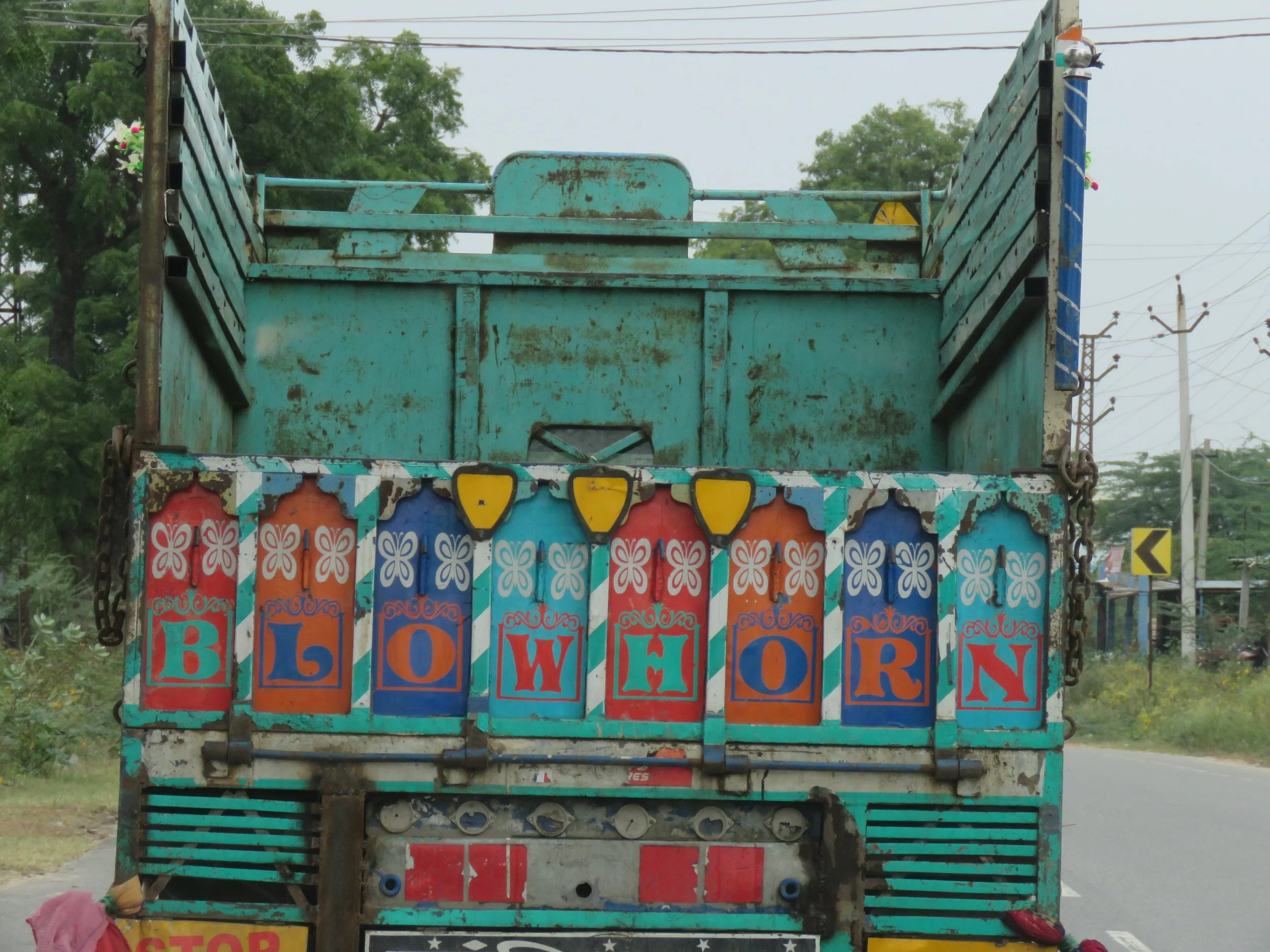
Most trucks have signs like this, or stickers that say ‘Please Honk’.
And so, after two hours driving through Delhi, we arrived at one of the most wonderful, clean, relaxing hotels we ever stayed at. We had decided against sightseeing today, as was offered by the travel agency, but opted to catch up on 20+ hours of flying and a 12 hour time difference by swimming in the pool and having a long sleep.
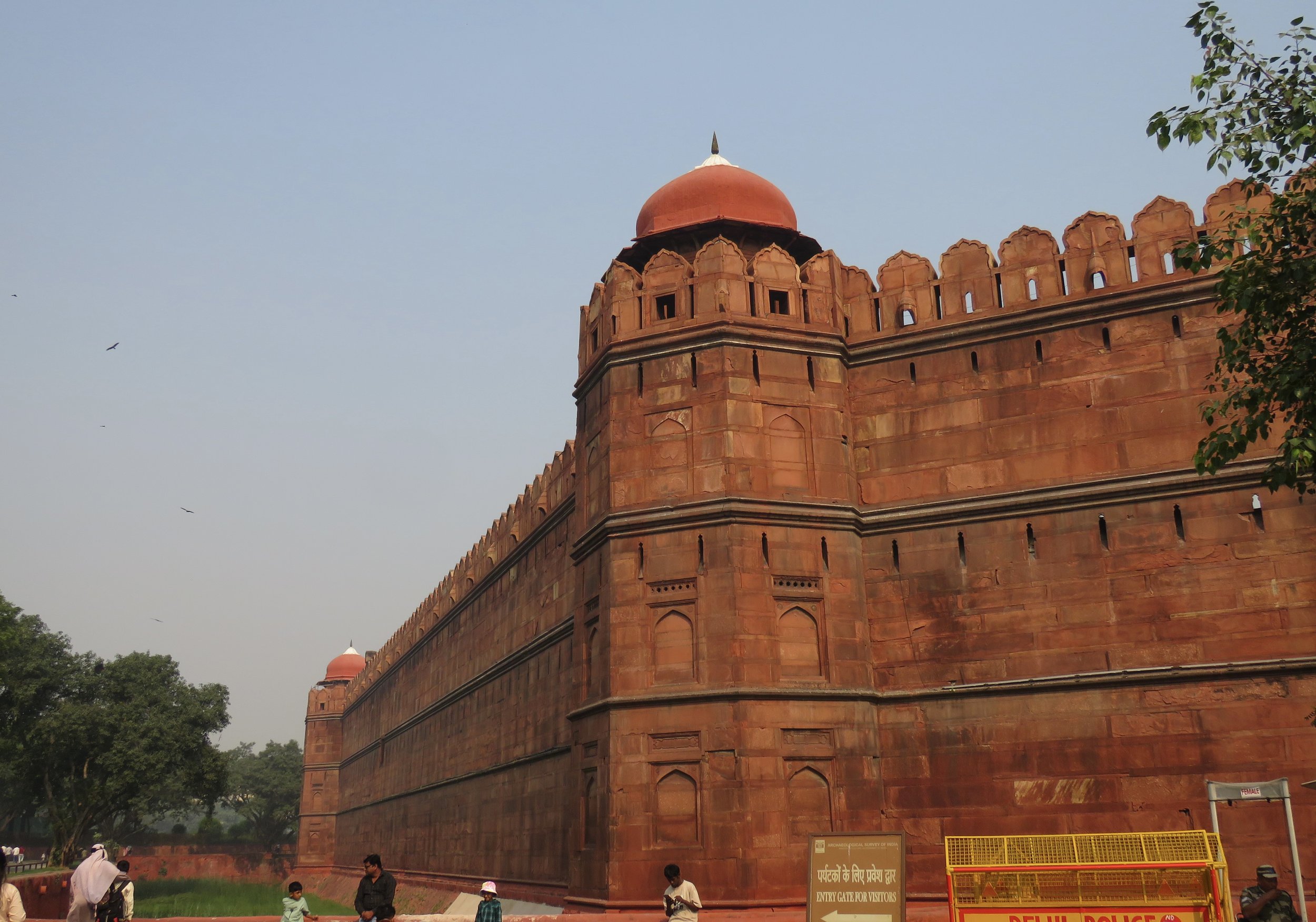
Red Fort, Delhi
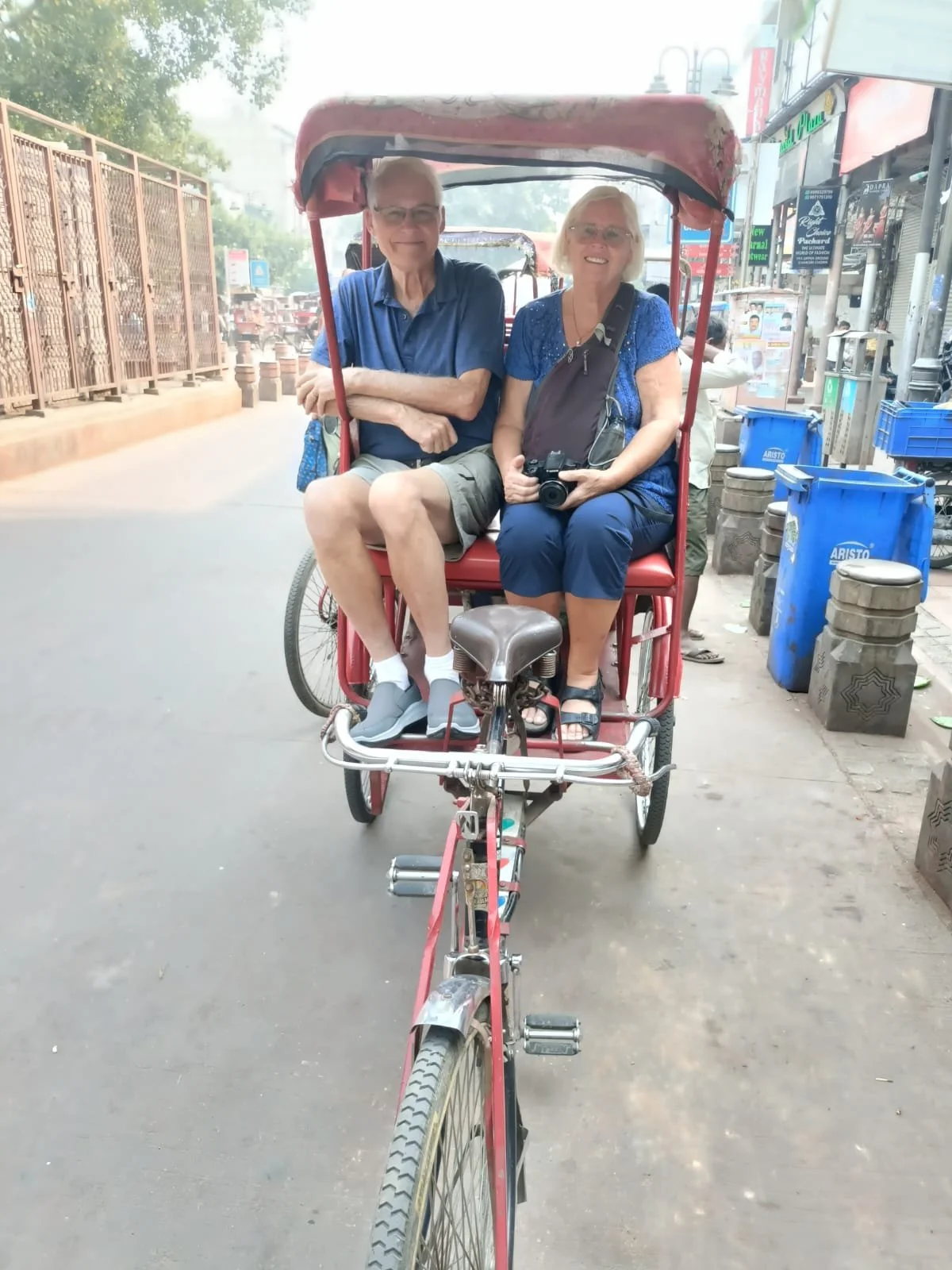
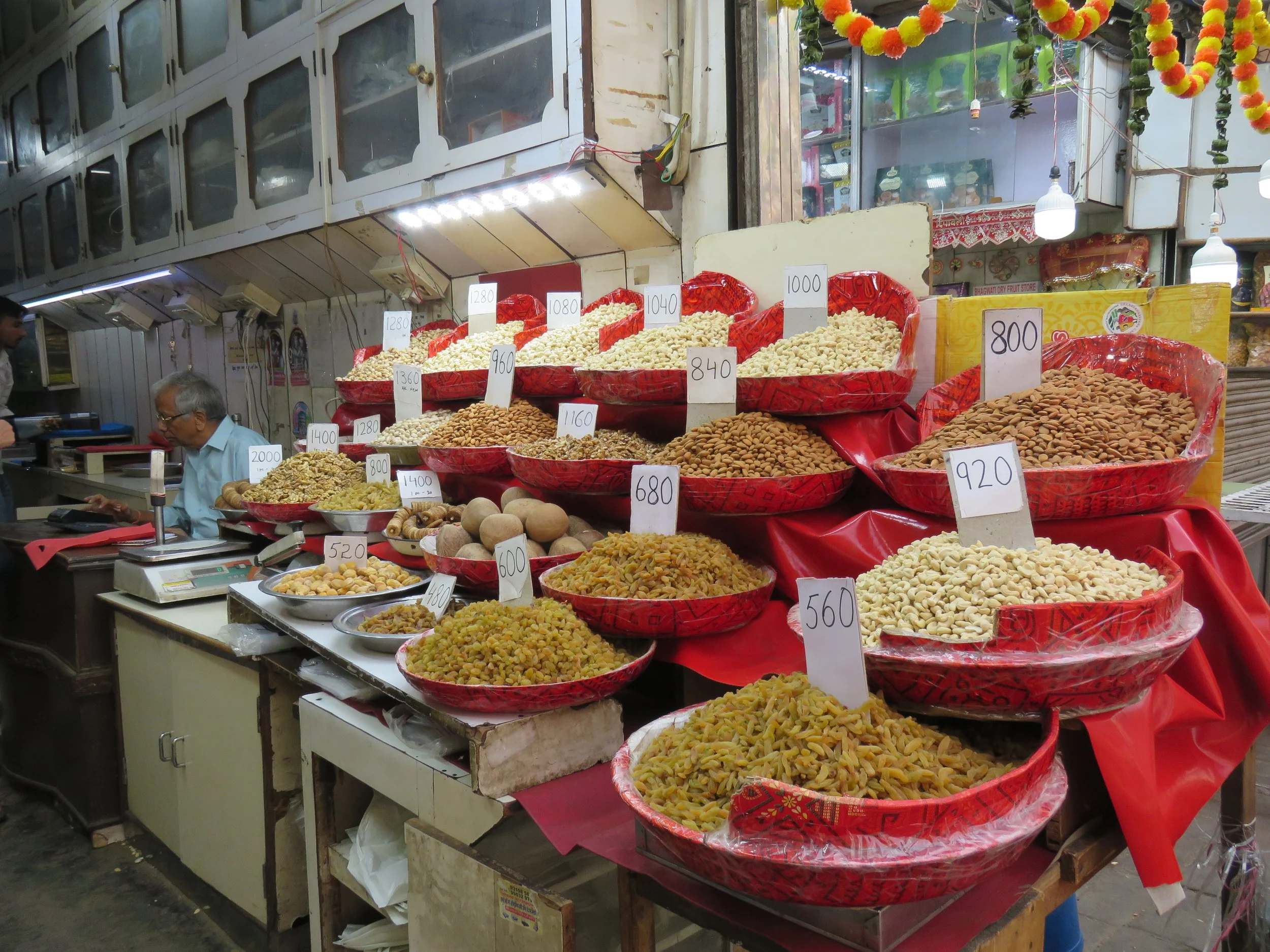
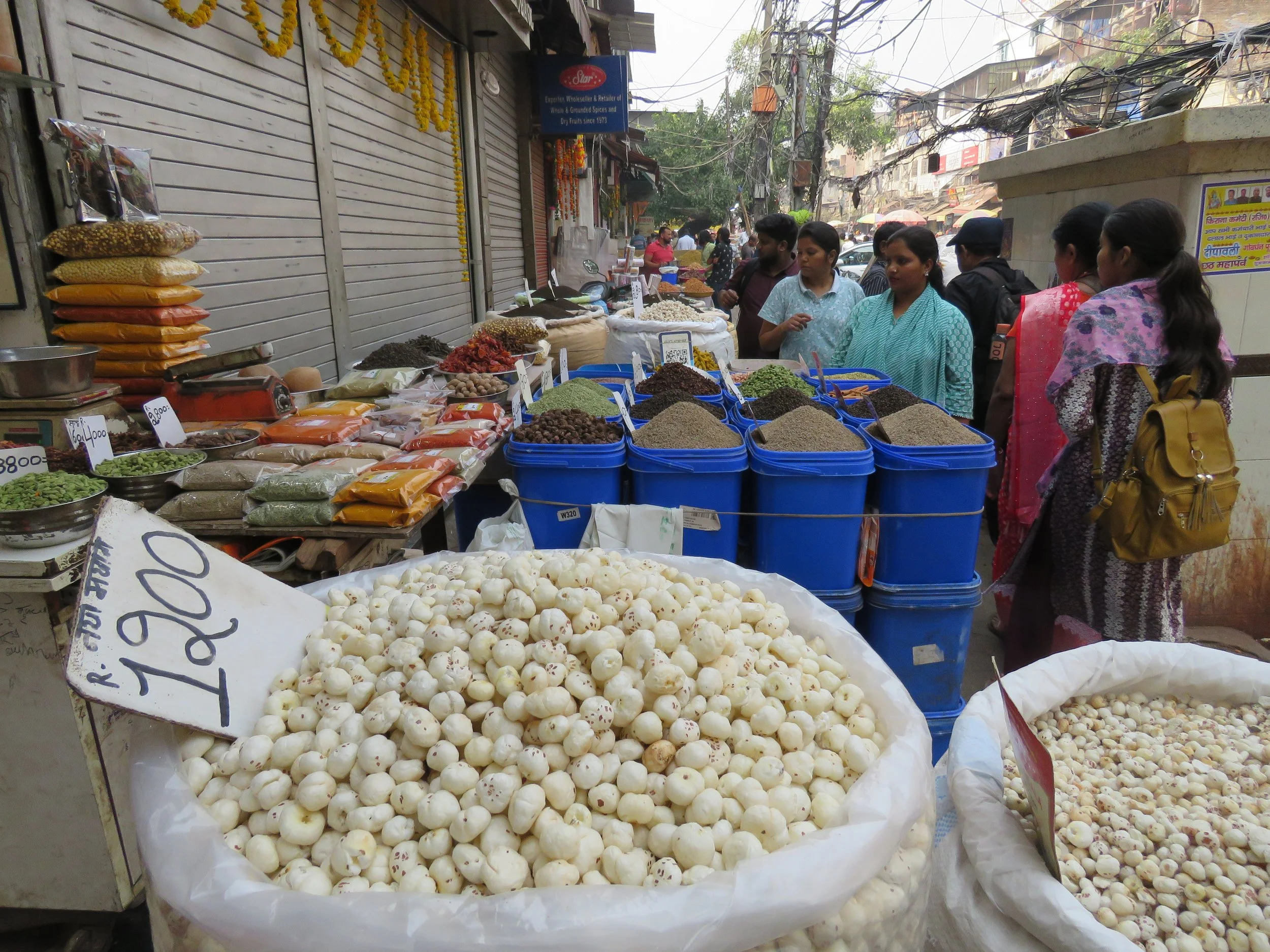
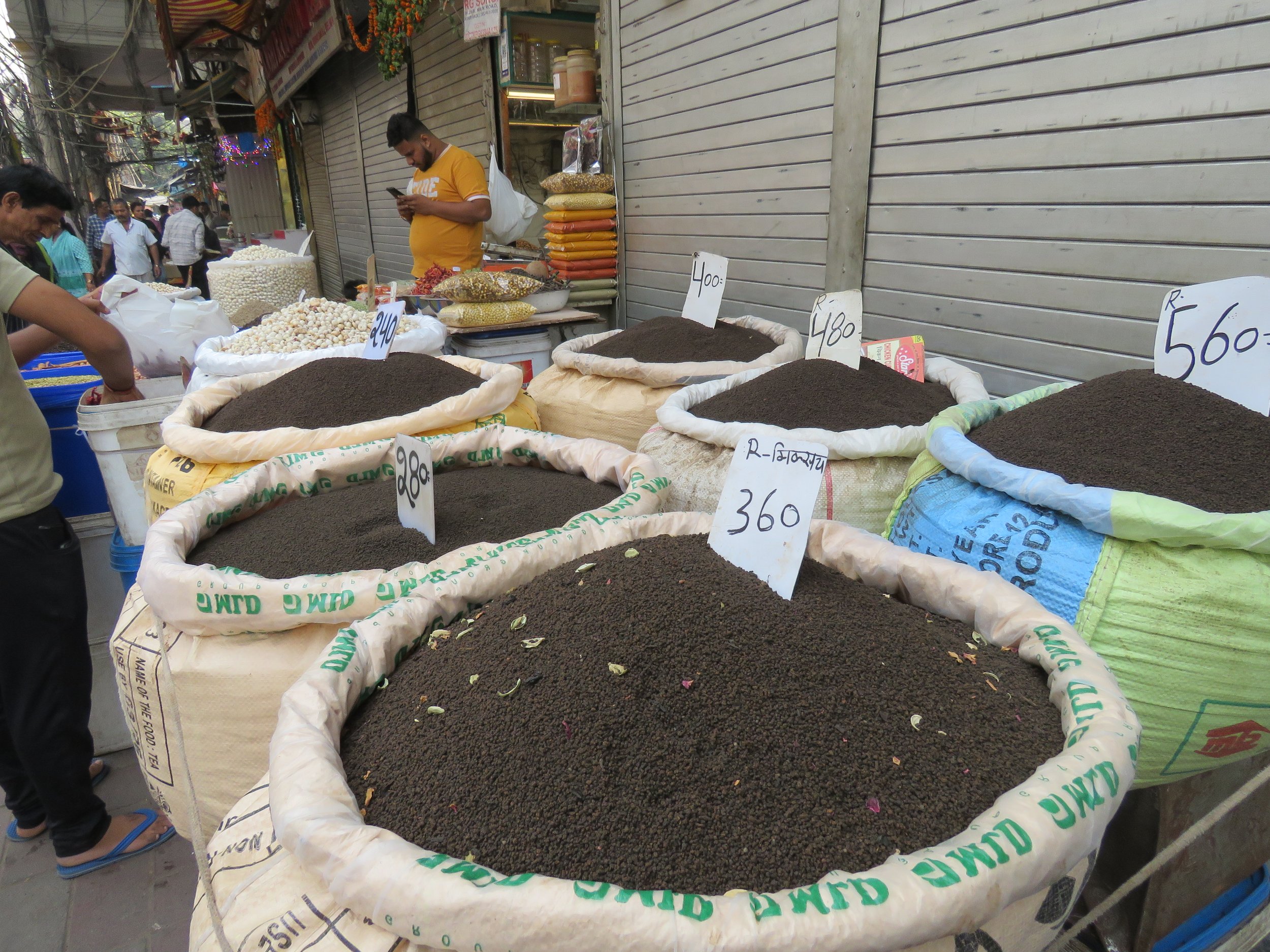
The following morning we were refreshed and keen to see Delhi! Guru Singh met us at the hotel and we dove right into the traffic to reach downtown Old Delhi. From a long list of sightseeing options, we had selected those that appealed most to us, rather than try and see it all. We visited Delhi’s Red Fort and then climbed into two rickshaws to visit the inner city and spice market.
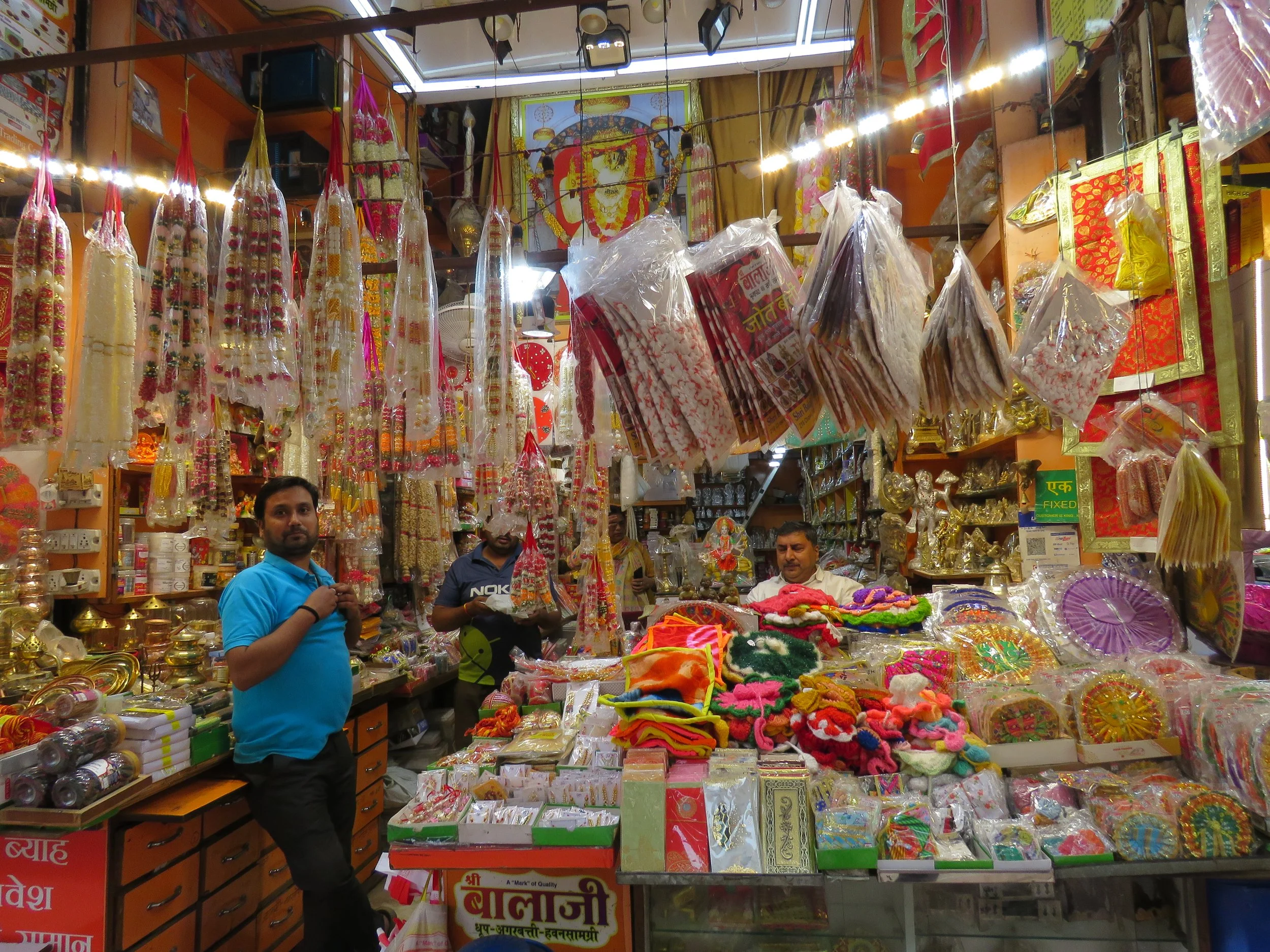
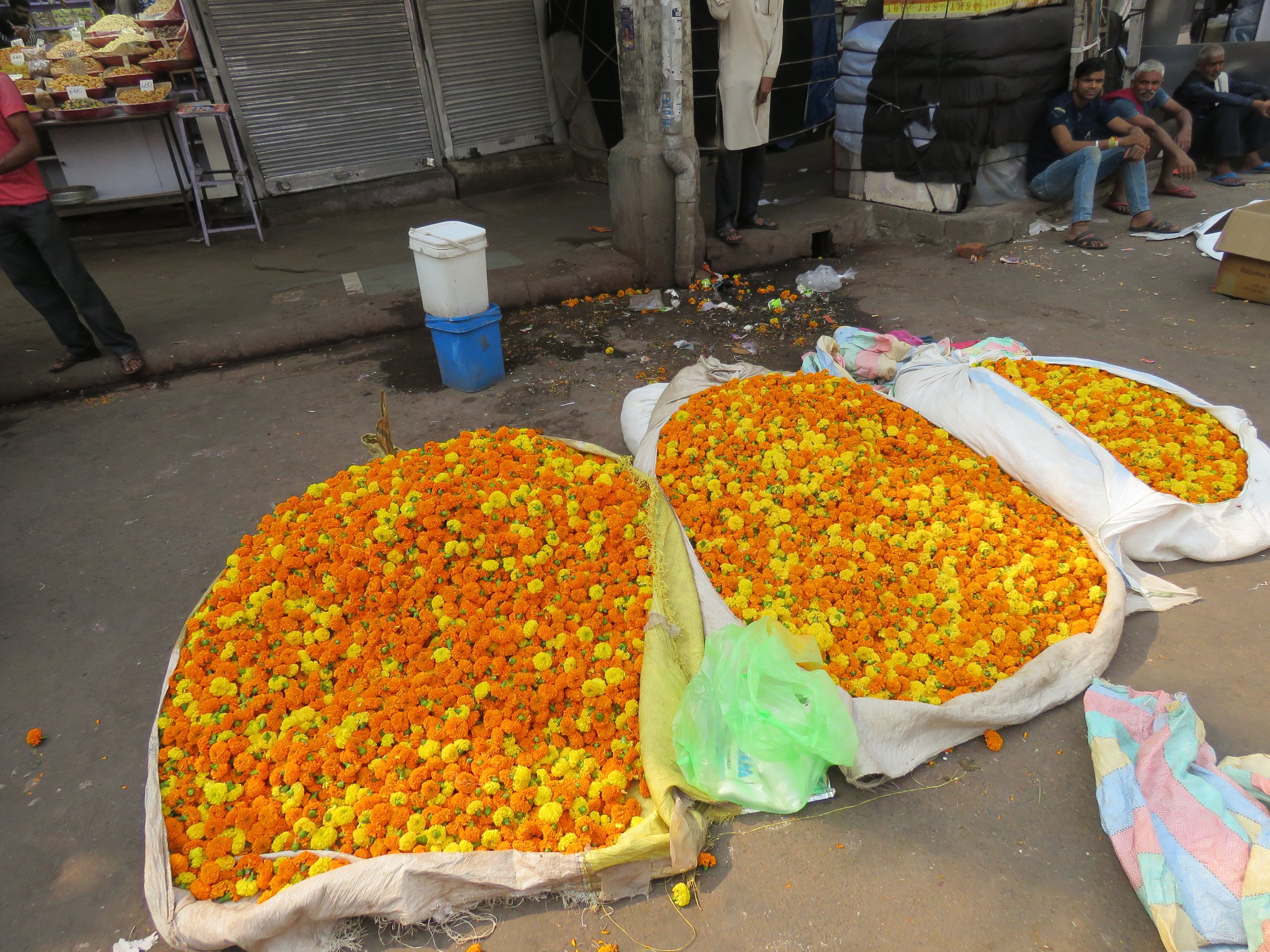
I loved strolling among the smiling people and feasting on the colours of marigolds and saris everywhere.
Sometimes the alley ways were the same width as the rickshaw! What floored me most was the electric wiring everywhere. The sky overhead was darkened by millions of cables and wires, running from buildings overhead, bundled onto posts. I can’t for the life of me understand how an electrician could make sense of what goes where, or why there are no daily power outages…
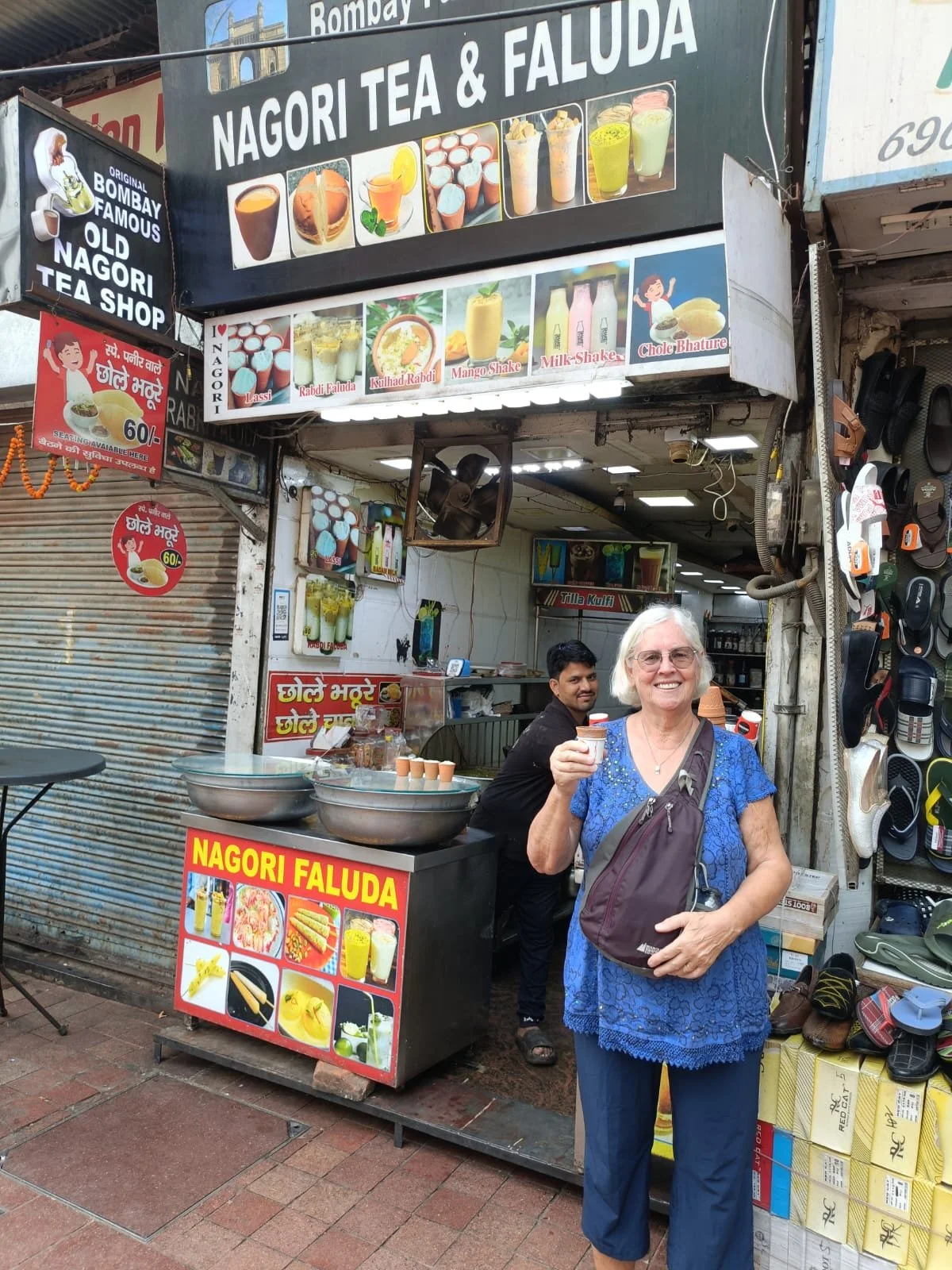
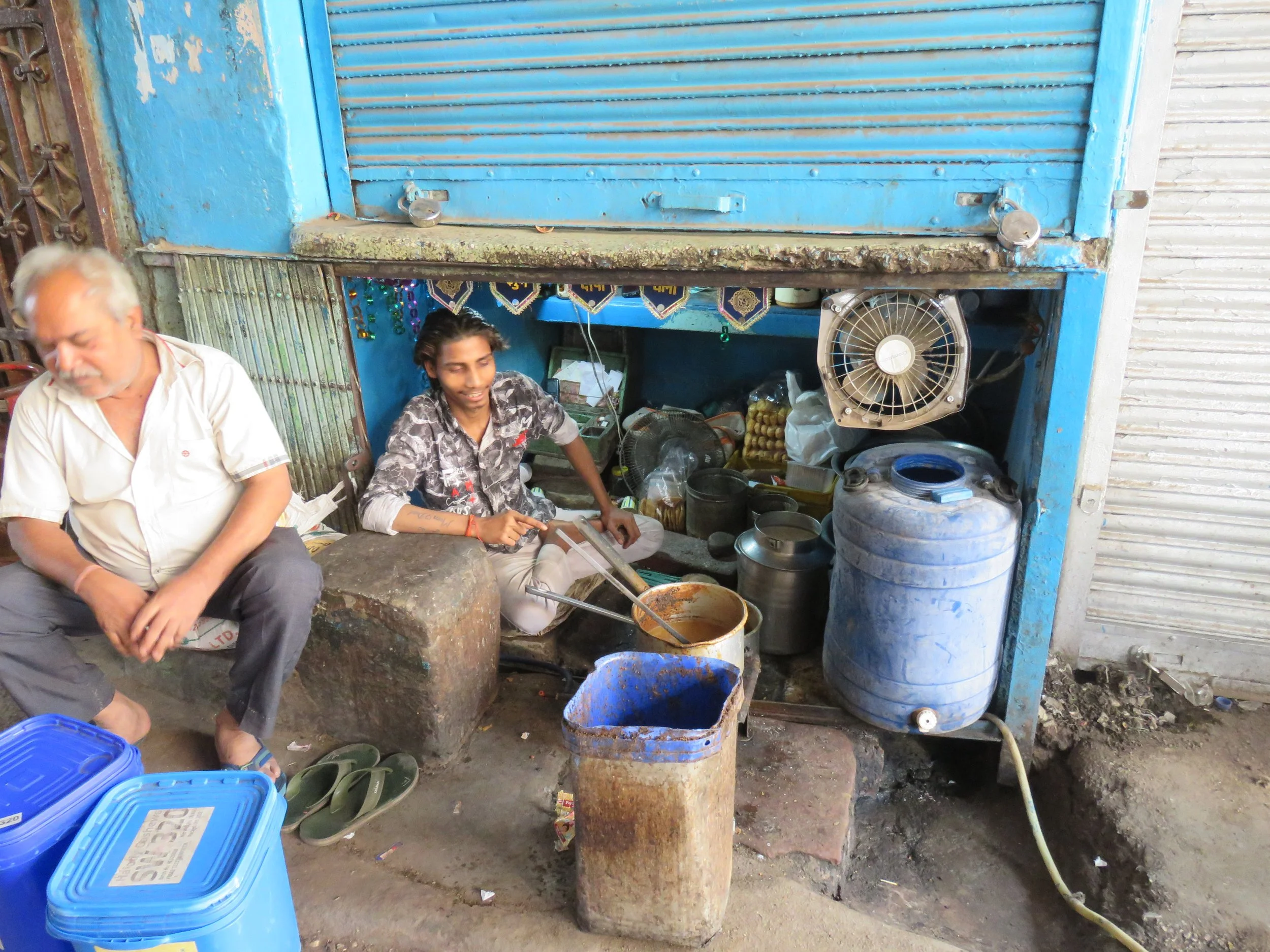
My favourite stop was to drink masala chai - India’s iconic tea, sweetened with thick milk. The street vendors serve it in terra cotta cups that are thrown out and recycled! Beats paper cups and much more fun not to throw out but to bring home as a souvenir!
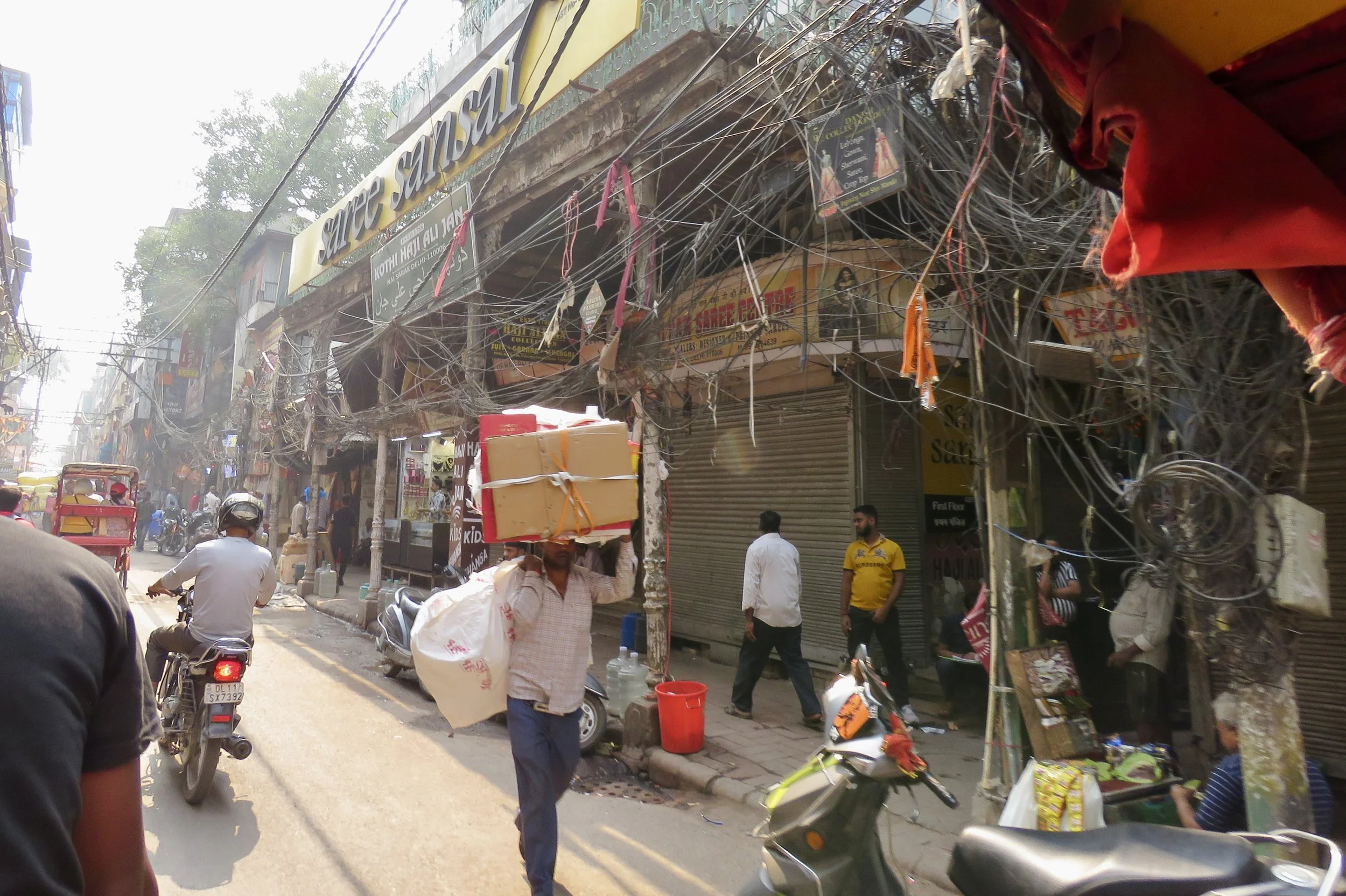
Just look at the electrical wires!
In our next blog, we’ll embark on our drive through India’s Golden Triangle!
RESOURCES:
https://www.vacationindia.com/
https://www.incredibleindia.gov.in/en/rajasthan
BOOKS - scroll to India