Leaving Cabo Verde, we faced eight days and nights at sea. This is probably comparable to crossing the Atlantic. It is one gigantic ocean and, in January, it did not offer very smooth sailing. We bumped and creaked along without land in sight - nor other ships or wildlife.
The wild life on board, however, was extensive. We enjoyed an Irish duo which performs regularly. There was an interesting cellist from Brazil - Andrei Cavassi. His performance reminded us of Yanni.
I also enjoyed experiencing Robert Burns Night on this British ship - complete with haggis, neeps and tatties and singing Auld Lang Syne!
One of the most enjoyable presentations was by the executive producer of the well known documentaries Human Planet. She shared fascinating stories and amazing footage taken by her team in remote wilderness settings around the world.
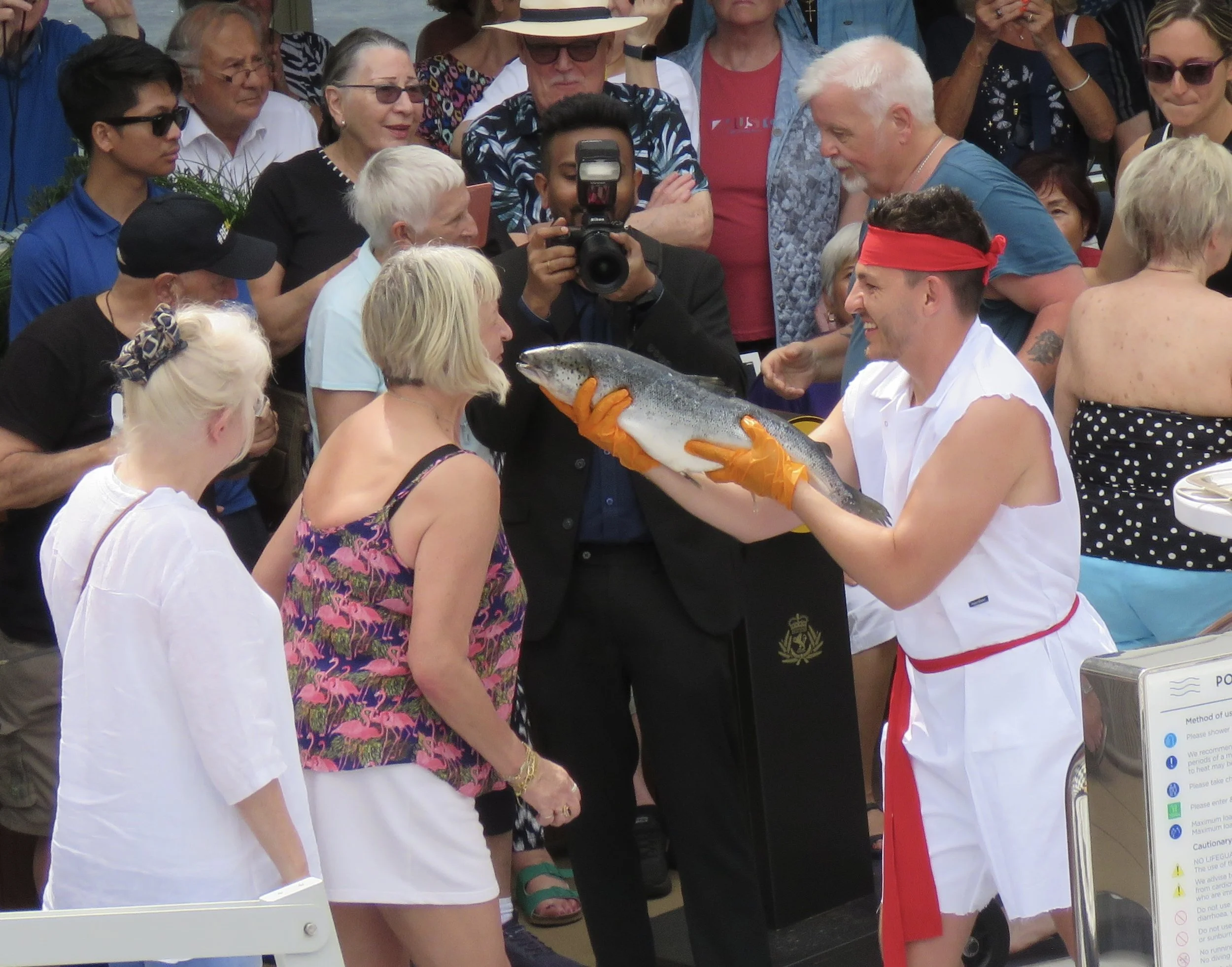
And then, during one of our seven straight days of sea time, we crossed the Equator. On a ship, that’s always a fun event when King Neptune shows up with his entourage, checks to see who is still a pollywog and who is to be initiated as a shellback. This usually involves kissing a cod and being covered in a lot of coloured slime…
But one of the most anticipated stops on this cruise was a visit to Namibia. We didn’t know much about the country but what we had heard was positive. So we were curious to get a glimpse of Namibia. And of course, it wasn’t more than a glimpse.
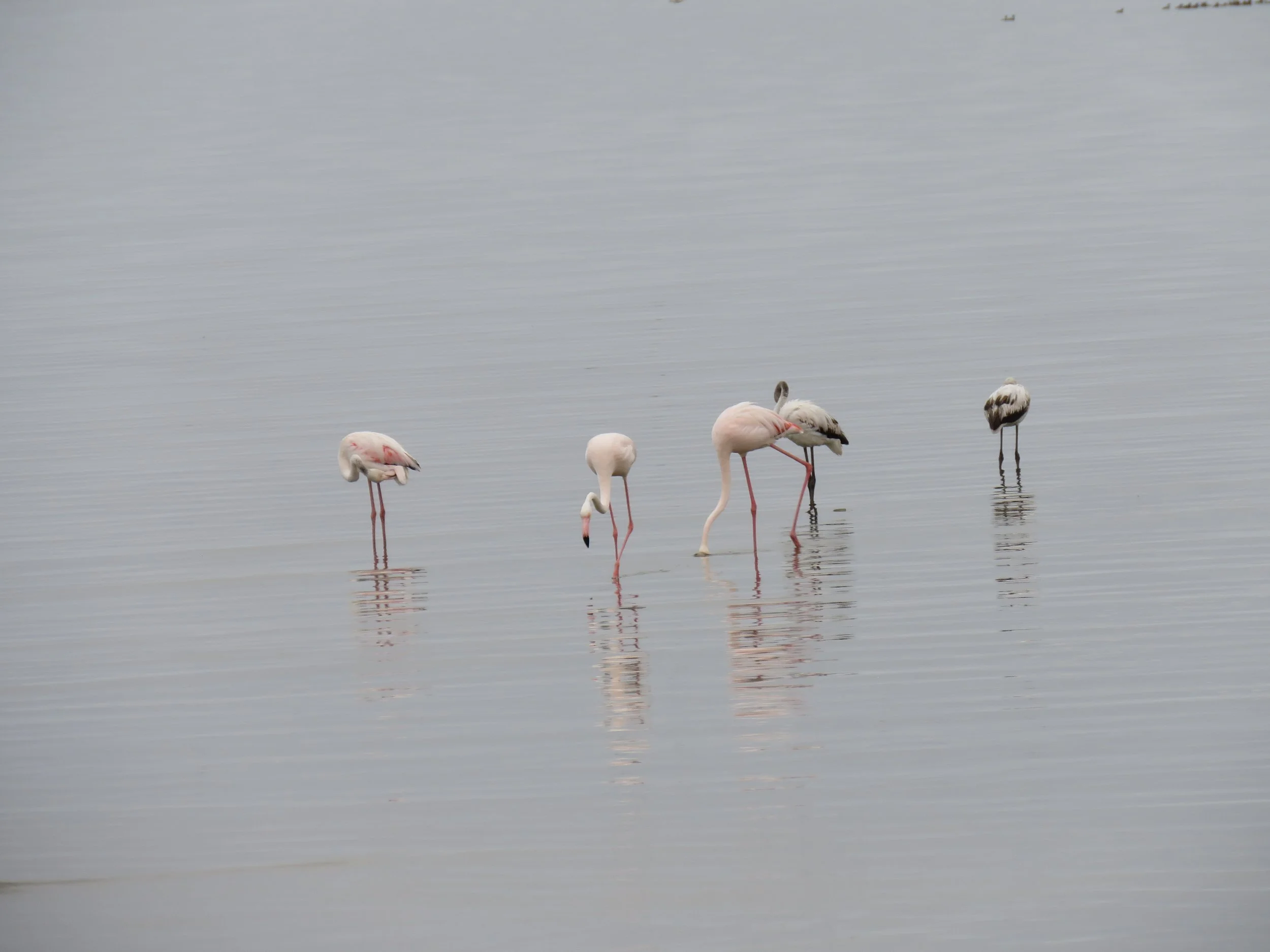
Flamingos at Walvis Bay
Since shore excursions on this, and other, cruise ships are prohibitively expensive, we had done our own research. For 1/3 of the cost, we had found a very similar Desert Excursion to the Namib desert, which ends at the shore of the Atlantic Ocean. And our experience with Pangaea Tours was perfect.
They reacted promptly to any inquiries, payment was easy to make and the owner/guide met us in his vehicle right at the ship. We were the only guests so we had a private tour all day. Hennie was born and raised in Namibia and was able to tell us everything about daily life, politics, education, health care and much more. While driving to the enormous salt flats outside Walvis Bay, we learned that Namibia has a black female president. Hennie assured us that, contrary to South Africa, the population is completely equal for people of all races and religions. There’s free education and health care although its quality may not be all that great.
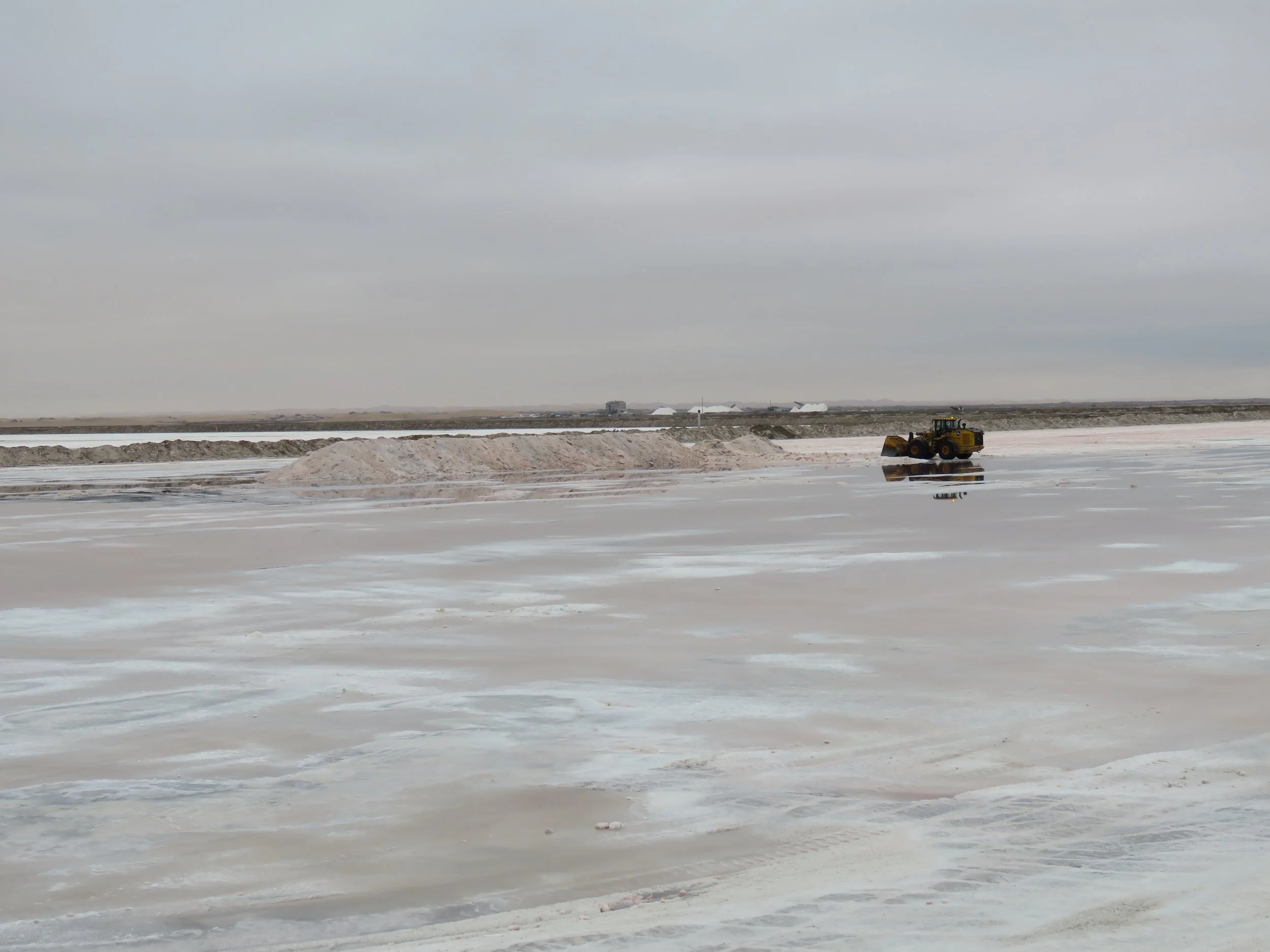
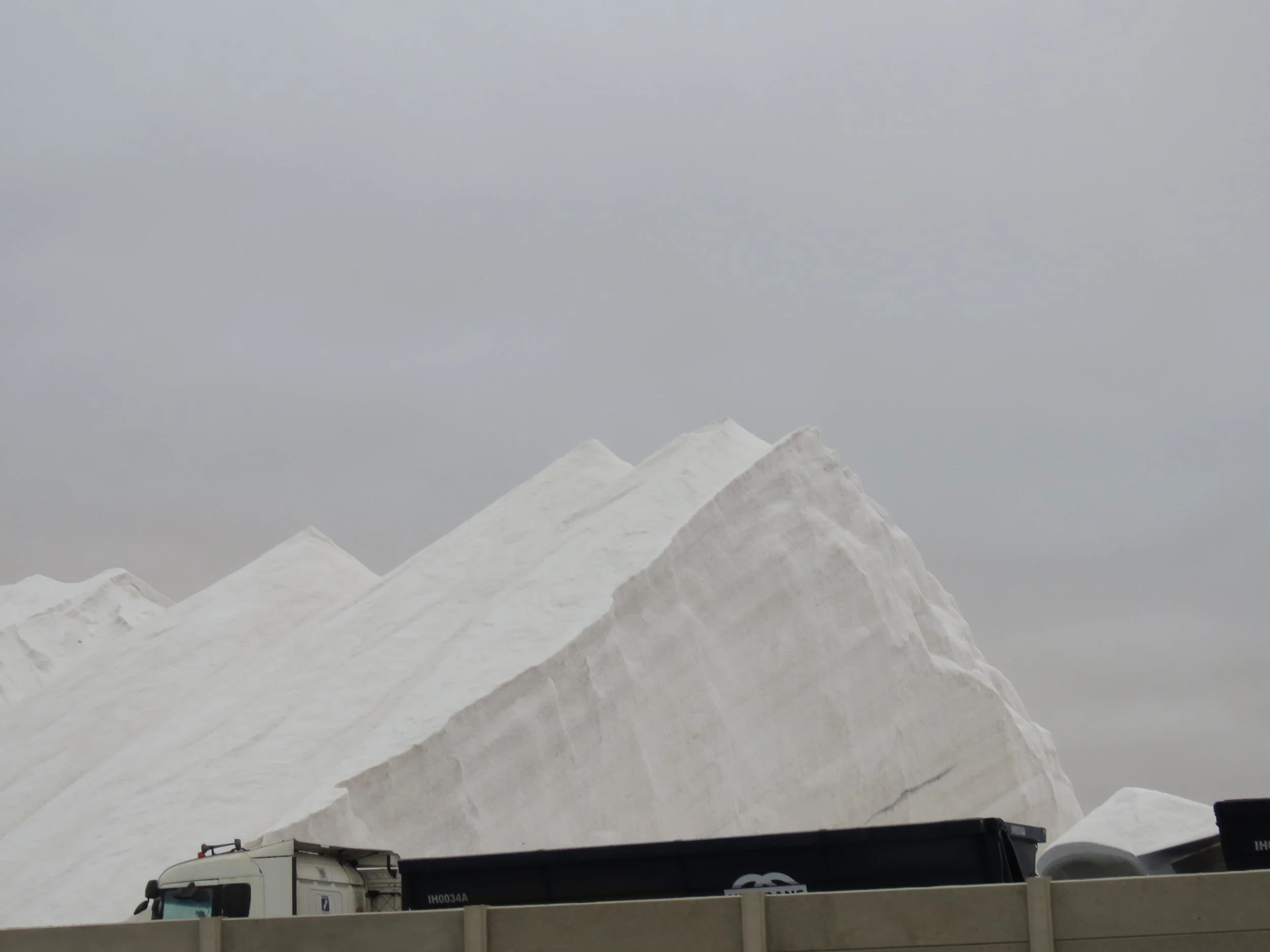
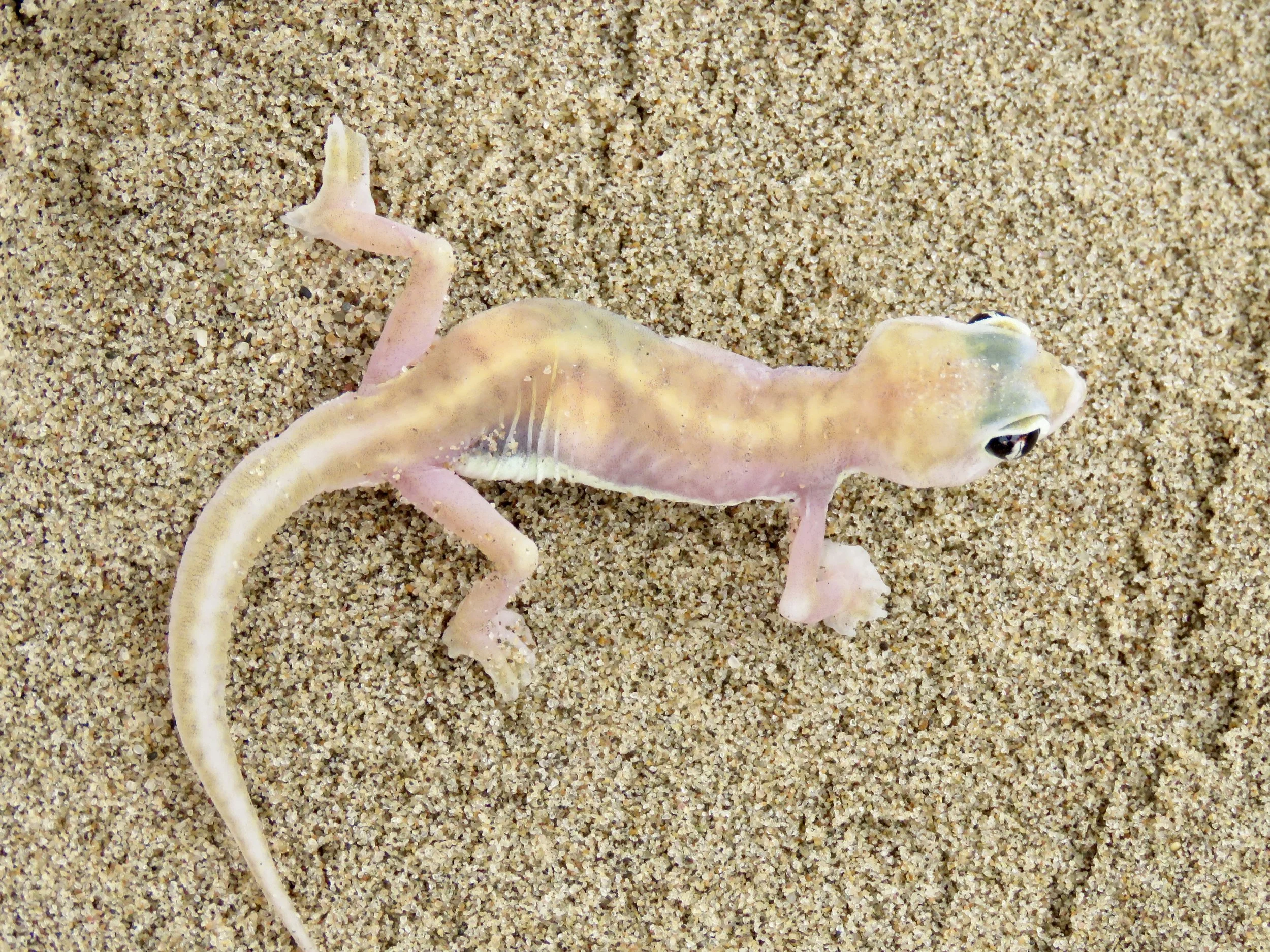
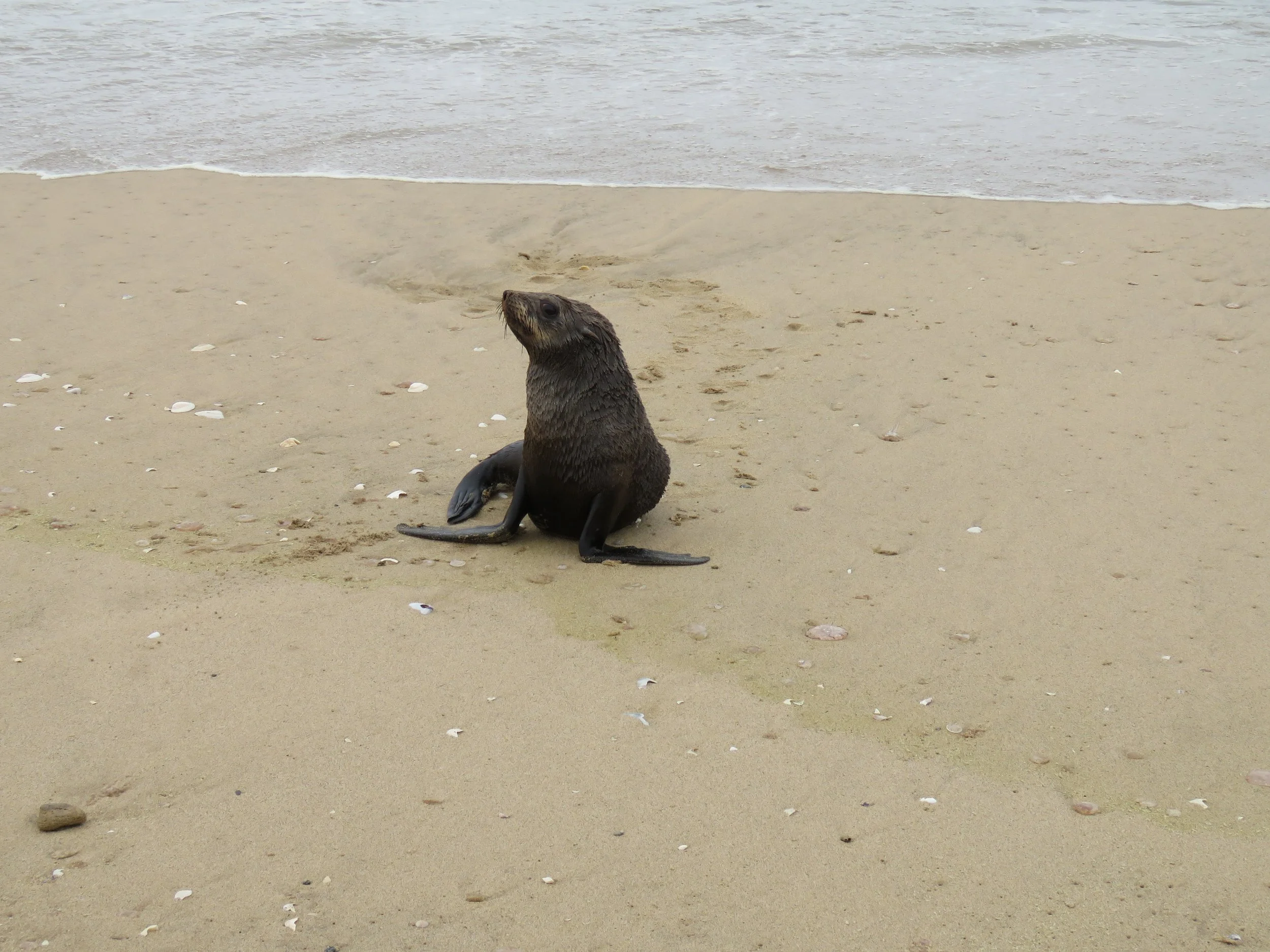
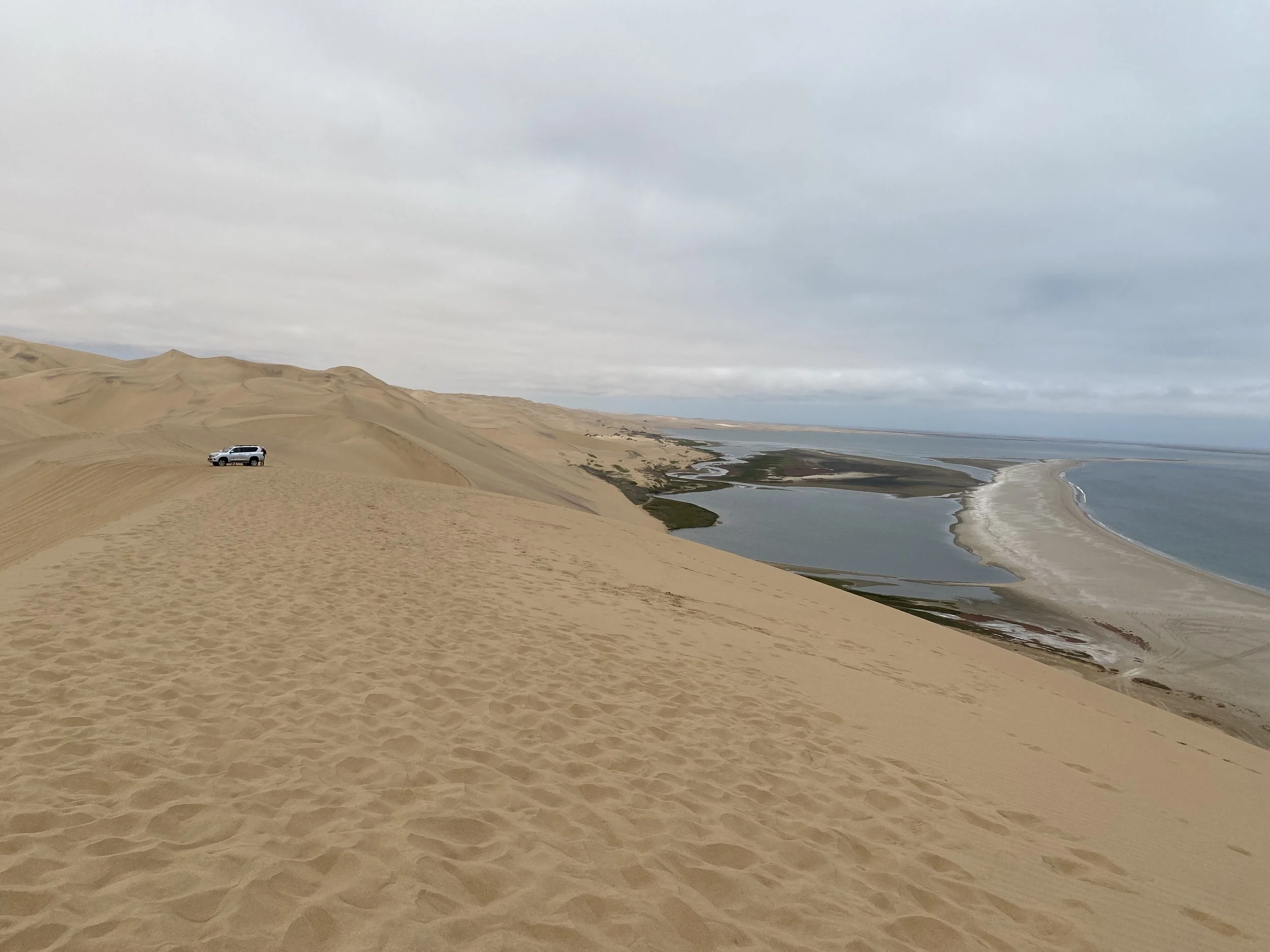
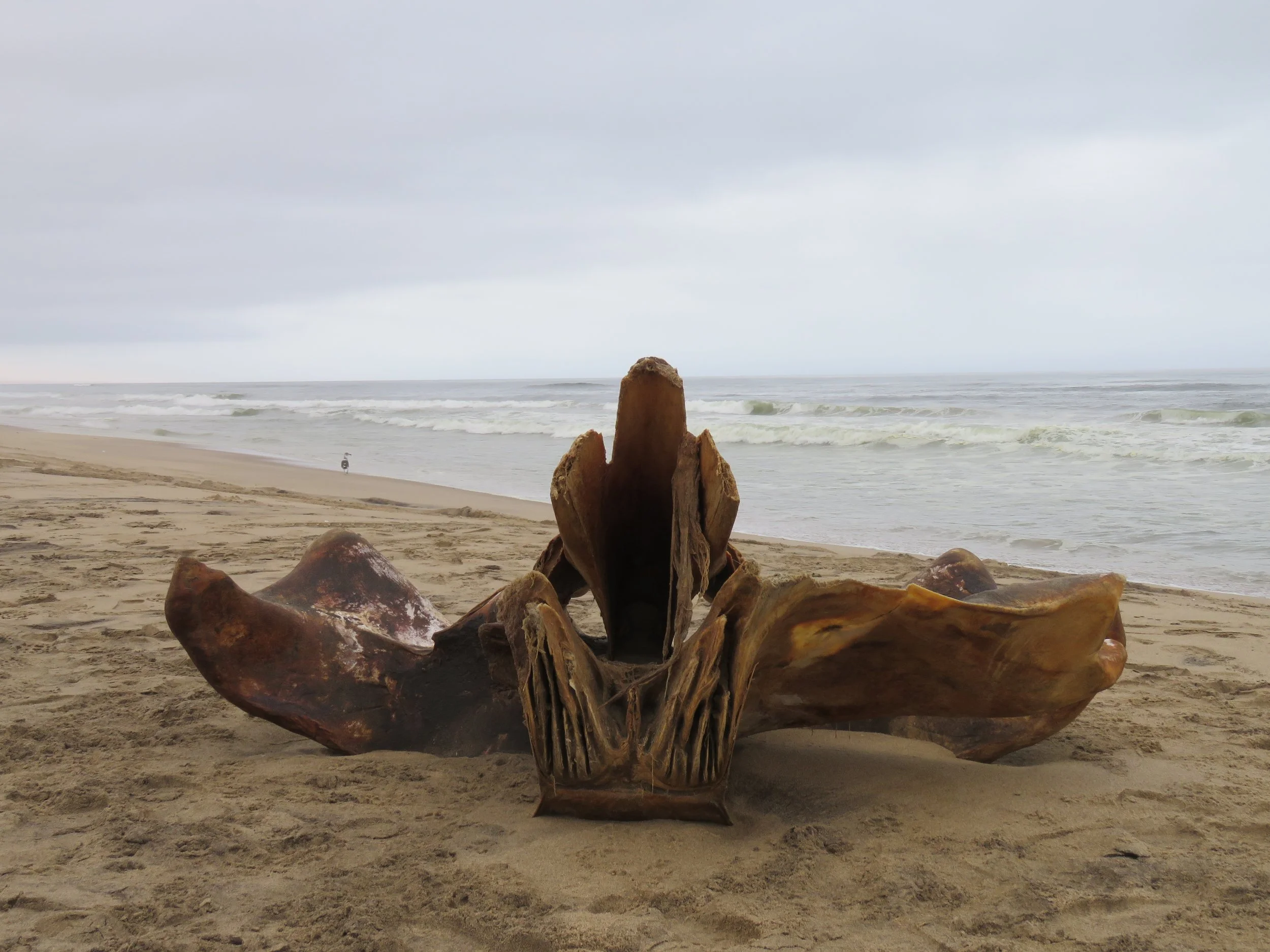
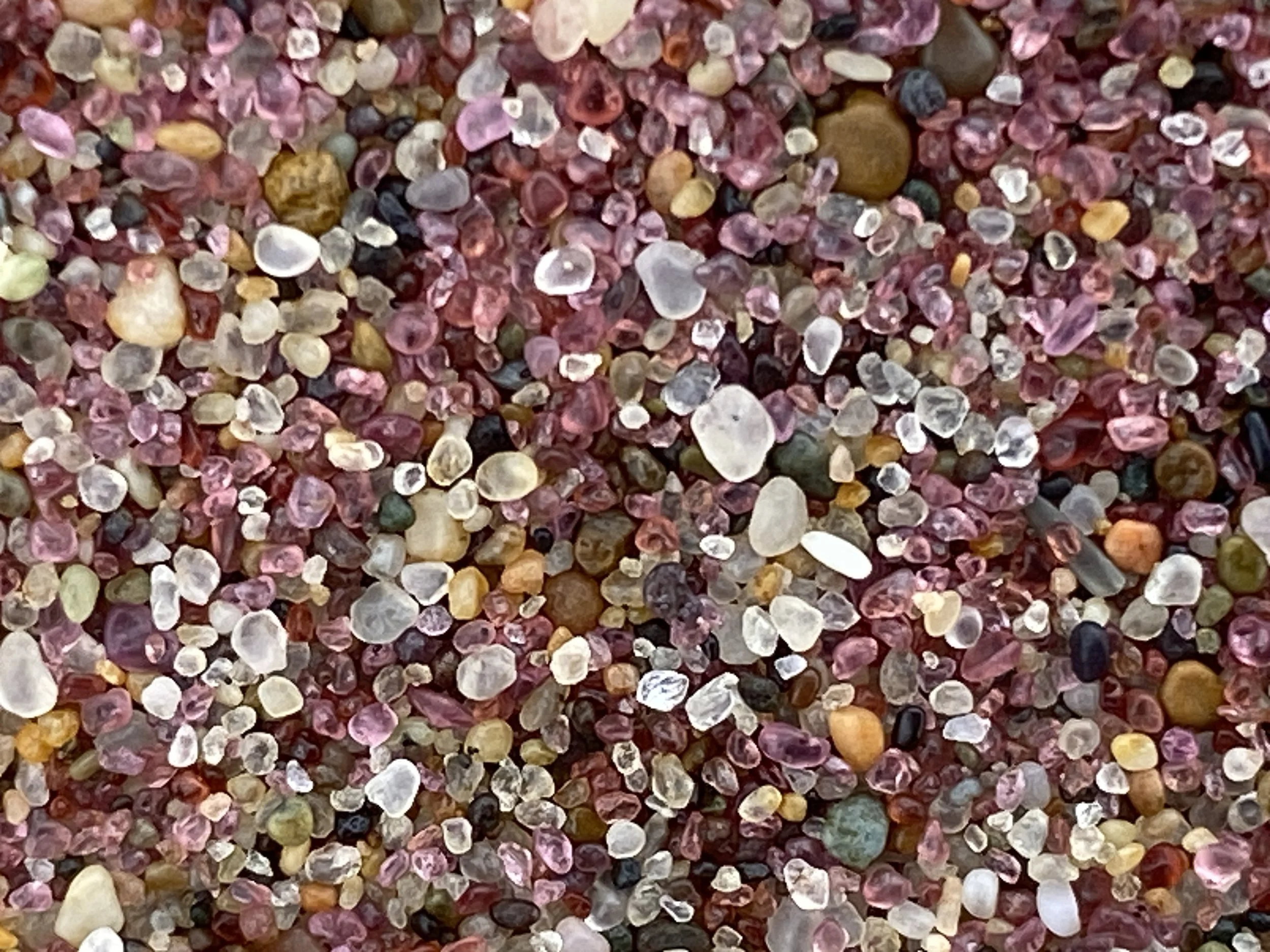
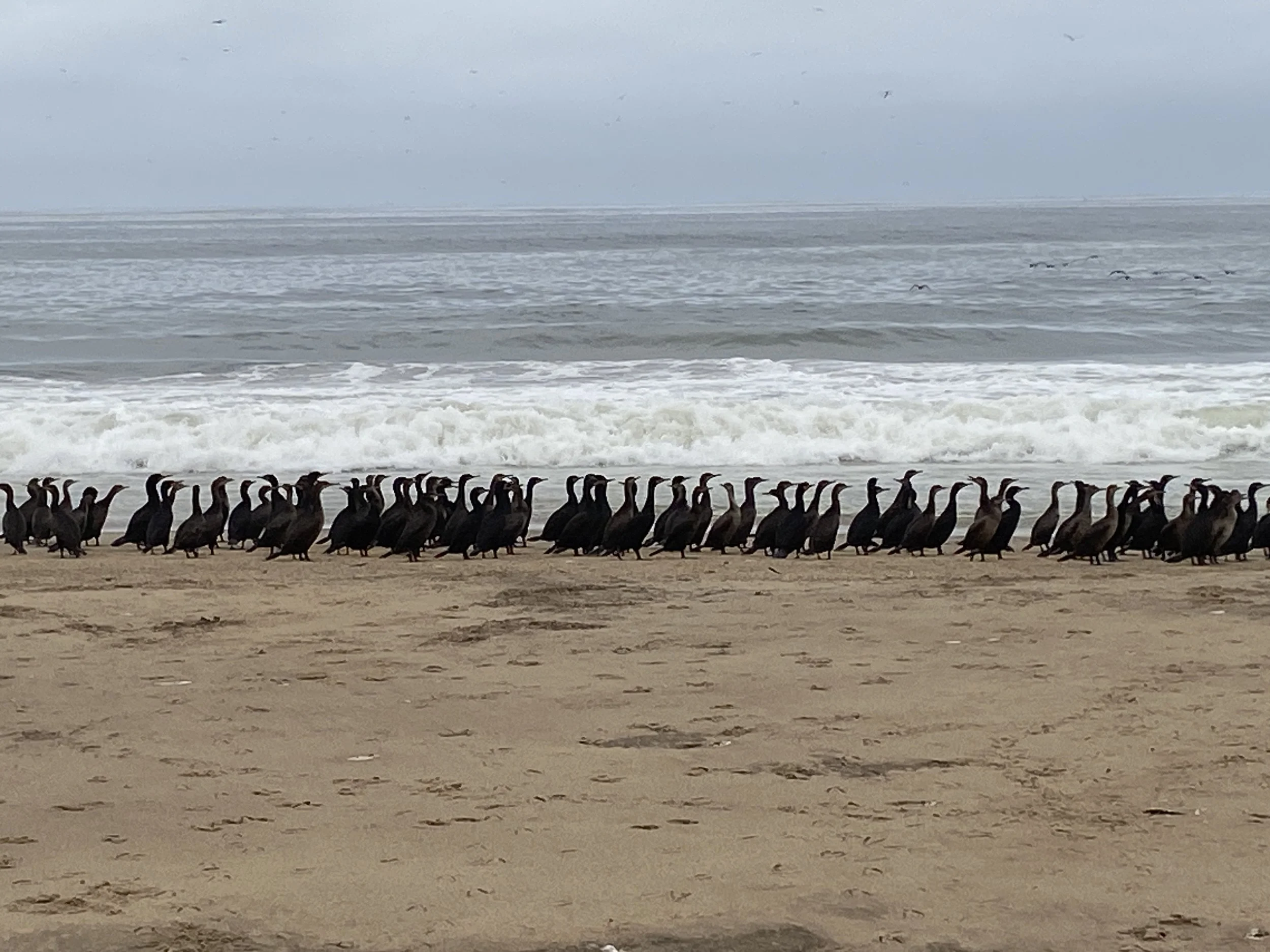
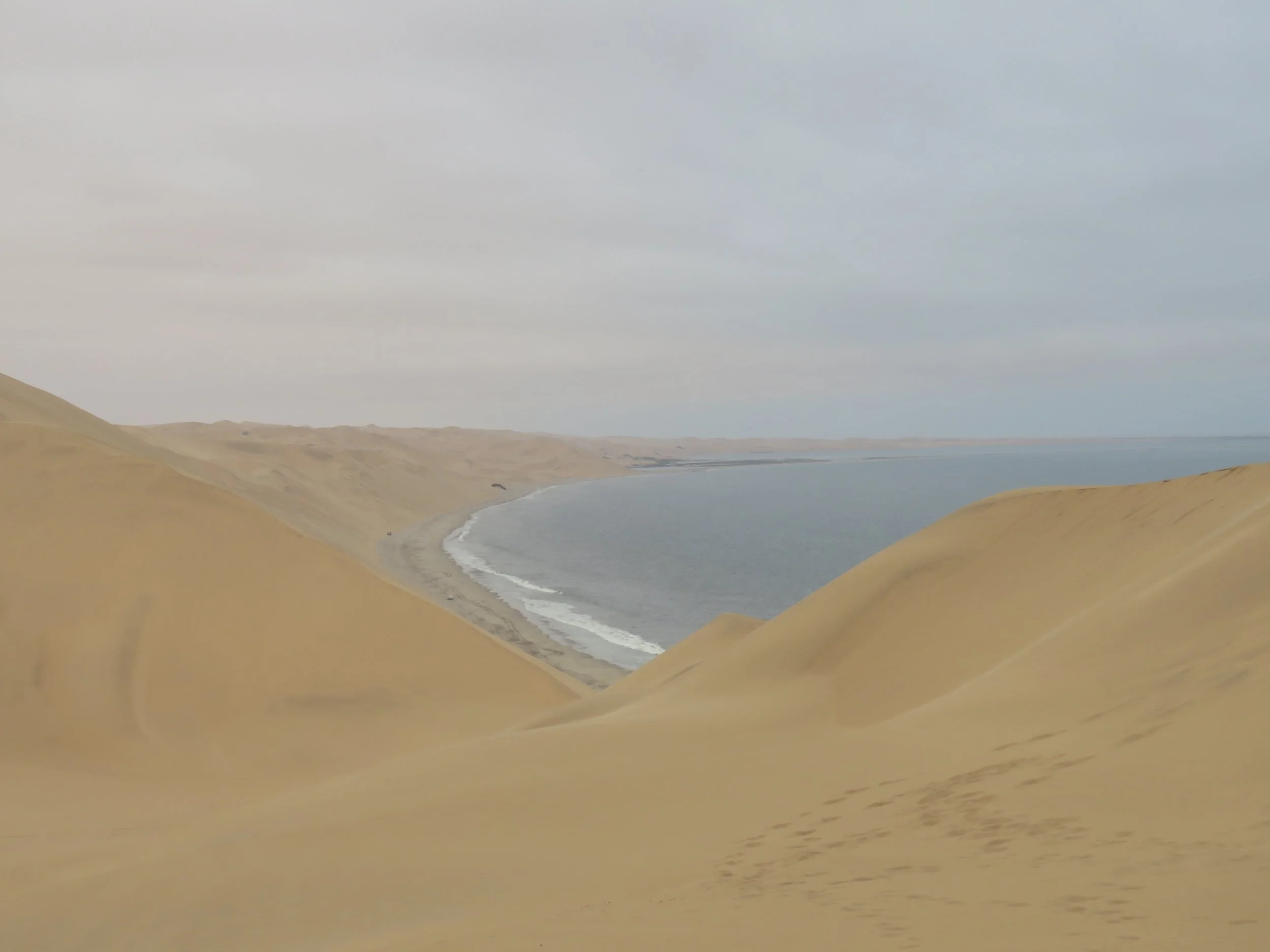
Leaving the salt mines, which made us feel like we were in Nunavut with dirty snow drifts, we drove over endless beaches. Hennie deflated the vehicle’s tires to make sure we’d make it over sand dunes several hundred meters tall. There are huge numbers of seals here in the ocean, which also means the occasional dead seal on the beach. We looked for sea shells and marvelled at how the Namib desert reaches right down to the ocean here. Hennie dug up some impressive little geckos - Namib sand geckos - which burrow here. They are completely transparent so you can see their little skeleton and insides, including the stomach contents.
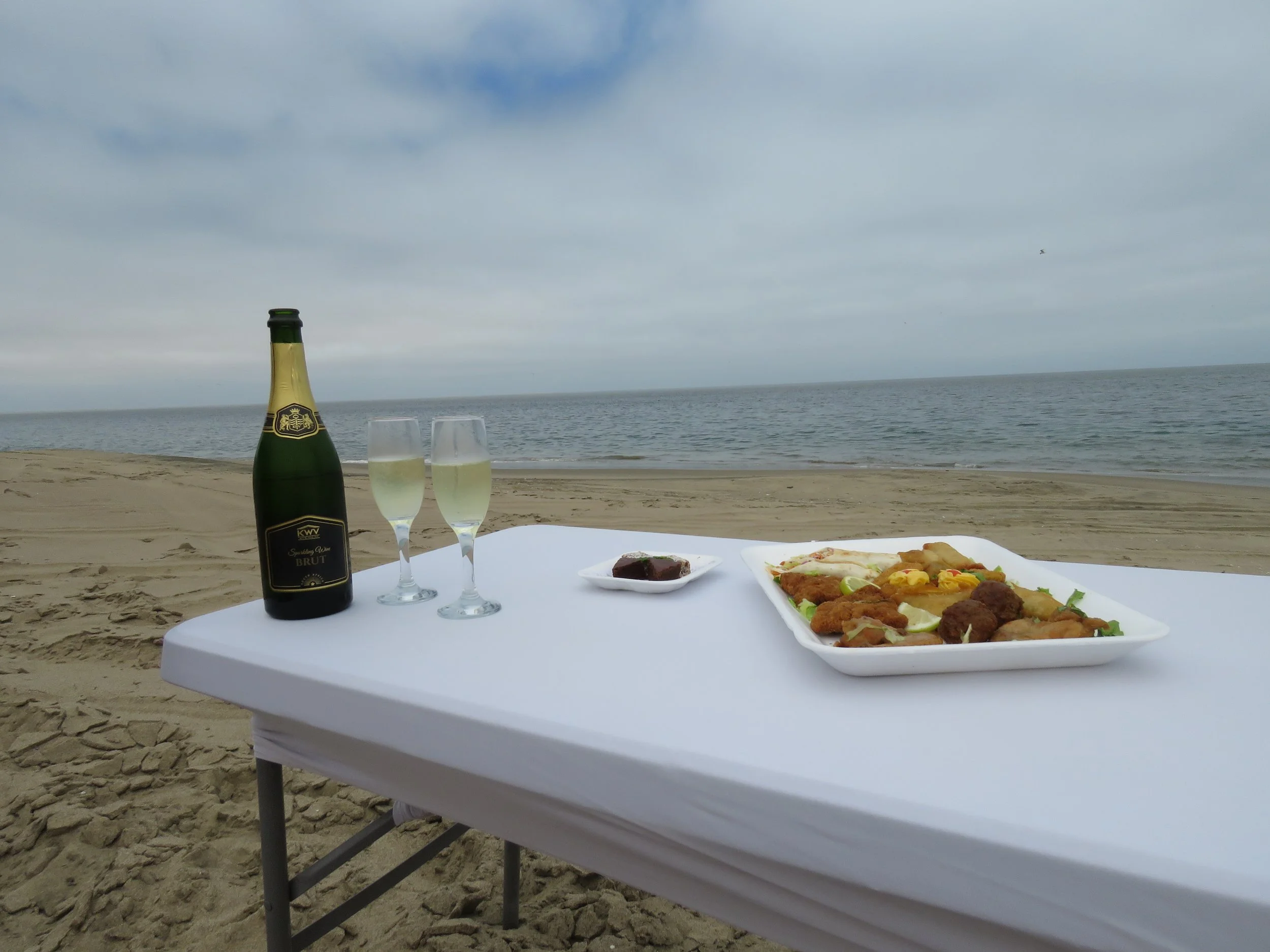
At Sandwich Harbour, we had lunch on the beach - finger food and a bottle of bubblies! A jackal wandered by while the waves crashed on the beach and we sat in the shade of tall, rusty red sand dunes.
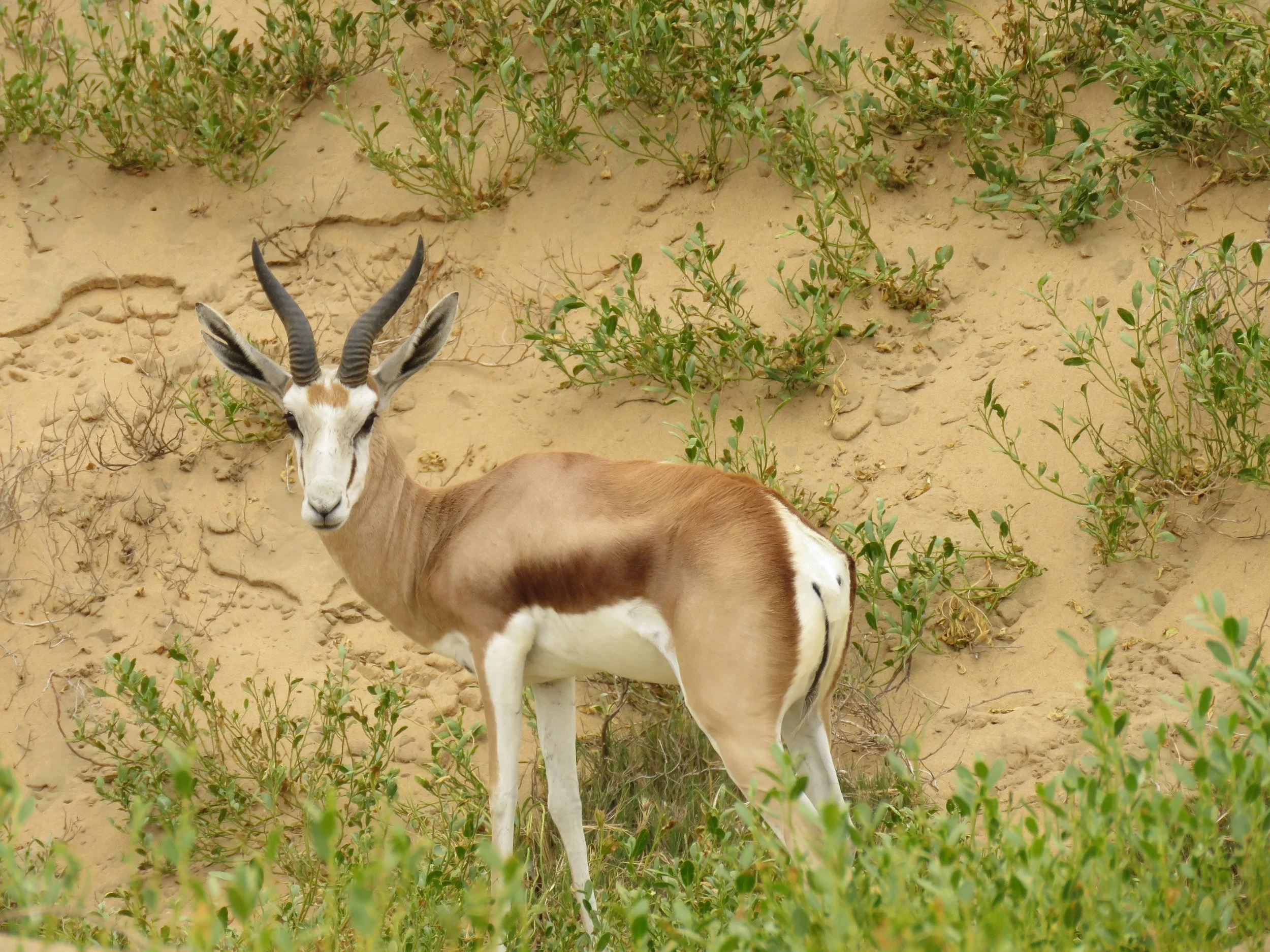
In the paddies between sand hills, covered by low vegetation, we saw many oryx - or gemsboks - grazing on the sparse greenery.
Then we ascended to the tops of the dunes, climbing and roaring up and down the national park’s sand dunes. This can only be done on sand hills that have no vegetation so that nothing is damaged. The wind erases the car’s tire tracks by the next day.
We loved our day with Hennie and exploring this tiny corner of Namibia. Who knows, we might just return one day to see more of this impressive African country that dances to the beat of its own drums.