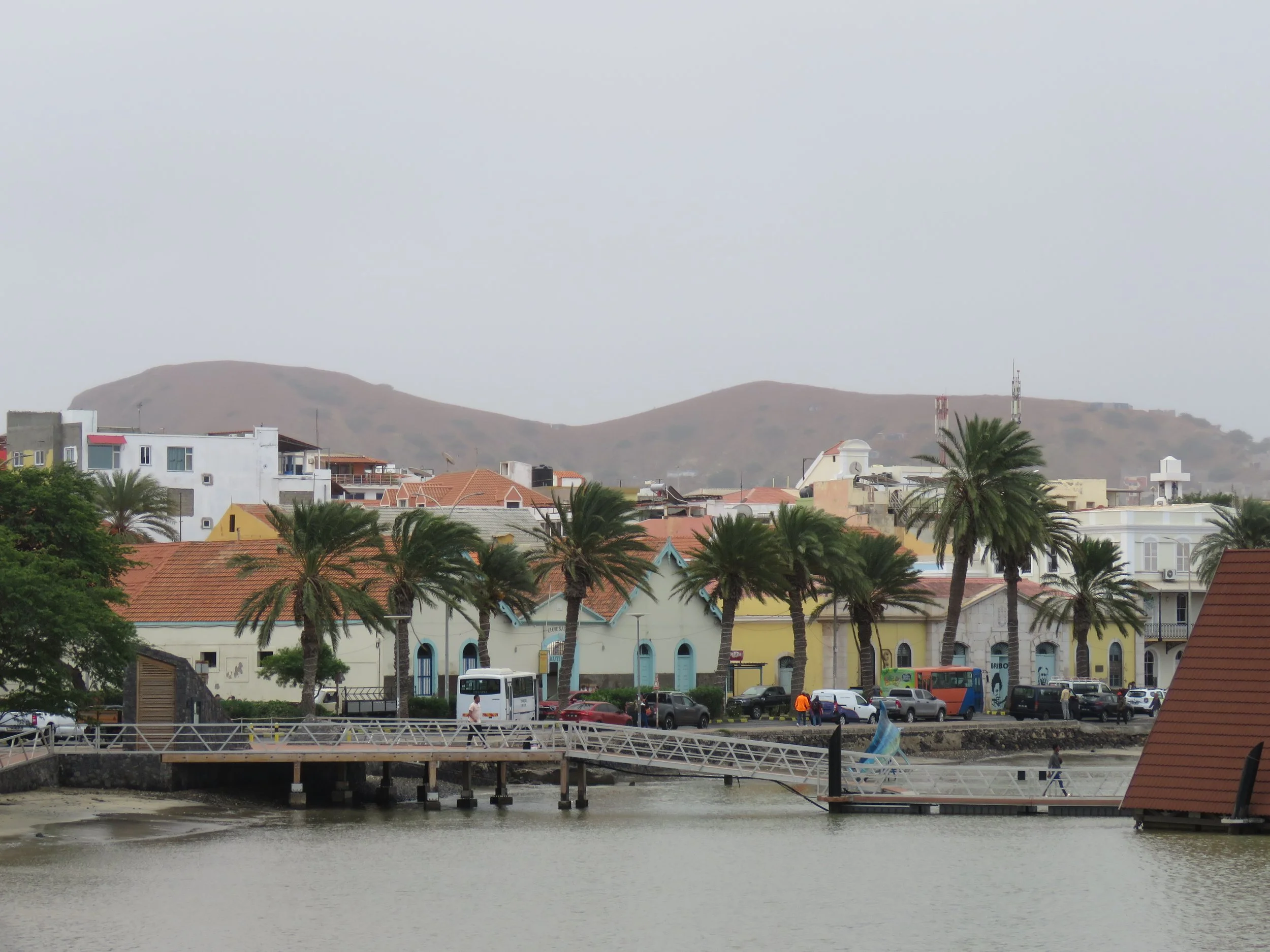
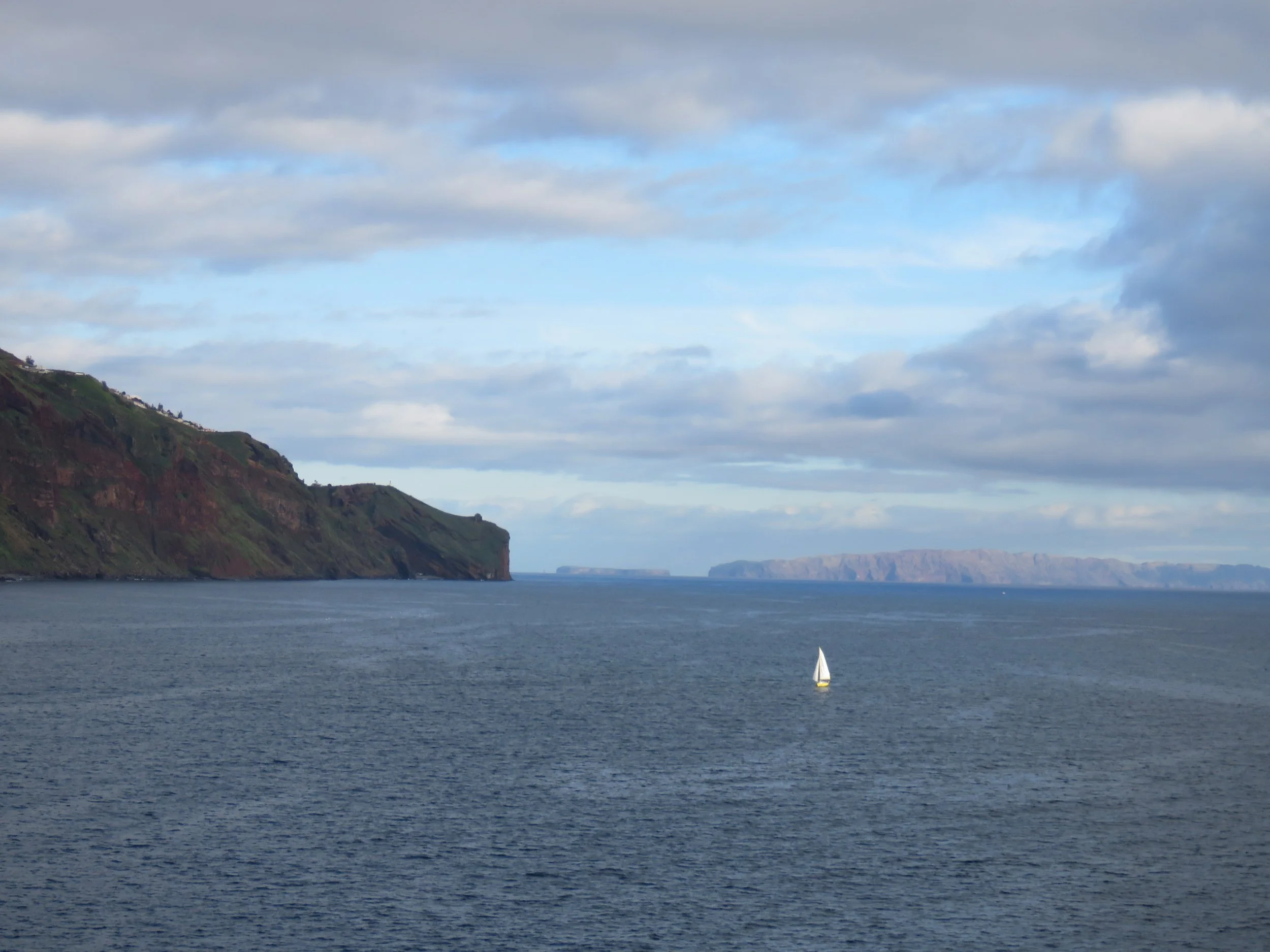
Leaving Southampton, England in winter we had to cross the Channel and make our way south on the Atlantic. We had no idea how huge the Bay of Biscay is…
And even the dictionary knows what these waters are infamous for. When I checked the spelling, the dictionary told me: ‘a part of the North Atlantic Ocean between the northern coast of Spain and the western coast of France, noted for its strong currents and storms.’
And bumpy it was! Apparently we rode the tail end of a hurricane - amazing we didn’t get sea sick. The ship creaked and cracked and swung back and forth. We walked like drunks, swaying into walls, until we found our sea legs.
We settled into the spoiled life on a cruise ship, enjoying meals in the dining room as well as at the extensive buffet. We couldn’t really go outside yet, but made tea in our room and, at night, we saw a great comedian from Armenia - Kev Orkian.
An Irish fiddler from Riverdance performed with her flute and fiddle.. We enjoyed real English Afternoon Tea at 3 and made a list of movies we now had time to watch. There was even a writer’s workshop offered on board, by a British Literary Agency.
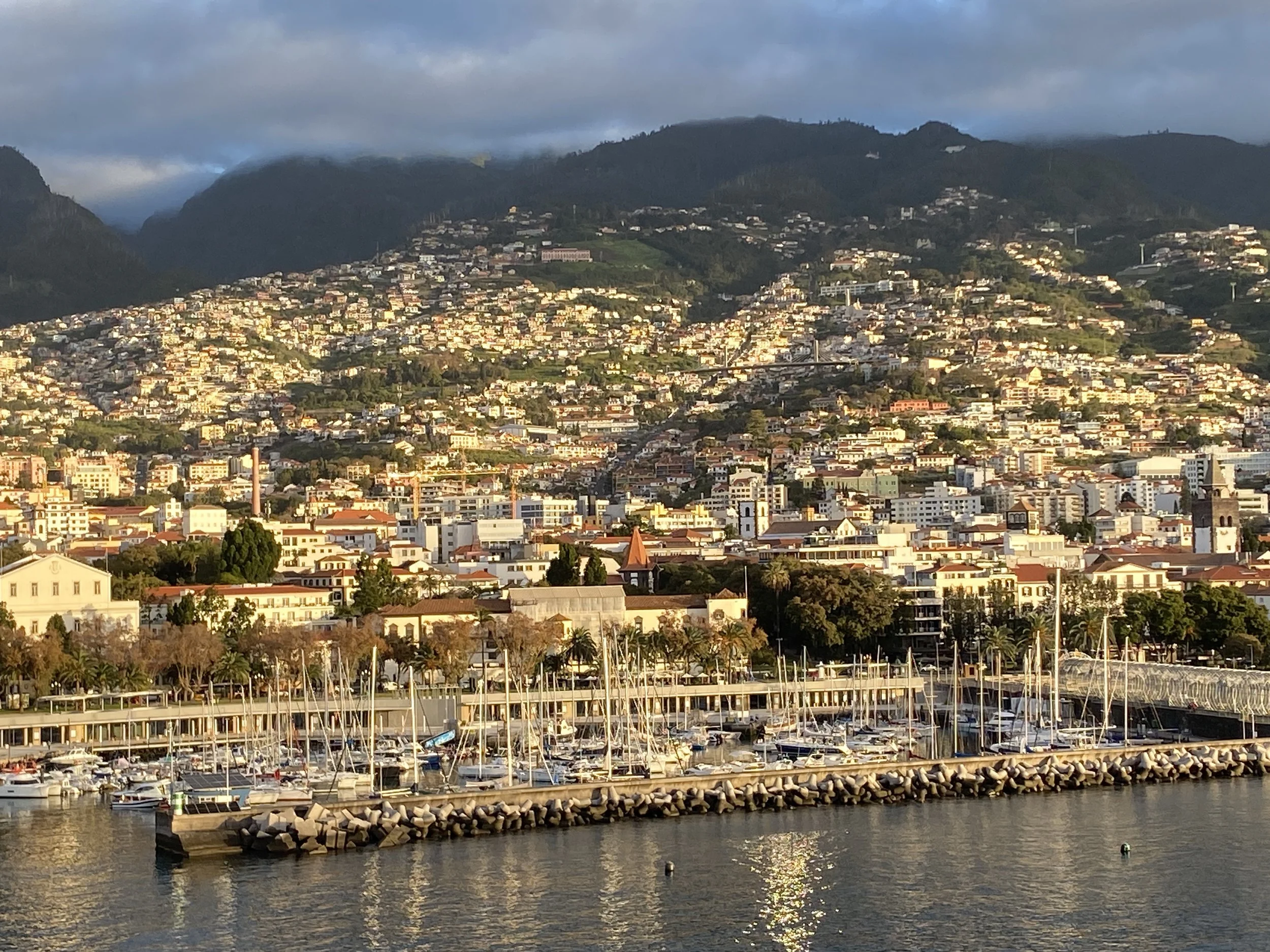
Leaving the worst of European winter slowly behind, our first stop was the Portuguese Island of Madeira. A popular European tourist destination, we had never been here. We woke up to a green hilly island covered in an urban sprawl of buildings. The city was draped over the rocks, dripping down like icing on a rocky cake, down to the water.
We strolled down the pier, through a tunnel and into the city of Funchal. Then walked and walked and walked. We found a public library (up hill), checked our email and then walked through the tree lined streets towards the Mercado. Many of the streets and squares had the same black and white patterns as streets in Lisbon. Buildings, too, had traditional Portuguese shutters and tiles. The Mercado was a fun market. Sales women wore colourful traditional outfits, selling flowers, fruit, wine and bakings.
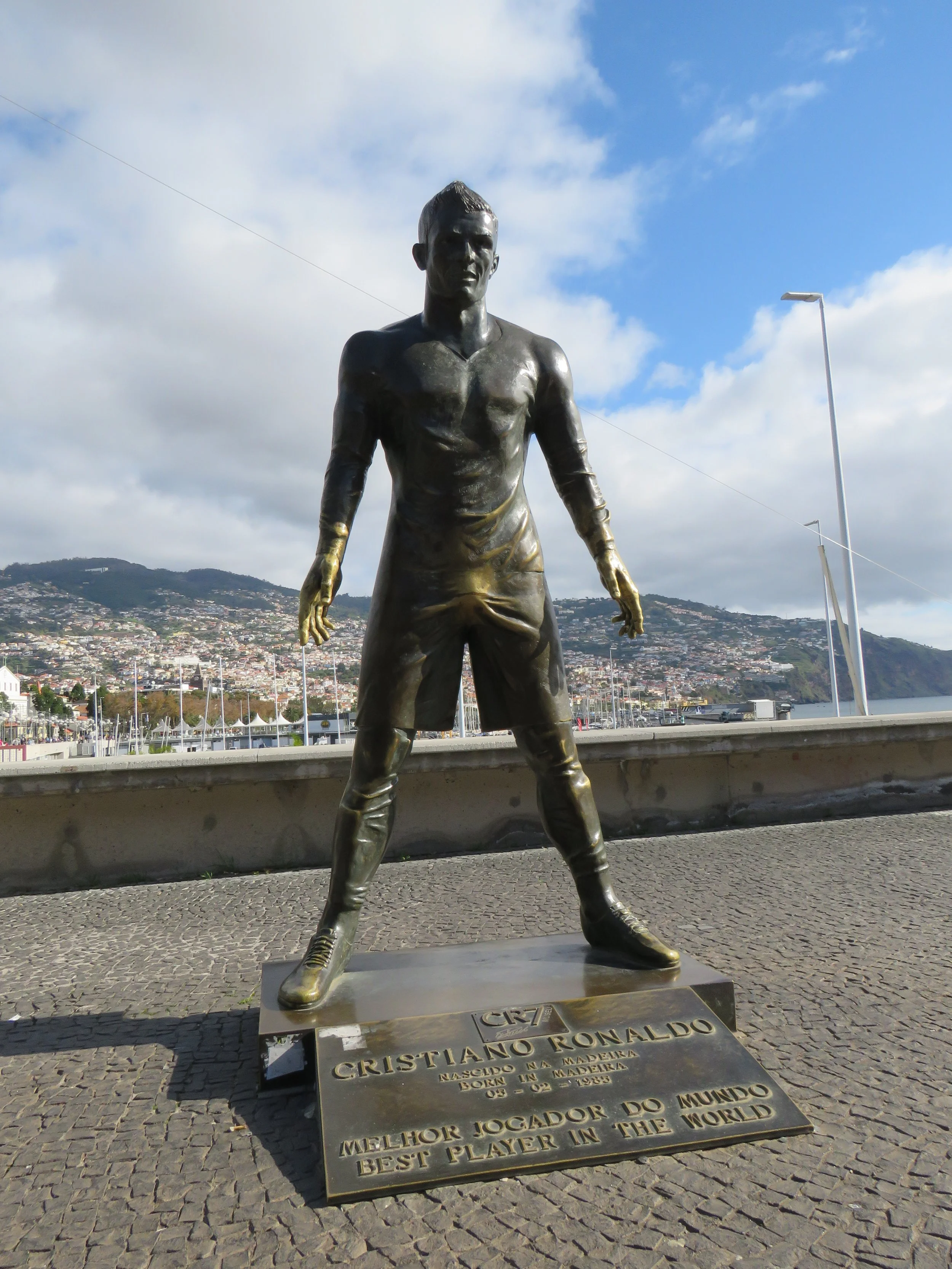
We walked back along the wide waterfront boulevard and found the statue dedicated to Funchal’s famous native son: Christiano Rinaldo, the soccer player.
The very next morning we woke up to a similar view of an even more crowded rock in the ocean covered in high rises, roads and buildings. This crowded island is Tenerife, part of the Canary Islands belonging to Spain. By now we’re off the coast of northern Africa so the temperatures are rising into the low 20’s but it’s still blustery and quite cool.
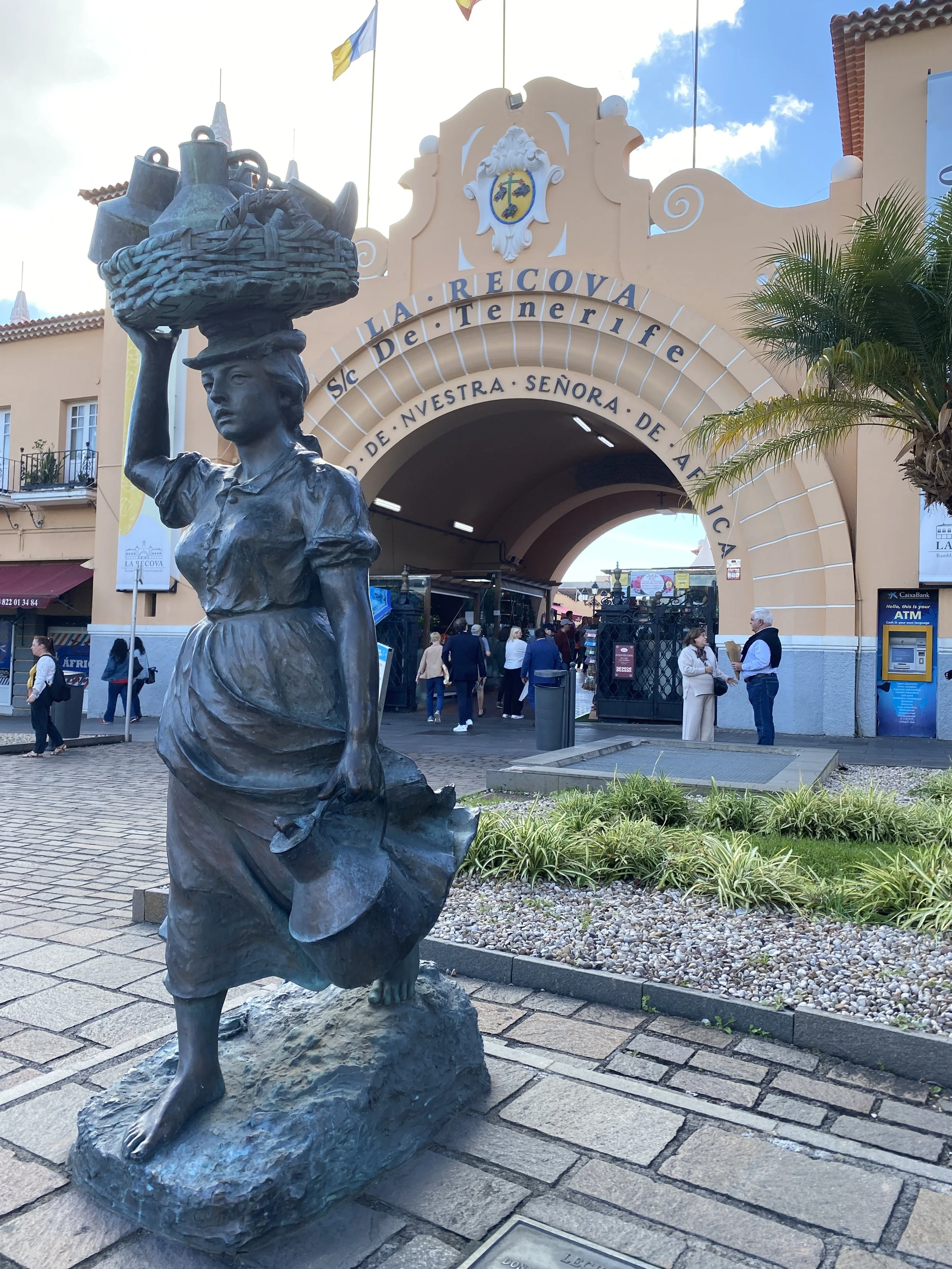
Again we walked many kilometers but we also found the Hop On Hop Off bus and rode it throughout the city. The bus’ route and its recorded commentary gives you a good idea of the history, the culture, the customs as well as the city’s lay-out. Once we knew which areas we wanted to explore more, we walked to the Mercado - bigger and more fun then yesterday’s. We ate sandwiches and pastries on a city bench. And, since we’re allowed to bring bottles on board, we bought wine at a supermarket before strolling back through the old town.
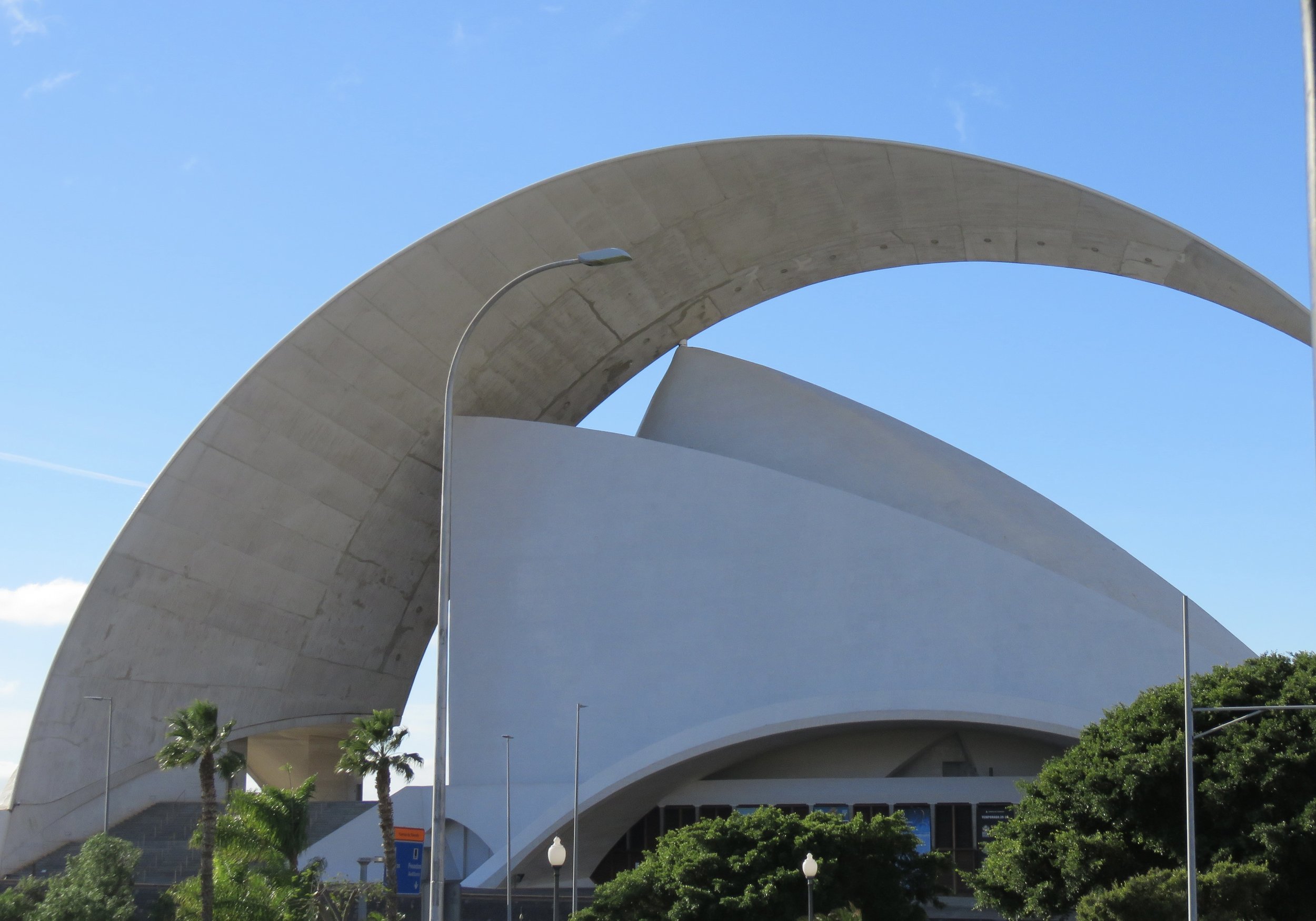
Theatre, Tenerife
Armed with Spanish wine, we settled in for two days at sea: attending talks, reading books and relaxing into the knowledge that we no longer had to run around doing all the work and chores we do at home. To my delight, the ship’s library has a copy of Margaret Atwood’s new autobiography - The Book of Lives. I have never managed to get through her books but this one is a fascinating read, not just about her interesting life, but also about Canada’s history and that of writers in Canada.
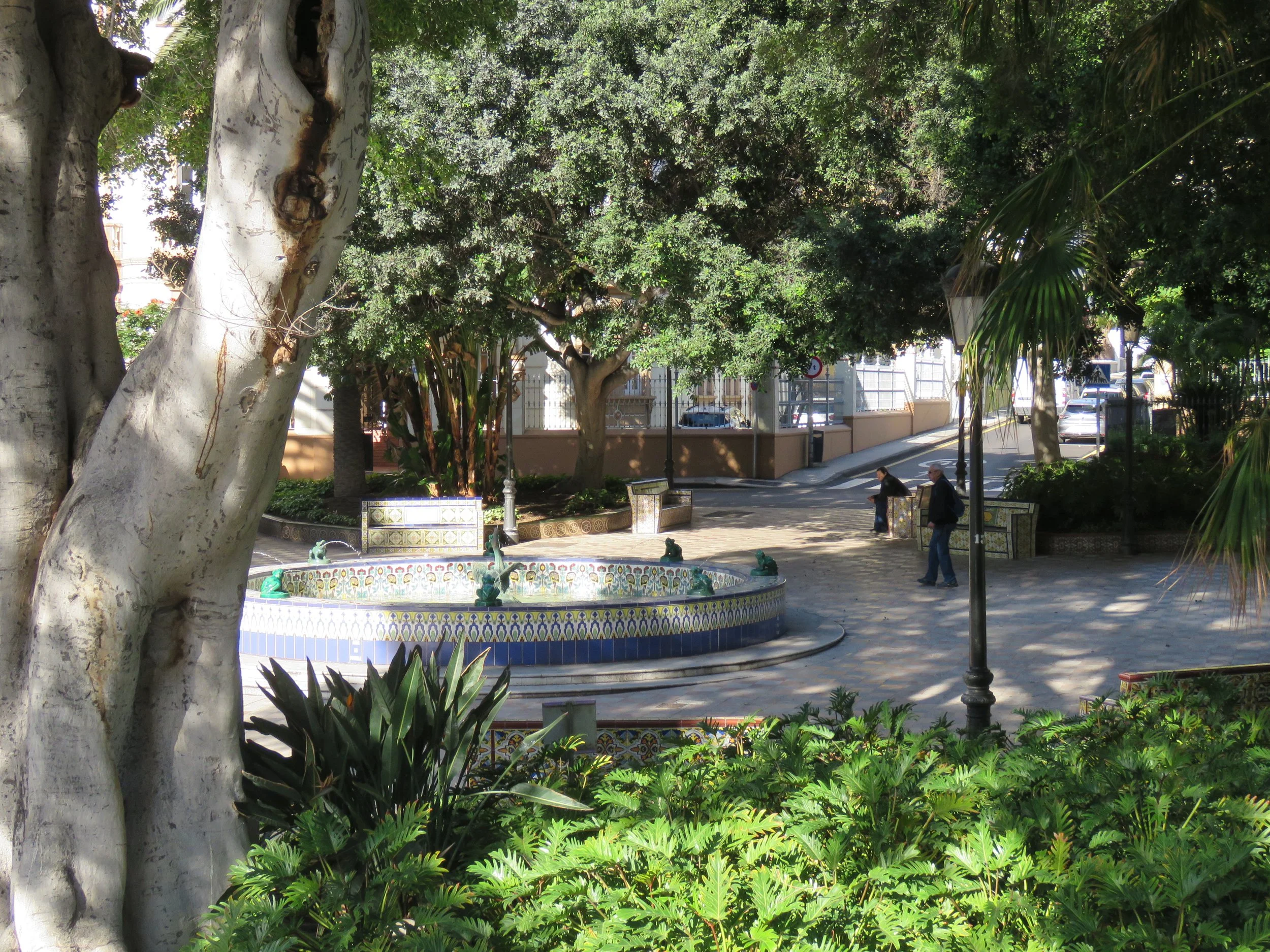
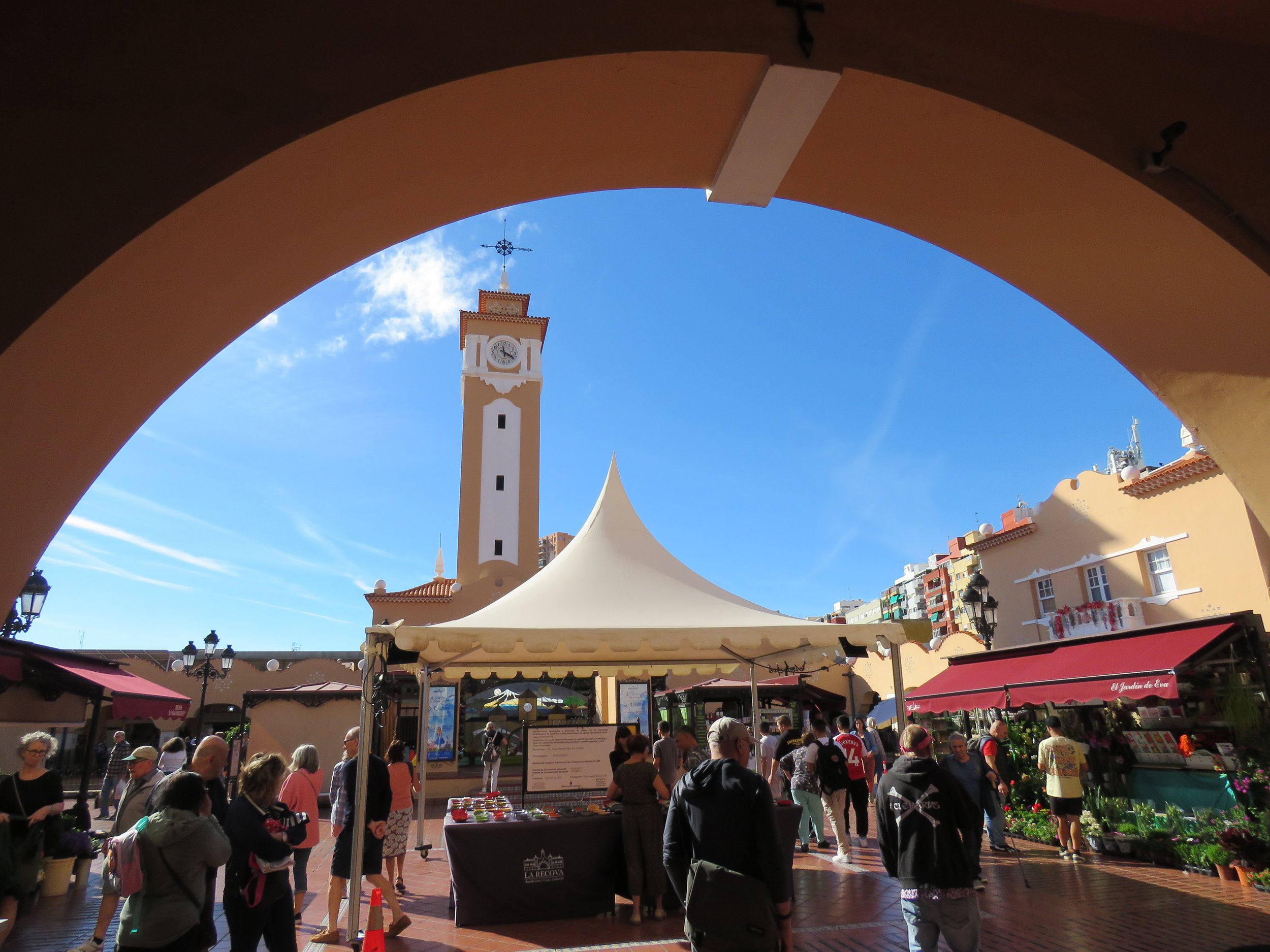
Mercado, Tenerife
Cabo Verde
And - just like that - we reached Mindelo, Cabo Verde. We had watched documentaries on this fascinating island on Knowledge Network so it was cool to see it for real: ragged brown hills of bare rock in the middle of the ocean. The town of Mindelo (min-DEL-oh) is bigger and a bit more run down than the previous islands. This is much more a blend of Portuguese and African, in language, architecture and people. Women in colourful cotton skirts carry baskets of produce on the head. Mangy dogs look for scraps. Along the sidewalks we stroll along a vegetable market, a fish market with exotic fishes displayed, a touristy market with t-shirts and fridge magnets…
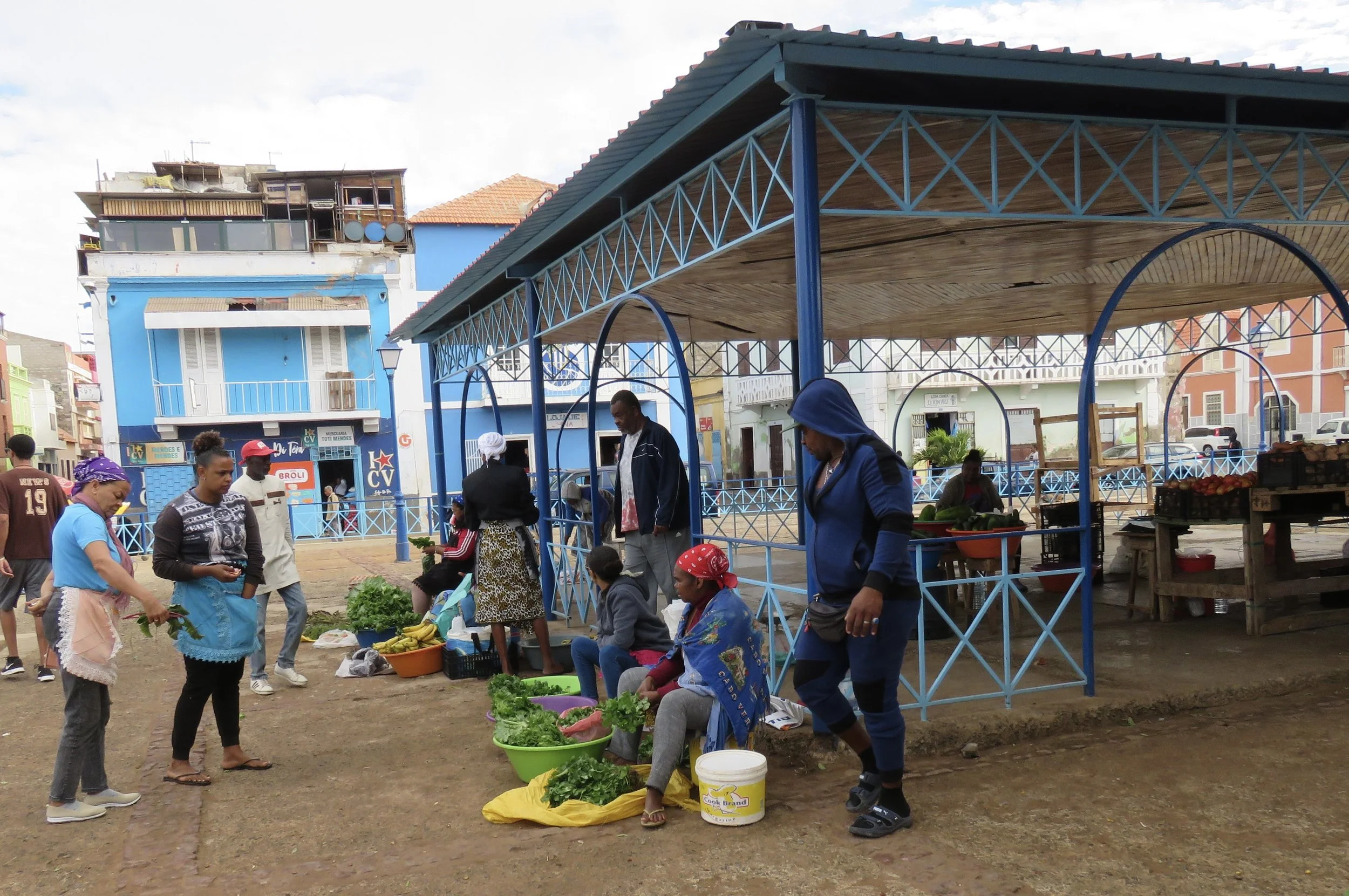
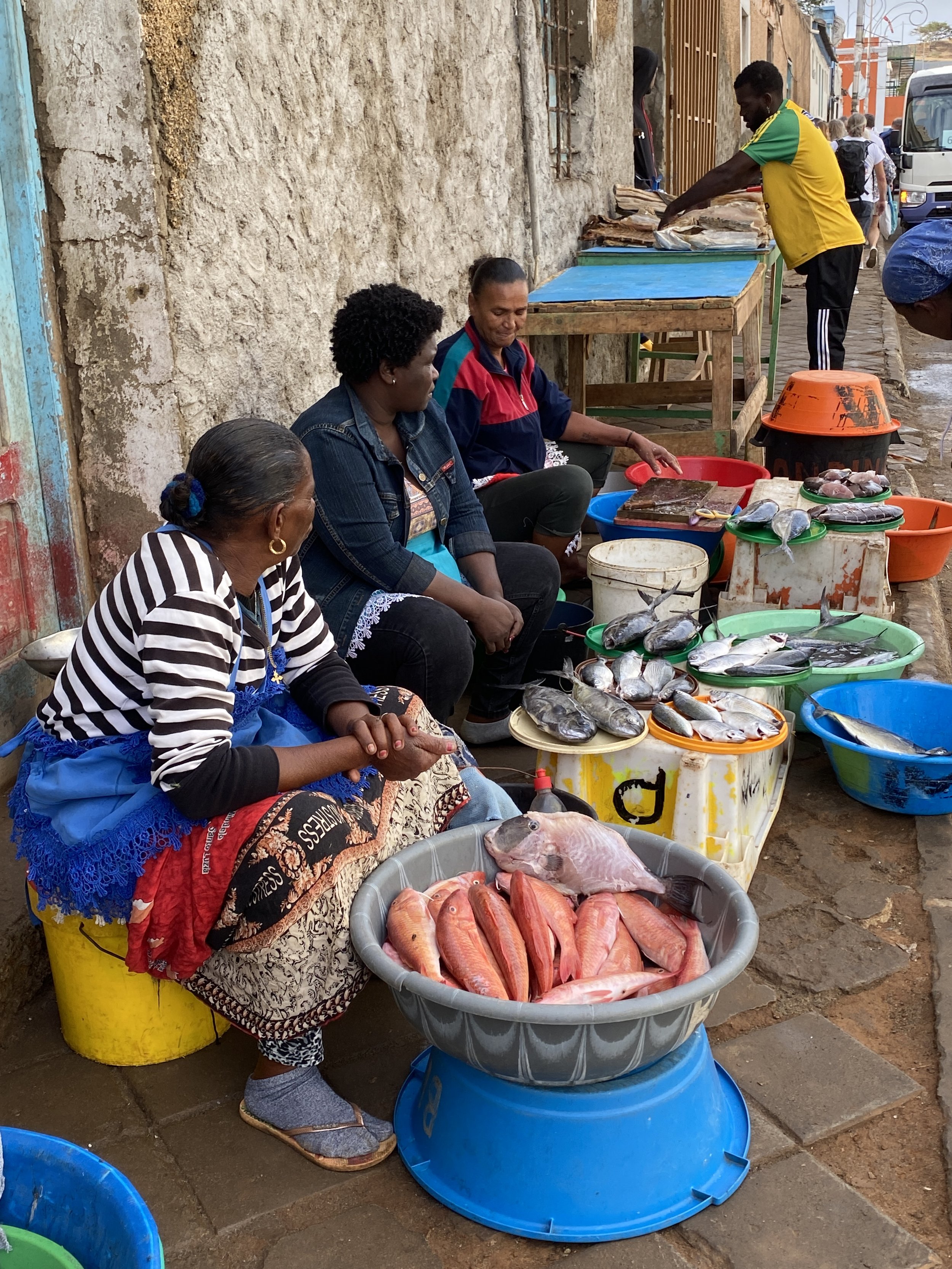
It’s nice to soak up the atmosphere - a long history of seafaring nations and local people, of blue waves, fruit and music. Cabo Verde’s most famous singer is Cesaria Evora. Her portrait is shown as murals on buildings as well as on the local currency. Her music has put Cabo Verde on the world map.
As we left the island, we knew we were a far way from land - it would take our large ship seven full days and nights to reach our next destination in mainland Africa.
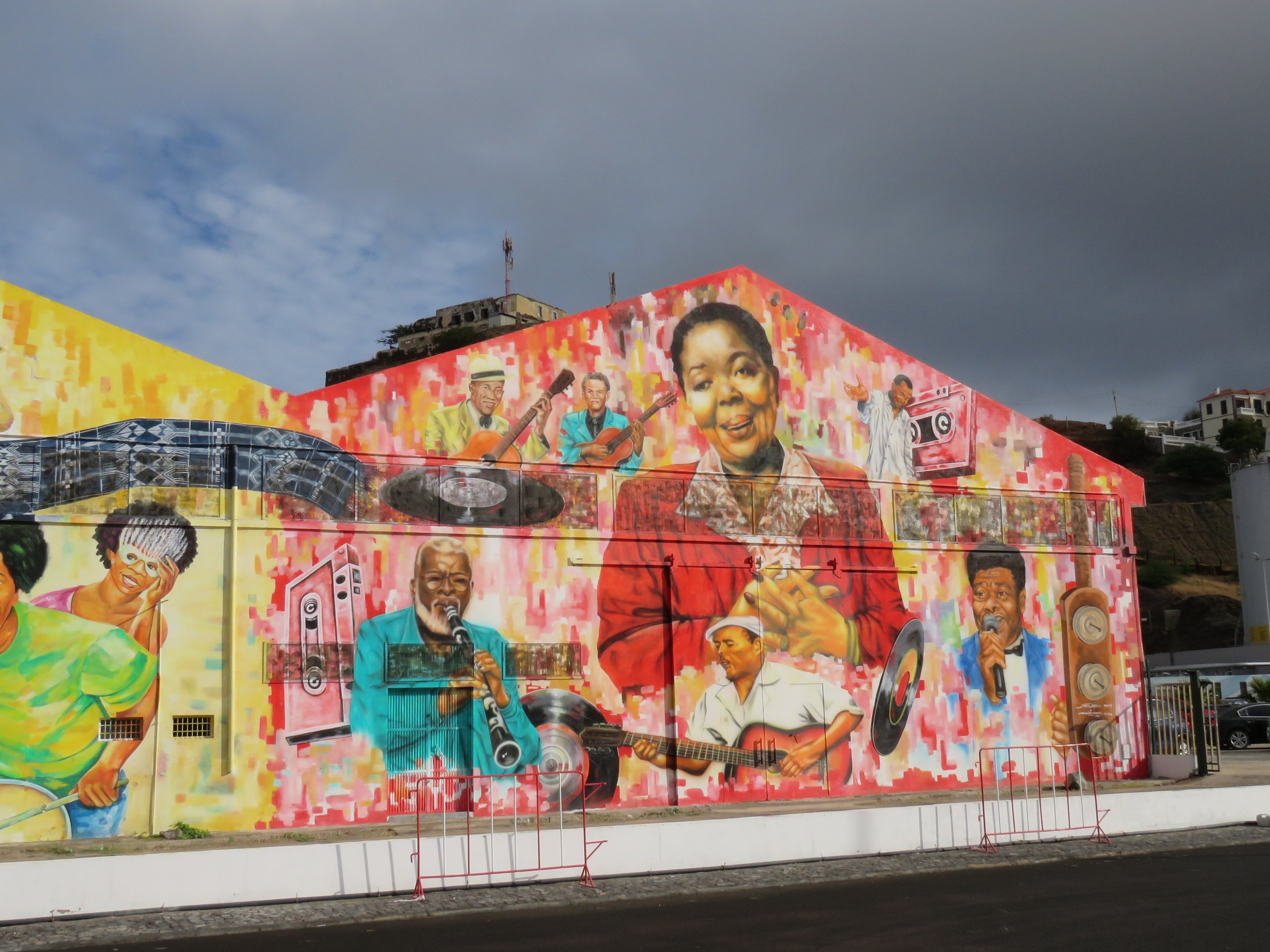
Cesaria Evora